

Every breath we take carries a quiet debt to the ocean.
World Ocean Day - A moment to celebrate, grieve, and act on behalf of the vast waters that keep our world alive. The ocean produces more than half the oxygen you're breathing right now, covers over 70% of the planet, and absorbs nearly 30% of all the carbon pollution we pump into the air. It has been quietly keeping us alive and we have been quietly letting it down.
In many ways, the ocean has been protecting us from the full force of our own actions. It has cooled the planet, fed communities, carried global trade, shaped weather systems, and supported economies across continents. But for decades, we have treated it as if it were endless — endless in what it can give, and endless in what it can absorb.
World Ocean Day 2026 is not just another environmental observance. It arrives at a moment when the world has already made big promises on ocean protection. The question now is whether those promises will finally turn into action.
The numbers are hard to ignore. About 90% of the world's large fish populations are already gone. Less than 8% of the ocean is protected. And despite being a $24 trillion engine of the global economy and a food source for 3.5 billion people, the ocean receives less than 1% of global climate funding. We are drawing everything from it and giving almost nothing back.
Last year’s UN Ocean Conference in Nice pushed ocean protection higher on the global agenda. In 2026, the focus now shifts from commitments to implementation, France for the UN Ocean Conference making binding commitments on marine protection that will shape the next decade.
The decisions made this week aren't abstract policy. They will determine whether a fisherman in Kerala still has a livelihood in 2040, whether a coastal village in Bangladesh still exists, whether a reef that took 10,000 years to build survives another generation.
Also Read | At 1.5°C and Rising: This World Environment Day Earth Needs Answers!
And yet - we've explored less than 5% of the ocean. Most of it remains unknown to us. We are fighting to save something we haven't even fully met yet.
People are choosing to pay attention. However, the question is what we do with that attention, because the ocean doesn't need our admiration. It needs our action.
Why World Ocean Day 2026 Matters?
Observed every year on June 8, World Ocean Day is a reminder that the health of the ocean is directly linked to the health of life on Earth. This year carries particular significance because the global ocean conversation has moved beyond awareness. The focus is now on protection, enforcement, and accountability.
The action theme for World Ocean Day 2026 — “Strong Marine Protected Areas for Our Blue Planet” — makes that message clear. The world does not simply need more speeches about saving the ocean. It needs well-managed, legally protected marine areas where ecosystems can recover, fish populations can rebuild, coral reefs and mangroves can survive, and destructive activities can be restricted.
This urgency comes at a critical time. In January 2026, the High Seas Treaty officially entered into force, creating a new legal pathway to protect marine biodiversity in international waters. These high seas lie beyond national boundaries and make up nearly two-thirds of the ocean. Until now, they have remained among the least protected parts of the planet.

World Ocean Day is a global reminder of our responsibility to protect the oceans - a chance to confront how badly we have treated the seas, and to recommit to protecting them before the damage becomes irreversible. This year's action theme, "Strong Marine Protected Areas for Our Blue Planet," makes one thing crystal clear: the time for promises is over. The time for protection is now.
Where It All Began
The story of the World Ocean Day idea was first proposed in 1992, Canada proposed at the Earth Summit - the UN Conference on Environment and Development held in Rio de Janeiro, Brazil alongside the signing of the Convention on Biological Diversity and Agenda 21. Ocean concerns were not answered in global discussions. The goal was simple but radical: to move the ocean from the margins to the center of the world's environmental agenda.

“Source: United Nations, UNESCO-IOC, UN Ocean Conference, and World Oceans Day initiatives."
The United Nations officially recognized June 8 as World Oceans Day, with celebrations beginning formally in 2009.

Why Does the Ocean Matters More than People?
Oceans are not just all about beaches and holidays and seafoods, it’s an engine of life which most of us take completely for granted.
- The ocean is a life support for entire planet:
- It produces more than half of the world’s oxygen
- Absorbs 25%-30% of all CO2 (Carbon Dioxide)
- Regulates temperature, drives weather patterns and controls precipitation cycles.
- More than 3 billion people depend on oceans as their primary source of food/protein.
- 90% of the global trade is through oceans
- And it supports “blue economy” which worths trillions of dollars
Also Read | Important Days in June 2026: Full List, History, Significance, and What to Expect?
Crisis Beneath the surface
The Plastic Crisis:
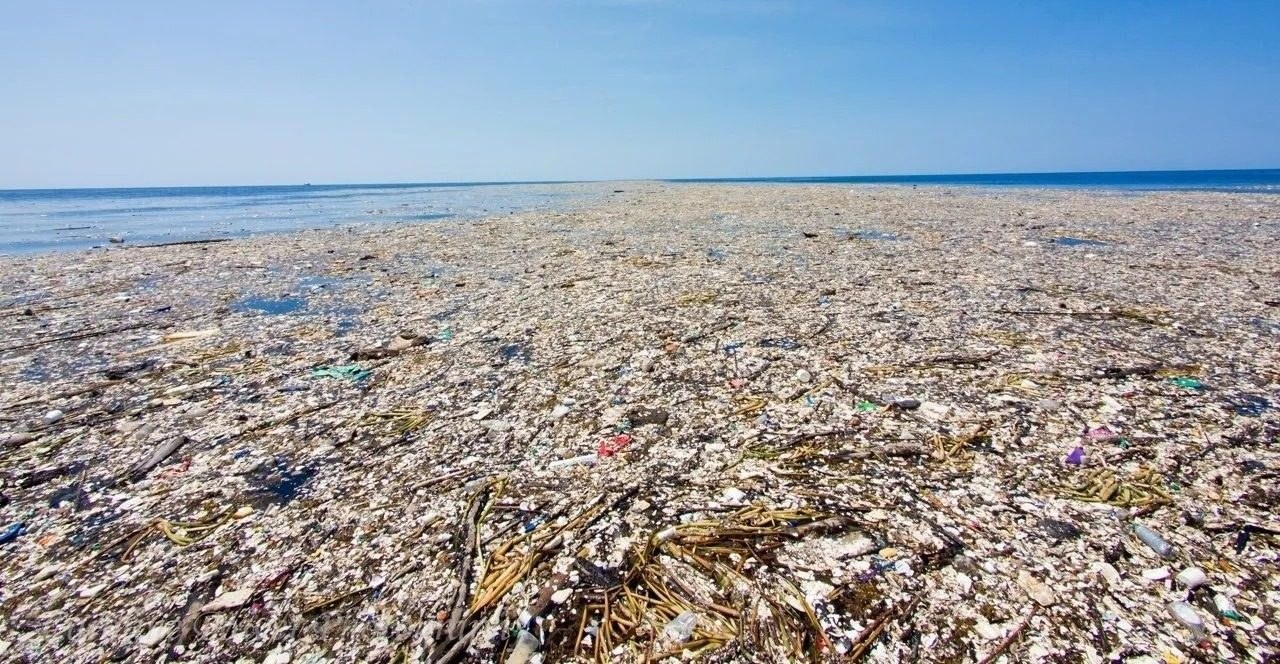
Currently the estimation says that 75 to 199 million tons of plastic sits in the world's ocean each year. And further 8 to 10 million tons of new plastic enters the sea every year.
The visible example of this crisis is the “Great Pacific Garbage Patch”. It contains hundreds of billions of pieces of plastic.
Warming and Acidification

The ocean has been absorbing our mistakes. Every year, oceans soak up about a quarter of all the CO₂ humans produce. It has buffered us from the worst of climate change. But that generosity has a price. Since industries emerged ocean pH has dropped from 8.2 to 8.1 which represents a 30% increase in acidity. At current emission rates, ocean pH could fall to 7.8 by the end of the century, more acidic than anything seen in the past 100 million years.
The current rate of acidification is 50 times faster than any known change in history.
Overfishing
The fish population around the world is decreasing under the weight of industrial fishing. The number of overfished stocks globally has tripled. The worst-hit waters are the Mediterranean and Black Sea, where around 62% of fish stocks are being overfished, followed by the Atlantic at 59%. And much of it happens in the shadows: illegal, unreported, and unregulated fishing accounts for up to 30% of catch for high-value species, netting criminals as much as $36.4 billion every year. When fish stocks disappear, entire coastal communities and the food security of millions go with them.
Fish and seafood provide vital nutrients for more than 3 billion people and supply income for 10 to 12% of the world's population.

The Year of Strong Marine Protected Areas
This year's theme is not just a slogan. The 30×30 framework adopted within the Kunming-Montreal Global Biodiversity Framework in December 2022 - commits world leaders to protecting at least 30% of the world's lands, waters, and oceans by 2030. That target covers national waters and, crucially, the High Seas the vast international waters that account for two-thirds of the ocean and nearly half of Earth's surface.
Adding even greater urgency: The High Seas Treaty officially entered into force in January 2026, creating a legal pathway to establish Marine Protected Areas in international waters.
Also Read | World No Tobacco Day 2026: Why the Fight Against Youth Nicotine Addiction Is More Urgent Than Ever!
Marine Protected Areas (MPAs) are the key tool to making all of this real. Well-managed MPAs help rebuild fish populations, protect coral reefs and mangrove forests, create natural buffers against climate change, and restore the resilience of marine ecosystems.

One Ocean. One Climate. One Future.
We must understand that the ocean is not a dumping ground. It is a living system and we have to treat it like one. The starkest number of all, Less than 3% of the world's oceans are currently "highly protected." The rest is largely open to industrial fishing, mining, and pollution - with minimal safeguards.
The ocean is not a backdrop to human civilization. It is the foundation of it. The air we breathe, the food we eat, the climate we live in, the rain that waters our crops all of it is tied in one way or another to the health of the sea.
World Ocean Day 2026 arrives at a critical moment. The High Seas Treaty is now in force. The 30×30 commitment has been made. The science is unambiguous. What the world needs now is not more pledges - it is action. Strong, specific, enforceable action in the form of Marine Protected Areas that cover the ocean the way national parks cover our land.
This June 8, whether you are in Mumbai, Lagos, New York, or a village a thousand miles from the nearest shore - the ocean is part of your story. And its future is part of yours.