

Foldable phones have been around for close to seven years now. One complaint refuses to go away, the crease. Open a Galaxy Fold or a Z Flip and run your finger across the middle of the screen. You will feel a dip. It is small, but it is there. It reminds you every day that you paid a premium price for a phone that still shows its flaws. Samsung's answer to this, at least on paper, is Flex Titanium Technology. The company shared details of this new display design recently. This was just over a week before its Galaxy Unpacked event in London.
This is not a small change. Samsung calls it the result of seven generations of foldable work. It will debut on the upcoming Galaxy Z Fold 8, Z Fold 8 Ultra and Z Flip 8. The question that matters most to buyers, especially in a price sensitive market like India, is simple. Does Flex Titanium Technology actually fix the fold? Or is this just another label on the same old problem?
The Problem Samsung Is Trying to Fix
Foldable phones attract people because they look different and offer new features. Users like the folding design. They like split screen multitasking. They like carrying a big screen in a compact phone. But many people still do not pick a foldable as their main phone.
The biggest reasons are the screen crease and worries about durability.
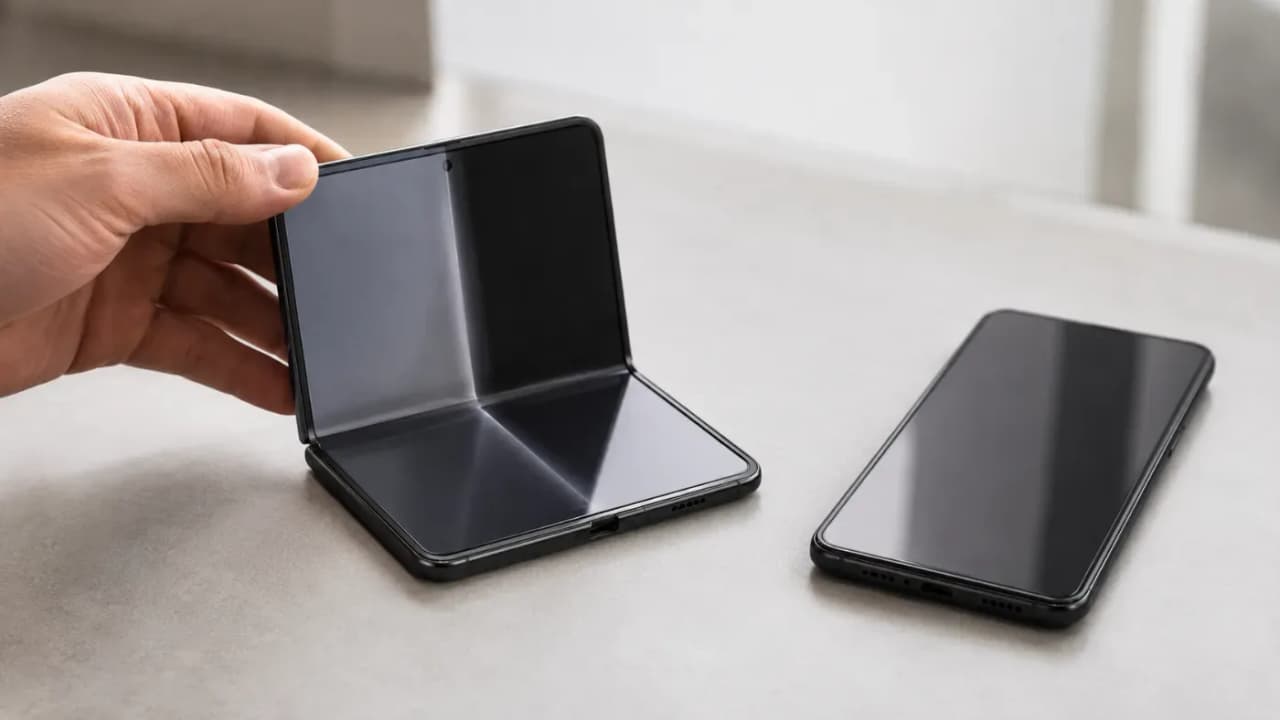
A normal smartphone has a flat screen. A foldable phone has a visible line where the screen bends. You can often spot this crease when light hits the display at certain angles. Many buyers also worry about opening and closing the phone thousands of times over the years. Will it damage the screen? Will it wear out the hinge?
Samsung knows about these worries. Sunghoon Moon, a senior executive who leads Samsung's mobile display strategy. He said the company focuses on fixing the problems users complain about the most. In simple words, Samsung knows the crease has stopped many people from buying a foldable phone.
Also Read | Samsung TV Plus launches ‘Kings of Comedy’ Channel in India
What Exactly Is Flex Titanium?
Strip away the marketing. Flex Titanium Technology comes down to two new layers under the OLED panel.
The first is a titanium alloy film. It sits right under the display and supports it from within. Samsung says this film is about 30 % the thickness of a human hair. Yet it offers close to 20 times the strength of the plastic film used in older foldables. Being thin and strong at the same time is hard to achieve. That is the core claim here.
Below that sits a titanium plate. This part stays flexible enough to bend thousands of times without cracking. Samsung does this using tiny holes cut into the plate, called micro patterned holes. Kyung Jin Yoo leads mobile display product development at Samsung Display. He explained that this hole pattern lets the plate bend at the crease. At the same time, it stays tightly bonded to the display above it. Older foldables had a small air gap between the screen and its support layer. That gap was part of what created the visible dip. Flex Titanium Technology removes this gap.
The result, Samsung says, is a display that looks flatter when open. It feels sturdier when you press on it. And it does not make the phone thicker.
Can It Finally Fix Foldables' Biggest Weakness?
This is where outside testing helps. Company claims on launch day are one thing. Real world durability is another.
Tom's Guide got a look at the internal stress tests Samsung ran before this announcement. The panel was folded 500,000 times at room temperature. It was folded another 60,000 times at minus 4 degrees Fahrenheit. It was folded 300,000 more times at 140 degrees Fahrenheit. This covers both freezing and very hot conditions a phone might face. In another test, a steel ball weighing 21.7 grams was dropped from up to 50 cm onto the screen. Samsung says the surface did not scratch.
These numbers do not mean the screen cannot break. But they do show Samsung pushed harder on durability testing this time. Older foldables often had scratches and screen protector complaints within months of purchase. If the crease is truly less visible and the panel holds up over time, Flex Titanium Technology solves the two biggest reasons people avoid foldables.
The honest answer right now is that we will only know for sure once buyers use the Z Fold 8 series after the July 22 launch. Lab tests happen in controlled settings. Daily life in a pocket or bag does not.
Also Read | Samsung Galaxy Book 6 Series Launched in India: AI PCs with Intel Core Ultra, RTX 5070
Why This Matters Beyond Samsung
Samsung does not just build phones. It also makes displays that other companies buy. This part of the story has been mostly missed by other outlets.
Samsung Display has reportedly signed a long term deal to supply the folding screen for Apple's first foldable iPhone. This phone is expected later in 2026. If Flex Titanium Technology, or something like it, ends up in that screen, Samsung would be setting the standard for the whole industry. That includes its biggest rival.
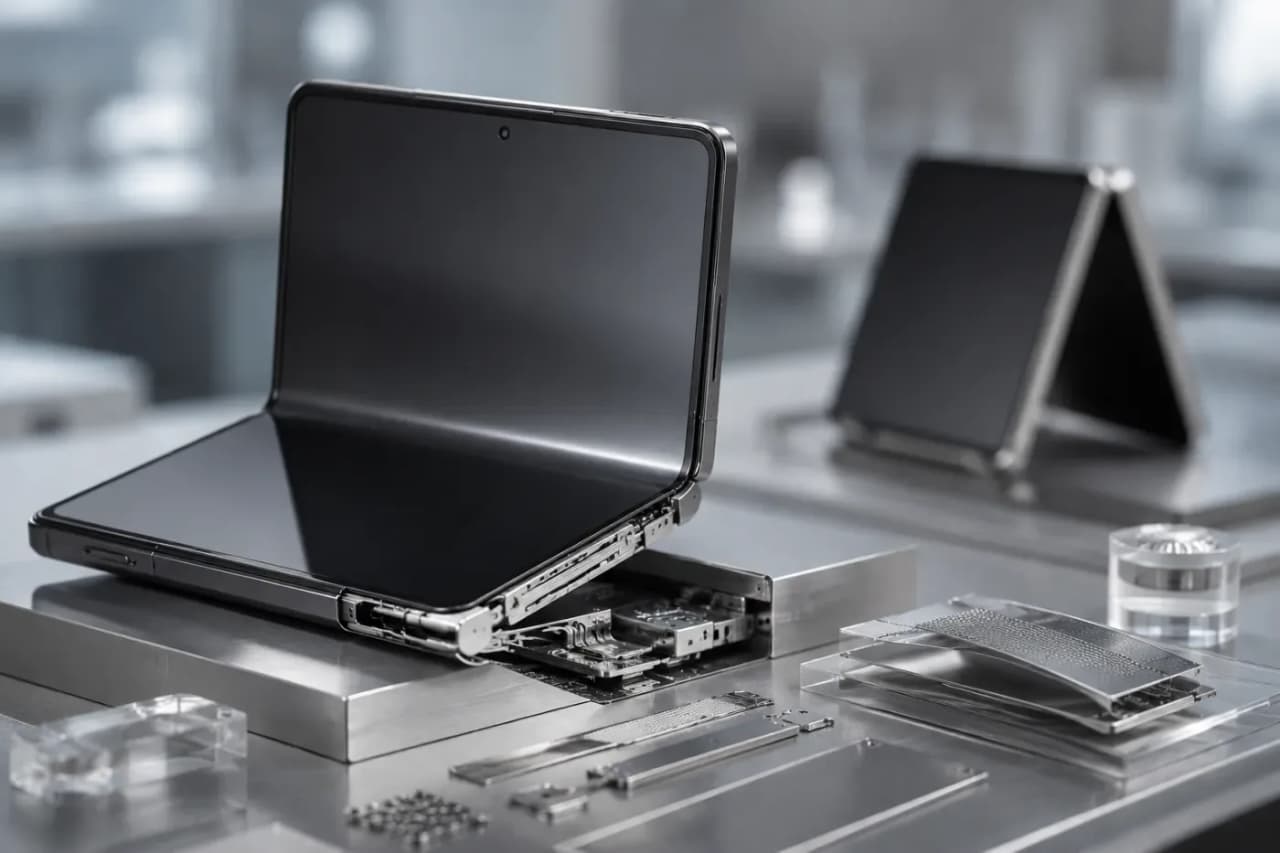
There is also a manufacturing side to this that few have noticed. Working with titanium at these thin levels is hard. Titanium resists rust and is strong for its weight. But it is harder to roll into thin films than plastic. It also does not stick to adhesives as easily. Samsung engineers solved this bonding problem using the micro patterned hole design. This shows real engineering work went into it, not just a new name for an old part.
This launch also comes at an important time. The whole foldable category needs to prove it is more than a niche product. Global shipments are expected to grow sharply in 2026. A big reason is Apple's expected entry into the market. If Apple's foldable falls short on the crease while Samsung's does not, it could change which brand buyers trust first in this category.
What It Means for Indian Buyers
India has long been a market where Samsung leads in foldables. It has held a large share of foldable sales in the country in past years, well ahead of rivals like Motorola, Oppo and Tecno. Motorola has been gaining ground lately. It grew its India share even as the overall premium phone market slowed in early 2026. This growth came mostly from low pricing on its Razr series.
For Indian buyers, Flex Titanium Technology matters for a practical reason, resale value and repair cost. Foldable screens are expensive to replace in India. Repairs can cost tens of thousands of rupees outside warranty. A more durable screen lowers this risk. If Samsung also keeps prices steady, this could speed up a shift experts have expected. Foldables could move from a niche product to a real flagship choice for more buyers.
There is a catch though, timing and price. Samsung's newer foldables usually launch in India a few weeks after the global event. And titanium is not a cheap material to use at scale. Buyers should watch the actual India price closely once it is announced. Do not assume the global price will match the India price.
Also Read | Samsung’s New AI Browser Goes Beyond Mobile, Introduces Agentic AI Experience
Is Hardware Becoming Samsung's Biggest AI Strategy?
Google, Apple and Chinese brands keep pushing AI features as their main selling point. Samsung's Flex Titanium Technology announcement is a reminder that the company still bets heavily on hardware. Samsung has AI features too. But its foldable strategy this year is led by a materials story, not a list of AI tools.
This is a clear contrast. AI features across brands are starting to look similar. Camera processing, on device summaries, translation tools, most brands now offer these. A better hinge and a flatter screen are harder to copy overnight. Samsung likely knows that durability and design are areas where it can still lead. This edge may last for the next generation or two.
Should You Buy a Foldable Now, or Wait?
If you already own a foldable and want to upgrade, it makes sense to wait for the Z Fold 8 series. Let independent reviews on crease and durability come out after July 22.
If this is your first foldable, patience is still the safer choice. Flex Titanium Technology is a promising change. But promising and proven are two different things. Let the first wave of real world reviews come in. Watch for any early durability complaints. Wait two to three months before you buy in this price range.
Also Read | AI Chip Boom Pushes Samsung to $1 Trillion, Raises Consumer Electronics Price Concerns
The Bigger Question
Is Flex Titanium Technology a real breakthrough? Or is it just the next yearly upgrade in a category that needs fresh headlines? The honest answer sits somewhere in between. The engineering behind removing the air gap and thinning the support film is real. It is backed by test data, not just marketing words. Whether it holds up after two years of daily folding is something only time will tell.