

Key Summary
- Earth crossed 1.5°C of warming for an entire calendar year for the first time in recorded history in 2024.
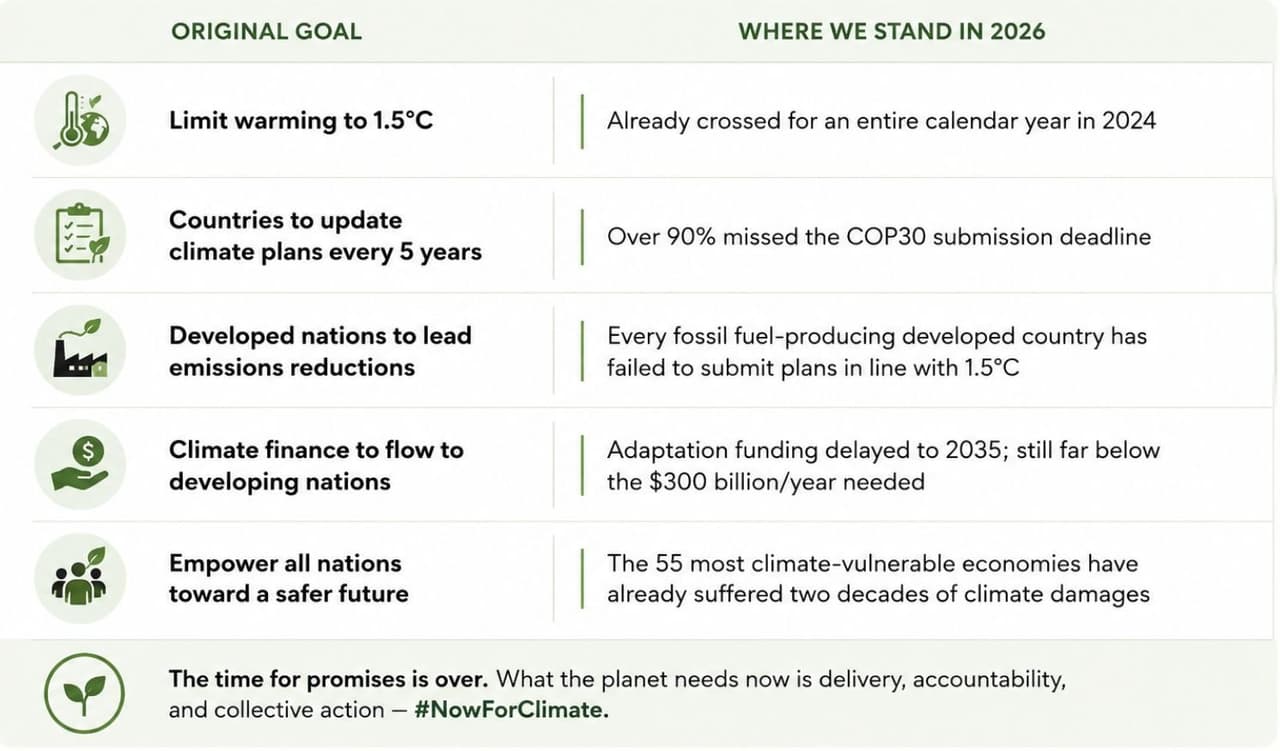
- 195 nations signed the Paris Agreement, but a decade later emissions are still rising and 90% of countries missed their COP30 deadlines.
- Oceans, glaciers, wildfires, and heatwaves are no longer future warnings - the damage is happening right now.
- UNEP's World Environment Day has driven real wins like ozone layer recovery, but the gap between promises and action has never been wider.
- India is stepping up with initiatives like Mission LiFE, the International Solar Alliance.
Climate change is a global emergency that goes beyond national borders. It is an issue that requires international cooperation and coordinated solutions at all levels.
For the first time in recorded history, the planet crossed 1.5°C of warming for an entire calendar year and the world's response was, largely, to carry on.
By March 2026 environmental disasters had already struck almost every corner of the earth - Kenyan Floods dozens of fatalities were reported, Chilean Wildfires, Flooding across South Africa, Zimbabwe, and Mozambique. This is no more a theoretical risk.
We Promised. We Failed!

Christiana Figueres, Executive Secretary of the UN Framework Convention on Climate Change; UN Secretary-General Ban Ki-moon; Laurent Fabius, Minister for Foreign Affairs of France and President of the UN Climate Change Conference in Paris (COP21); and François Hollande, President of France celebrate after the historic adoption of Paris Agreement on climate change. Paris Agreement
The Paris Agreement: A Historic Promise Under Pressure
On December 12, 2015 - Paris: World Leaders reached a historic breakthrough at the UN Climate change Conference “The Paris Agreement” setting long-term goals to:
- Reduce global greenhouse gas emissions to keep temperature rise well below 2°C and strive to limit it to 1.5°C, helping minimize the impacts of climate change.
- Regularly review global progress towards achieving climate goals and commitments.
- Support developing countries with funding to reduce emissions, strengthen resilience, and adapt to climate change impacts.
The Agreement is a legally binding international treaty. It entered into force on 4 November 2016. Today, 195 Parties (194 States plus the European Union) have joined the Paris Agreement.
Legally it was the most unified act of responsibility, from the world's largest economy to the world's smallest economy all signed their name to share a better future. But the signatures are not the same as action.
Also Read | Important Days in June 2026: Full List, History, Significance, and What to Expect?
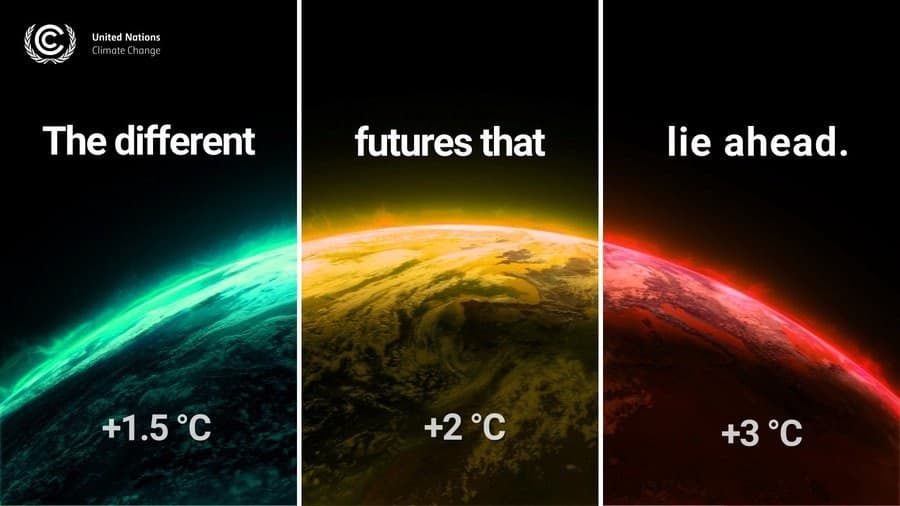
Source: UN
How Nationally Determined Contributions Work?
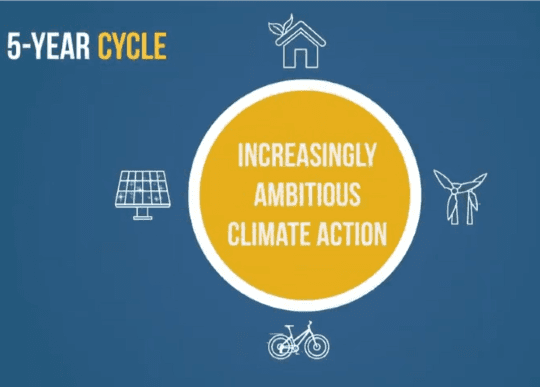
The Agreement works on a 5-Year cycle. Every five years, each country is expected to submit an updated national climate action plan known as Nationally Determined Contribution, or NDC.
In their NDCs, countries communicate actions they will take to reduce their greenhouse gas emissions in order to reach the goals of the Paris Agrement. Countries also communicate in the NDCs actions they will take to build resilience to adapt to the impacts of rising temperatures.
Promise vs. Reality
The reality of the Paris Agreement is a paradox of historically successful policy and physical climate failure. While the treaty successfully mobilized record-breaking clean energy investments and shifted the global economic trajectory, global emissions remain dangerously high, and humanity is set to cross the 1.5°C warming threshold.
The year 2024 was the warmest year in the 175-year observational record, with a global mean near-surface temperature 1.55°C above the 1850–1900 average.
The World Is Missing Its Climate Targets
- Global CO2 emissions, largely from fossil fuels, continue to rise and are reaching record level
- At the current rate of emissions, the remaining carbon budget for limiting warming to 1.5°C with a 50% chance around 250–275 billion tonnes of CO2 will be depleted by 2030
- Every additional 0.1°C of warming causes clearly visible increases in the intensity and frequency of extreme heat, precipitation, and droughts.
- In 2024, disasters triggered a record 45.8 million internal displacements, of which 99.5% were caused by weather-related hazards.
- The 55 most climate-vulnerable economies have already experienced climate damages over the last two decades
- Many climate impacts - including sea-level rise and ocean acidification are essentially permanent for many generations.
Also Read | World No Tobacco Day 2026: Why the Fight Against Youth Nicotine Addiction Is More Urgent Than Ever!
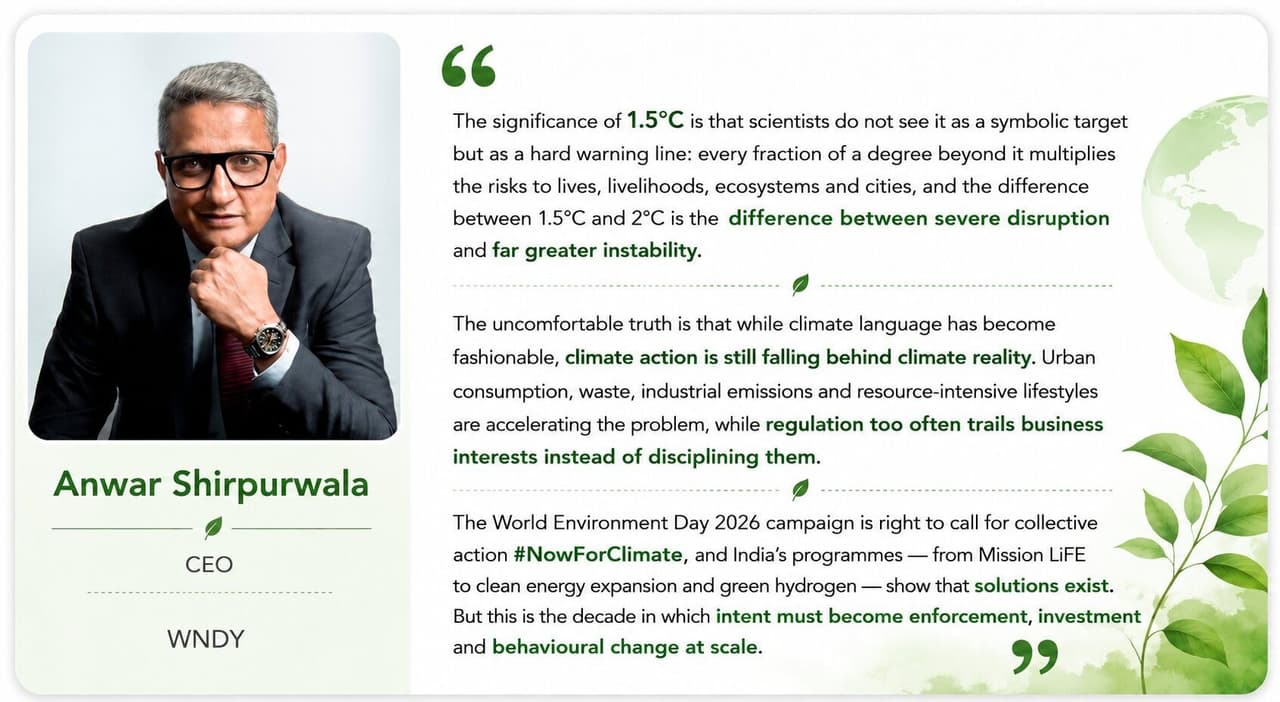
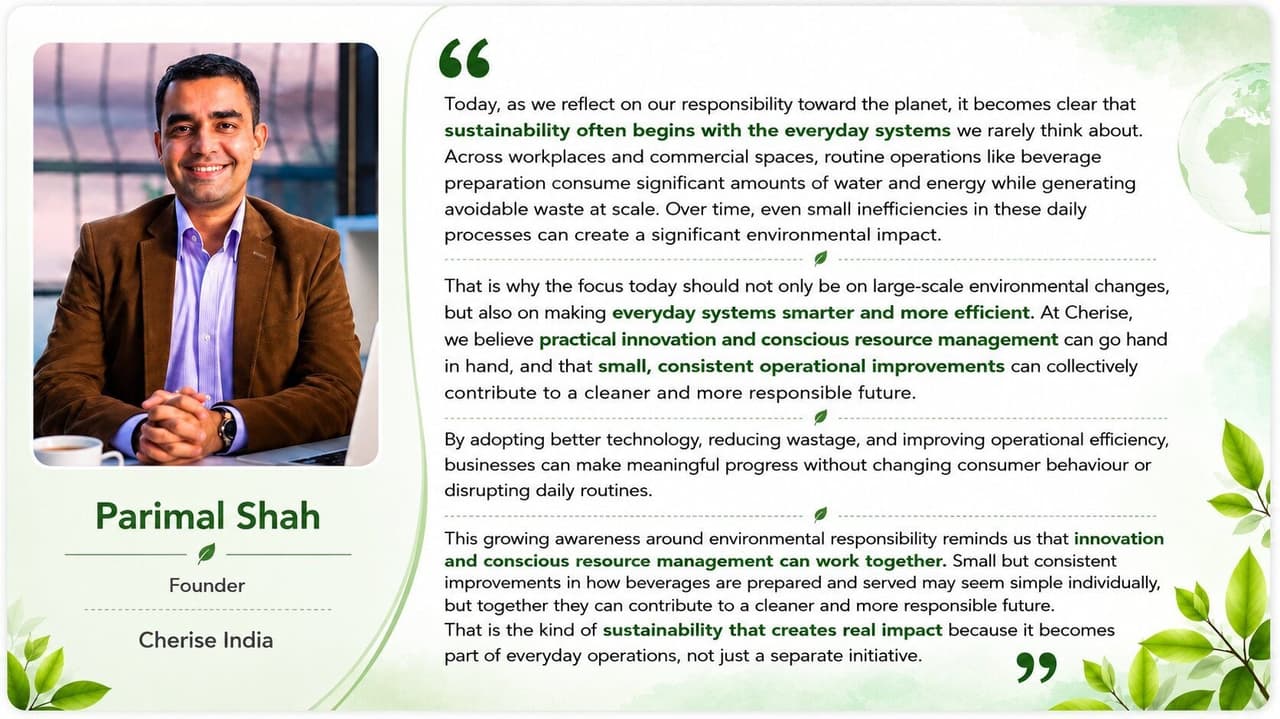
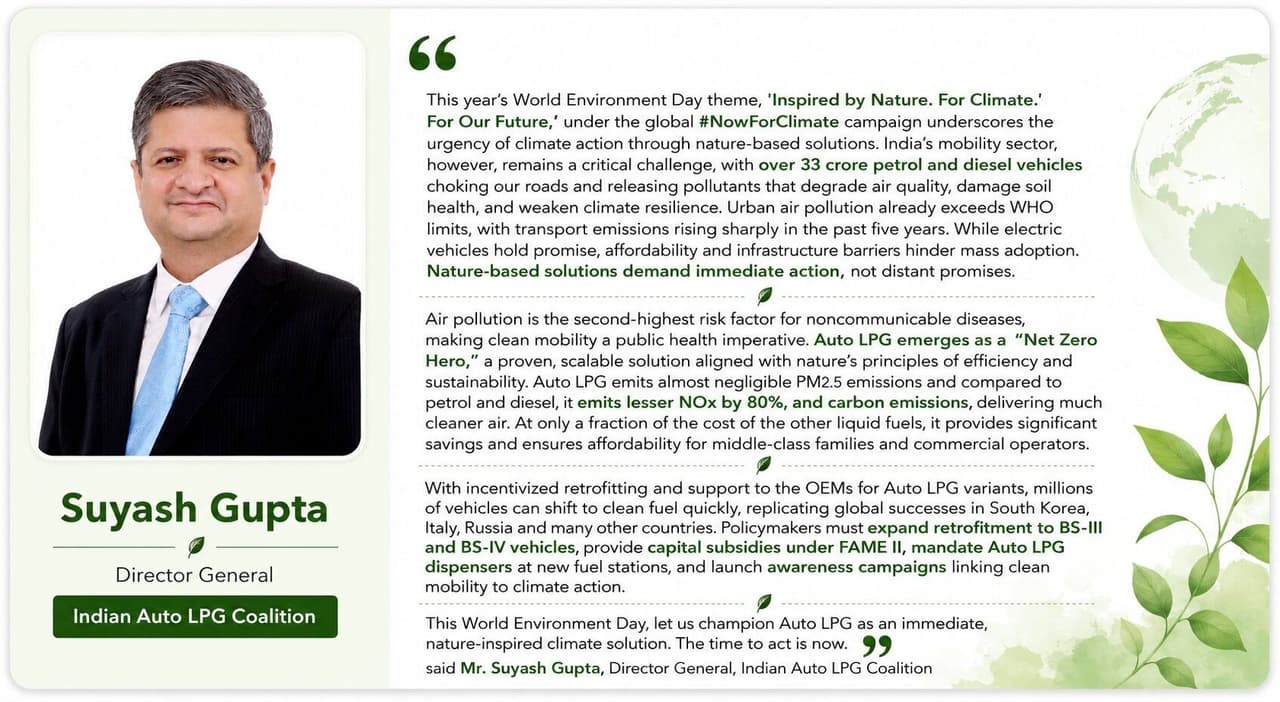
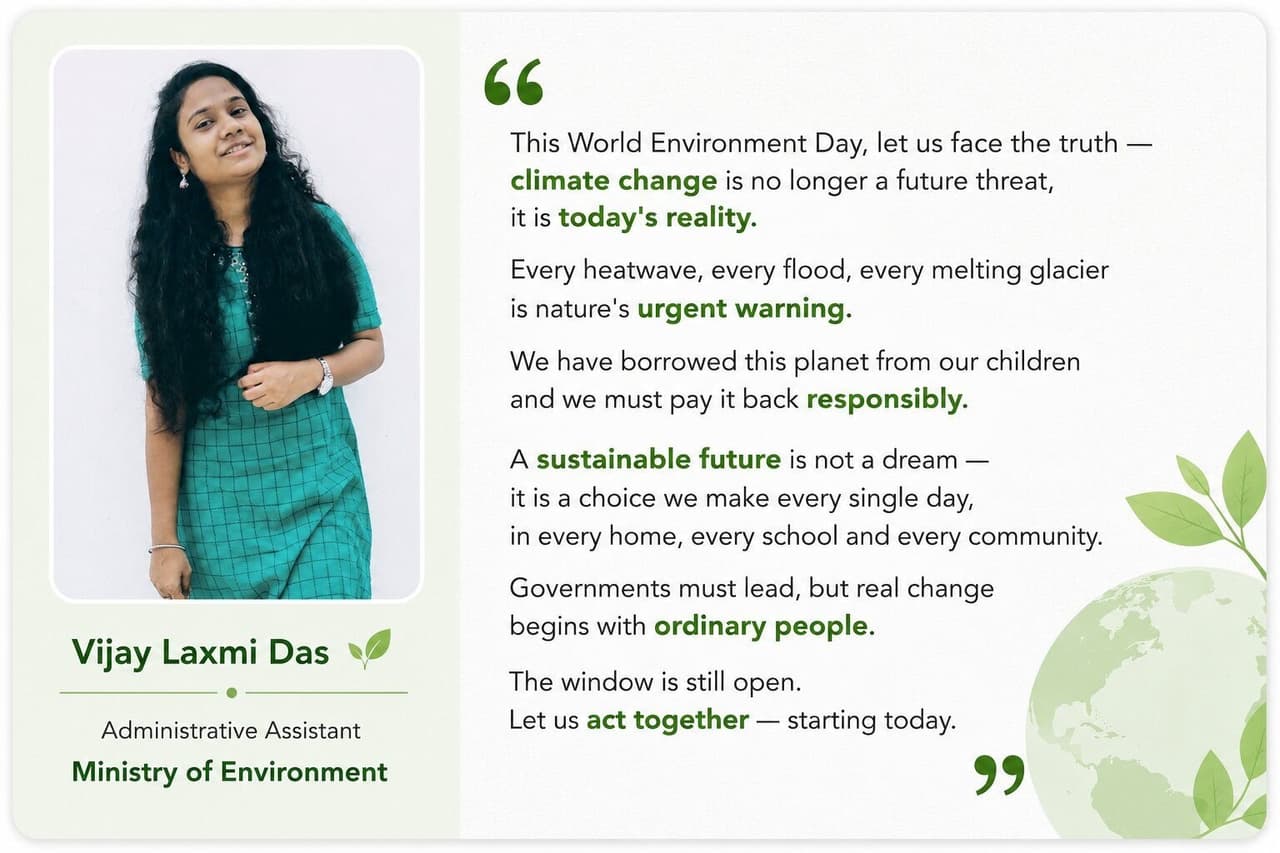
Industry Voices on Climate Responsibility
Evidence of Climate Breakdown We Can No Longer Ignore
The data below is not the forecasting, it is what is recorded in the present.
Oceans: World’s largest absorber is reaching its limit
Oceans absorb around 29% of all carbon dioxide released by human activities between 2015-2024 which eventually make them warmer and more acidic and unkind to marine life. For over a century oceans have been doing humanity.
Despite La Niña conditions around 90% of the ocean surface experienced at least one marine heatwave in 2025. Warmer oceans come at a price, fuelling stronger tropical cyclones, exacerbating ongoing sea-ice loss in the polar regions and stressing marine ecosystems.
Ice loss is accelerating at both poles and in glaciers
- Arctic sea ice remains near record low
- Antarctic is 3rd lowest on record
- Glaciers continue rapid retreat with major losses in Iceland and western North America.
- Sea level rise in 2025 was around 11 cm higher than 1993 levels
Wildlife Fire: The New Normal
There were days when wildfire was seasonal with a predictable window of risk that people could prepare for but the era ends. Wildfires are now common and are growing with every degree of warming.
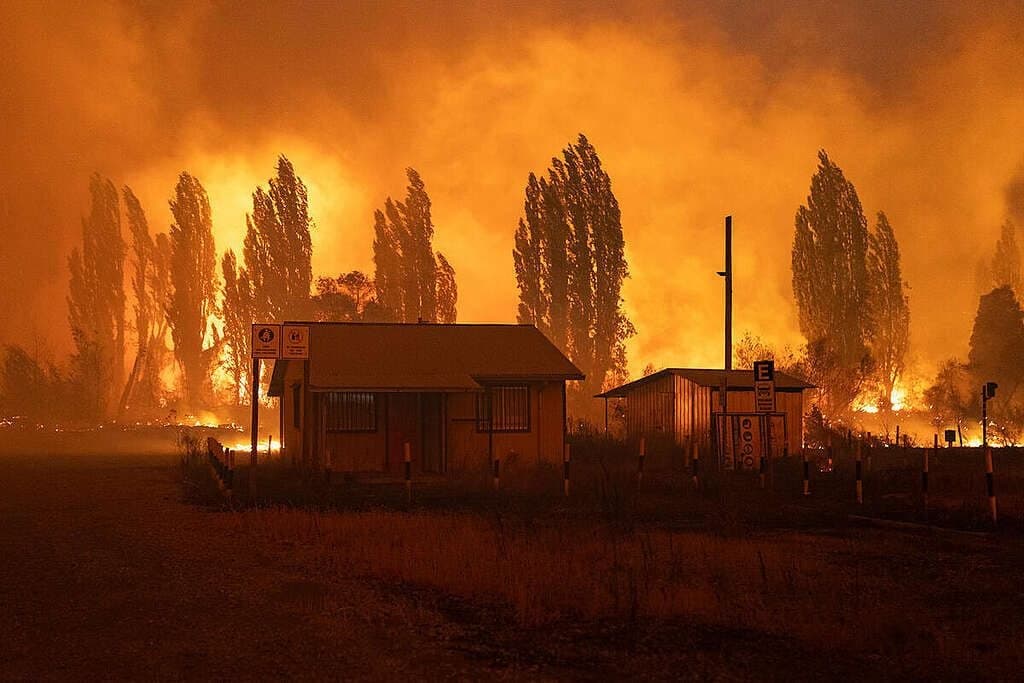
In the 2025–2026 wildfire season alone, Chile recorded more than 3,000 wildfires, with the total burned area running 193% higher than the previous season.
Forest fires in Chubut province (Patagonia, Argentina), burned 30,000 hectares of forests.
Heat that is killing people
Out of all the consequences of climate, heat death is the most undercounted and un-reported. People die in poorly ventilated homes & chaotic suffocated hospital wards.India’s heat-related mortality data reveals a questionable contrast between official government reports and recent public health research. A recent study by UC Berkeley researchers estimates that a single day of extreme heat causes about 3,400 excess deaths, and a five-day heatwave causes nearly 30,000.
Reading back through everything talked above - glaciers, the coral bleaching, flood, wildfires and heat death turning it into emergencies. The question arises, who’s responsible?

The answer traces back to a conference held centuries ago in Sweden, Stockholm in 1972 “The United Nations Conference” on the human environment. It placed environmental issues in front of international concerns and marked the beginning. One of the most significant outcomes was UNEP - United Nations Environment Programme established in December 1972.
UNEP and World Environment Day: From Awareness to Action
When UNEP established World Environment Day to:
- Give a human face to environmental issues that were being treated as technical or political abstractions
- Empower individuals and communities to become active agents of environmental and sustainable change and not just observers.
- Build the understanding that local communities are central to shifting global attitudes on the environment.
- Advocate for international partnerships ensuring that all wealthy and vulnerable nations alike can work together towards a safer and sustainable future.
The first slogan used by the United Nations Environment Programme (UNEP) for World Environment Day was "Only One Earth".
Goals Achieved
The UNEP’s framework has contributed to genuine progress and that deserves recognition. The Montreal Protocol - widely regarded as the most successful environmental agreement in history.
The Motreal protocol is the landmark international environmental treaty adopted on September 16, 1987 and was designed to protect Earth’s Ozone layer. The ozone layer is recovering. That is a direct result of coordinated global action under UNEP's umbrella.
Renewable energy transitions, reforestation commitments, marine protected areas, and plastic pollution awareness have all been accelerated and are at least in part by the annual global spotlight that World Environment Day creates.
The Goals Set. The Gaps Left.
India’s Green Push Against Climate Change
Mission LiFE (Lifestyle for Environment)
- A global movement encouraging citizens to adopt environmentally responsible habits in their daily lives.
- Promotes sustainable consumption and reduced waste.
- Encourages water and energy conservation.
- Focuses on behavioural change as a tool for climate action.
- Seeks to make environmental responsibility a people's movement.
Renewable Energy Expansion
- India increased investments in clean energy to reduce dependence on fossil fuels.
- Rapid growth in solar and wind energy capacity.
- Supports India's net-zero emissions target by 2070.
- Reduces carbon emissions while improving energy access.
- Positions India among the world's leading renewable energy markets.
International Solar Alliance (ISA)
- Global coalition launched by India and France
- Brings together countries to accelerate solar deployment.
- Supports clean energy access in developing nations.
- Encourages international cooperation on climate solutions.
- Helps reduce dependence on conventional energy sources.
National Green Hydrogen Mission
- Promotes clean fuel alternatives for heavy industries.
- Supports decarbonization of sectors difficult to electrify.
- Encourages innovation and investment in green technologies.
- Contributes to long-term energy security.
Swachh Bharat Mission
- One of the world's largest cleanliness and sanitation campaigns.
- Improved sanitation infrastructure across urban and rural India.
- Increased awareness around waste management.
- Encouraged community participation in cleanliness drives.
- Contributed to healthier and cleaner living environments.
Together, these initiatives and many others reflect India's approach to addressing environmental challenges through policy, technology, international cooperation, and citizen participation.
Summing It Up
The crossing of the 1.5°C threshold is not just a climate statistic; it is a global warning. The world has seen what coordinated action can achieve through milestones such as the Montreal Protocol and ozone layer recovery. But today’s climate crisis demands the same seriousness at a far greater scale.
The Paris Agreement created a framework for action, but frameworks alone cannot cool the planet. Governments must strengthen enforcement, industries must reduce emissions, financial systems must support climate resilience, and citizens must adopt sustainable choices in everyday life. India’s green initiatives show that climate action can become a people-led movement when policy and public participation work together.
The window for action is still open, but it is narrowing. The future will depend not on what the world has promised, but on what it does now.
Sources:
https://www.un.org/en/climatechange/paris-agreement
https://www.un.org/en/climatechange/science/climate-issues/degrees-matter
https://www.rmets.org/metmatters/state-global-climate-2025
https://www.thehindu.com/sci-tech/health/one-day-of-extreme-heat-causes-3400-excess-deaths-across-india-study-estimates/article71036585.ece