

A UPSC aspirant in Patna typed a tough polity question into a chatbot last month. Just to check her own answer. The bot replied in four seconds. Her own notes had taken three weeks to prepare. Something has shifted in India's exam culture. For decades, cracking UPSC, JEE, NEET or CAT meant memorising more than the next person. That edge is fading fast. Any student with a phone can now ask an AI model a question and get a clear answer in seconds. No coaching fee. No waiting for a mentor's free slot. Just an answer, instantly.
This is not a future problem. It is showing up in classrooms, coaching centres and question papers right now. Teachers are noticing it. Parents are noticing it too, even if they cannot always name what has changed.
India’s response is also moving beyond examination reform. The Ministry of Education has announced the introduction of an AI curriculum from Class 3 onwards. That creates a second reform challenge: assessments must evolve alongside AI literacy, so students are taught not only how to use these tools but also how to question, verify and explain their outputs.
AI Knows the Answers, So What Should Students Be Tested For?
A 2025 UK survey found that 88% of undergraduates had used generative AI for assessed work, up from 53% in 2024. By 2026, that figure had risen to 94%, while 95% reported using AI in at least one aspect of their studies. The share directly inserting AI-generated text into assessed work also increased from 3% in 2024 to 8% in 2025 and 12% in 2026.
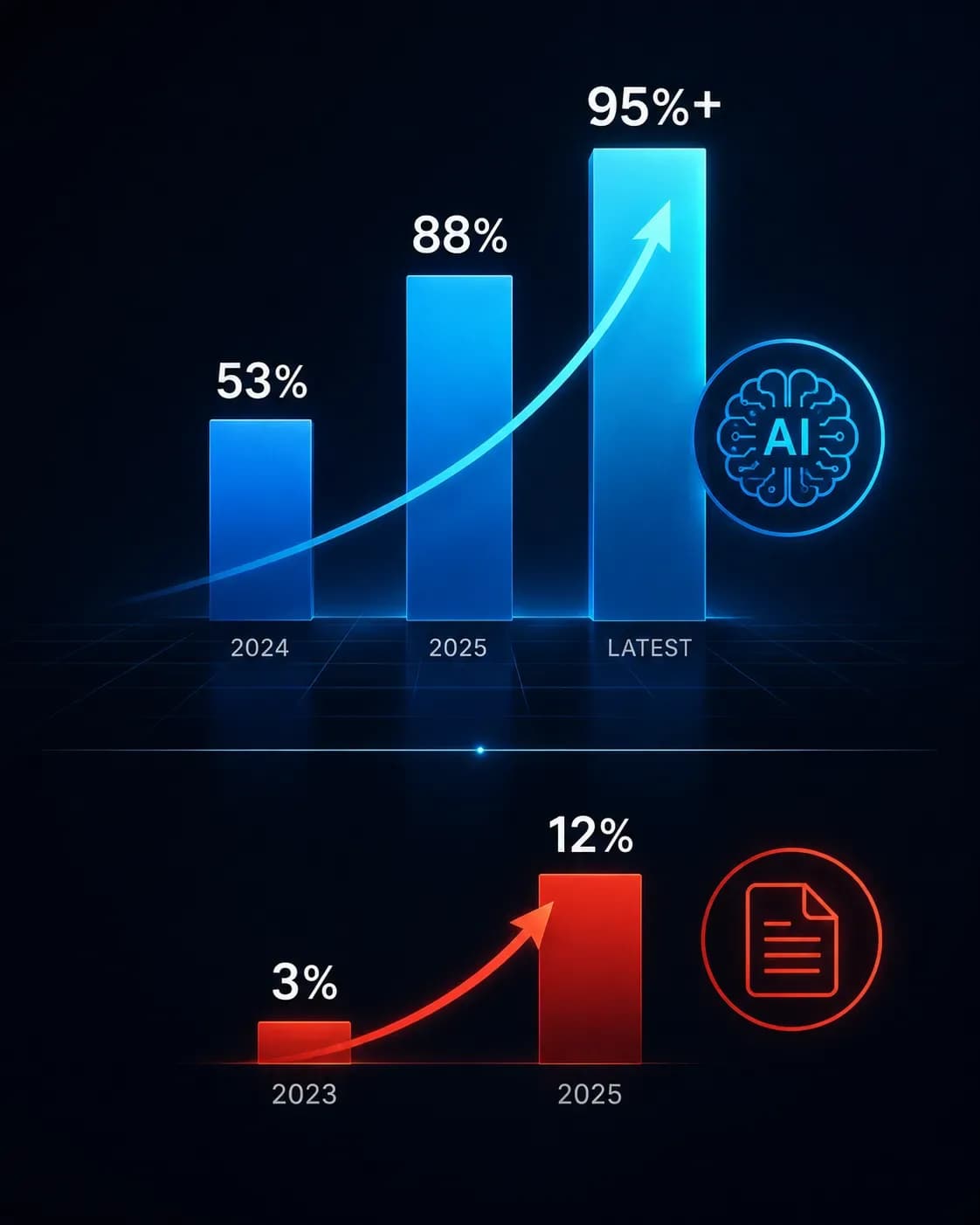
If a machine can write a strong answer in seconds, testing recall stops making sense. What still matters is judgement. Can a student weigh two conflicting facts? Can they spot a weak argument? Can they hold their nerve under pressure? AI still struggles to fake this.
AI systems can retrieve and summarise factual information rapidly, although their answers still require verification. Their larger weakness appears when a task demands contextual judgement, defensible reasoning or an explanation grounded in unfamiliar evidence.
Also Read | PMO NEET JEE Reforms 2026: What Centre’s Exam Reform Push Means for Students?
Why India's Biggest Exams Were Designed for a Different Era
UPSC, NEET, JEE and most state exams were designed decades ago. Back then, information was hard to find. A student's edge came from access, a good library, a strict teacher, a well-marked textbook. Students had to read books, remember facts, and write fast under time pressure. That process alone filtered out the unprepared. That filter is breaking down. Coaching platforms now sell AI tools for UPSC current affairs.
Others use AI for JEE doubts or NEET revision. Students use tools like Perplexity and Notion AI to do in weeks what once took months. Some aspirants now use AI to build their own mock test papers overnight, something that once took a coaching institute's entire faculty team days to prepare.
The exam has barely changed. The way students prepare for it has changed completely. That gap is the real story here, and it is only getting wider each admission cycle.
From UPSC to JEE: How AI Could Reshape Every Major Entrance Test
India has started to respond, quietly. Under the National Education Policy 2020, In line with the National Education Policy 2020, PARAKH was established under NCERT as India’s national assessment regulator to help move school assessments towards competency-based learning.
Haryana, Chhattisgarh, Himachal Pradesh, Nagaland and Uttarakhand have all built new question banks. These focus on competency, not memory. CBSE is doing the same, slowly raising its share of application-based questions. This is not a small tweak. A competency question does not ask a student to name a law. It asks them to apply that law to a new situation. That is something no memorised answer can fake.
Think of it this way. An old-style question might ask a student to define a constitutional article. A competency-based one hands the student a real-world scenario and asks how that same article would apply. One tests memory. The other tests understanding.
UPSC's Mains papers have leaned this way for years already, through its long-form answer format. What is new is this thinking now spreading down to Class 10 and Class 12 boards, years before students even reach competitive exam territory.
Also Read | AI Robots Are Getting Smarter Every Month. Here Is What It Means For India
AI-Proof Questions Are Coming. Here Is What They Look Like
Universities abroad tried two fixes. The first was detection software. It failed. Australia's regulator TEQSA said in 2025 that catching AI-written answers is now "all but impossible." It told colleges to stop relying on detection tools altogether.
The second fix works better. Redesign the test itself. American and Canadian universities have brought back handwritten exams. Oral vivas are returning too. A live conversation is much harder to fake than a written paragraph, since it forces a student to think on the spot, with no chance to paste in a borrowed answer.
Some Indian coaching centres have quietly copied this. They now run mock interviews and scenario rounds, well before UPSC or NEET make it official. A few have started timing how fast a student can explain their own reasoning out loud, not just how fast they can write it down.
Can AI Make Exams Fairer, or Just Create a New Divide?
Something real has changed in India's small towns. A student in Bihar or Chhattisgarh can now ask a free AI tool the same doubt a Kota mentor once charged lakhs to solve. Explanations that once needed expensive coaching are now a phone screen away. The old gap between a coaching hub and a small-town home feels smaller than before. But a new gap is quietly opening. Fast internet, a good device, and the skill to ask AI the right question. These have become invisible entry tickets to success. Two equally sharp students can score very differently now. Not because one works harder. But because one gets a better AI answer, and the other cannot even load the app twice before it times out.
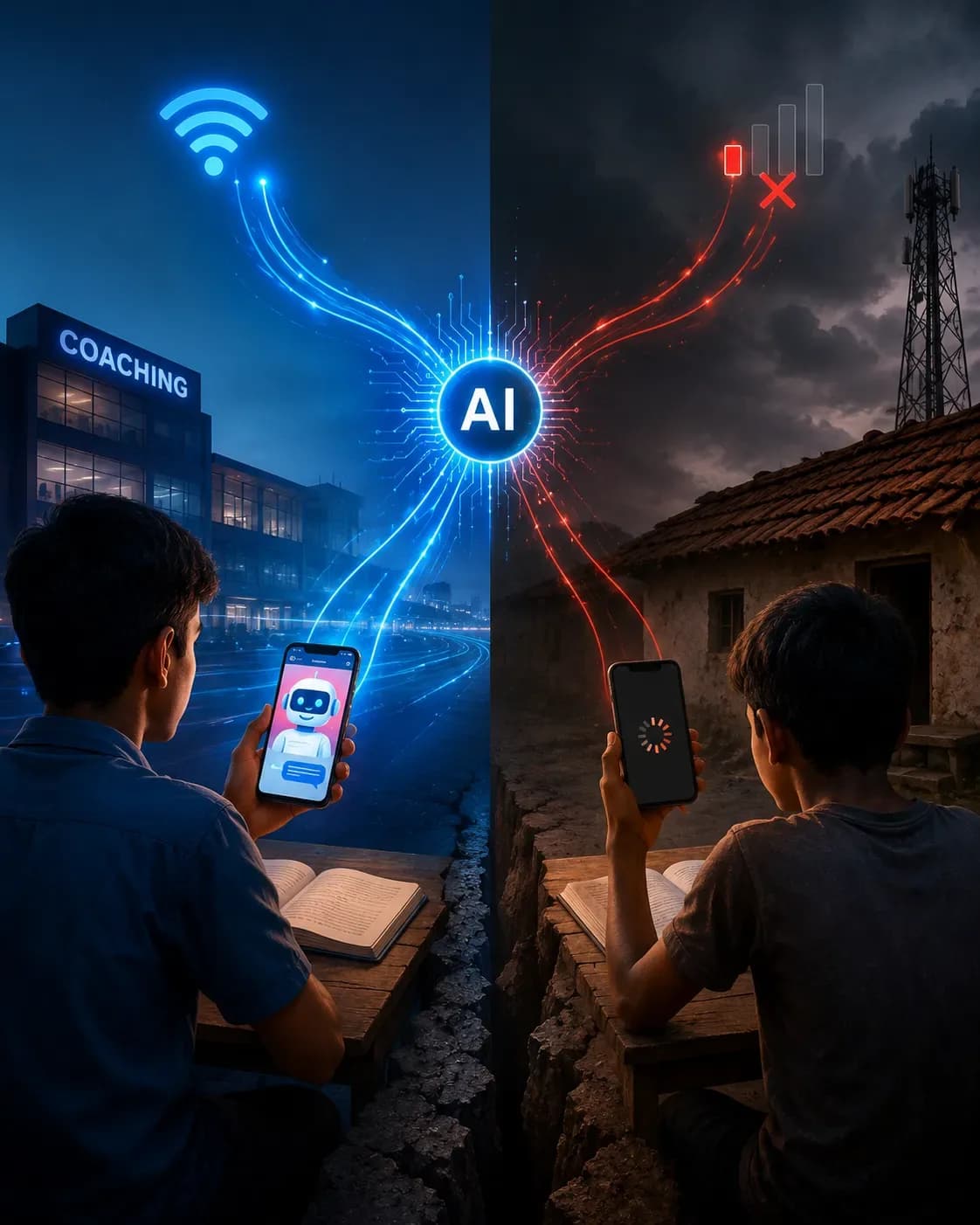
A patchy mobile network in a small district can now cost a student more than a weak textbook once did. That is a strange kind of unfairness, one that has nothing to do with talent and everything to do with infrastructure. AI fixed one of India's oldest exam gaps. In doing so, it opened a new one. Harder to see. Easier to ignore.
The real question for 2026 is not whether AI helps fairness. It is who still gets left behind.
Also Read | From Gurukuls to Generative AI: India’s Education Evolution Story
What an AI-Era Competitive Exam Could Look Like by 2035
Finland has already added AI literacy to its school curriculum. Students there are taught to question AI answers, not trust them blindly. Singapore is doing something similar through a 2030 education plan, one that leans harder into oral and applied tests. Its national exams board has also been restructuring how oral rounds are conducted, treating spoken assessment as a core part of the system, not an afterthought. Picture a UPSC Mains paper a decade from now. It could pair a live interview with a fresh scenario the candidate has never seen. JEE and NEET could shift toward adaptive testing, where each question changes based on the last answer. The GMAT already works this way, adjusting question difficulty in real time as a candidate answers. None of this is confirmed policy yet. But the direction is clear. Future exams will test how a mind works, not how much it has stored.
What Mainstream Coverage Has Missed
Most reporting stops at the obvious story. Cheating. Detection software. Banned apps. Blue books making a comeback. That is only half the picture. The deeper story is about India's coaching economy. It is worth thousands of crores. Most of it is built on helping students memorise faster than their peers. If exams shift toward judgement over recall, that entire business model has to change too. Very few coaching chains have said this out loud, since admitting it means admitting their own product needs to change.
There is a quieter problem too, and almost nobody is tracking it. As boards roll out competency-based question banks, teachers in rural schools are being asked to teach a completely new kind of question. Many have had no training for it.
PARAKH's own rollout is happening state by state. That means a student's readiness for this shift may depend on nothing more than which state board they happen to study under, an accident of geography deciding exam readiness. One more gap in the coverage. What happens to India's interview rounds, the ones used in UPSC and state services, once AI can coach a candidate on exactly what a panel is likely to ask? A candidate could now walk into an interview having rehearsed against an AI model trained to sound like a real panel. Nobody has really asked that question yet.
Also Read | Punjab Govt Schools To Teach AI From Next Month: Big Opportunity For Students, Bigger Test For Classrooms
Why This Matters
This is not a story about exams getting harder or easier. It is about what India chooses to reward in its young minds. If exams keep testing memory alone, they keep measuring something a machine already does better. If they shift toward reasoning and judgement, they measure something AI cannot replace.
For the millions of families who see UPSC, NEET, JEE and CAT as a ticket to a better life, this shift decides everything. How they prepare. How much coaching actually helps. And who gets a fair shot, regardless of city or income. A reform that looks small on paper, a new question format here, a revived oral round there, can end up deciding which student gets to change their family's future.
News4Bharat POV
India has already identified the right direction through NEP 2020, PARAKH and the expansion of competency-based assessment. The larger risk is uneven implementation. If question papers change faster than teacher training, school infrastructure and affordable AI access, a reform designed to reward thinking may end up rewarding privilege.
The real test, therefore, is not whether India can redesign its examinations. It is whether every student is equipped to succeed in the redesigned system.