

Skyroot Aerospace, a Hyderabad company is set to fly Vikram-1, India's first privately built orbital-class rocket, at 11:30 am today from the First Launch Pad at the Satish Dhawan Space Centre (SDSC-SHAR) in Sriharikota. The mission is named Aagaman, Sanskrit for "arrival," and Skyroot is treating it as Test Flight-1.
If Vikram-1 reaches orbit, no Indian private company will have done it before.
What PM Modi said
In his LinkedIn note, he mentioned that this is, "A historic new frontier for India’s space journey!
At 11:30 AM today, Skyroot Aerospace will undertake the maiden orbital launch of Vikram-1, India’s first privately developed launch vehicle.
This four-stage rocket is designed to provide rapid and on-demand launch services. This mission highlights the talent, determination and entrepreneurial spirit of our youth. It also shows how our space-sector reforms are unlocking new opportunities for innovation and enterprise.
My best wishes to the entire Skyroot Aerospace team for a successful launch. May Vikram-1 soar high, create history and inspire a generation of innovators.
I urge all Indians, especially my young friends, to follow this historic mission and join in wishing Team Skyroot success using #IndiaWithVikram1."
Also Read | Skyroot Aerospace Becomes India’s First Space-Tech Unicorn After $60 Million Funding Round
What is Mission Aagaman?
Skyroot has secured all airspace and maritime clearances, with authorities marking out restricted zones along the rocket's ascent and impact corridor. The launch window opened on July 12 and runs through August 4, so the company has room if weather or a technical hold pushes the attempt.
The plan is straightforward on paper and brutal in practice: fly Vikram-1, gather flight data, and deploy customer payloads at an altitude of roughly 450 km in low Earth orbit. Around 200 people, close to one-fifth of Skyroot's workforce, are running the launch operation.
Co-founder and COO Naga Bharath Daka has framed the day as bigger than a single flight, pointing to the roughly 1,000 people, more than 400 suppliers, and nearly 3,000 days of work that went into getting here. His message on the risk is blunt: this is a first test flight, the value is in the data, and the team expects to go back to the shop floor to improve after it.
What makes Vikram-1 different
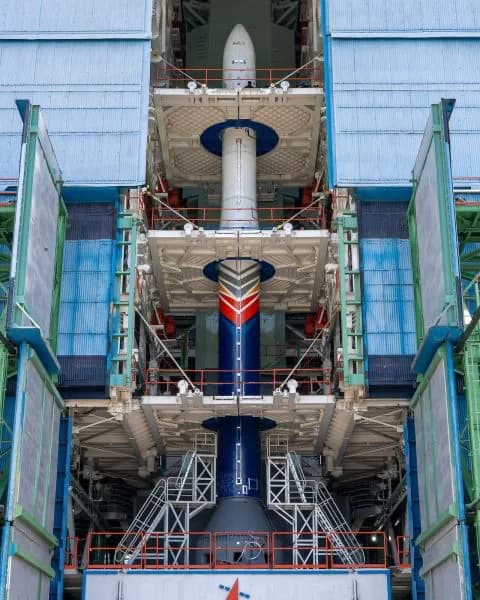
Vikram-1 is a four-stage rocket, about seven storeys tall. Three stages run on solid propulsion, and a liquid-fuelled kick stage, the Orbital Adjustment Module, handles the final precise manoeuvres to place satellites where customers want them.
Two things set it apart. First, it uses an all-carbon composite structure to cut weight. Second, its liquid engine is 3D-printed, which lets Skyroot build faster and cheaper. The vehicle is designed to carry payloads in the 300 kg class to low Earth orbit, with sun-synchronous capacity in the 260 kg range, aimed squarely at the crowded small-satellite market.
Skyroot's pitch is simple. Small satellite operators today mostly hitch rides as secondary cargo on big rockets, on someone else's schedule. Skyroot wants to sell the whole cab. CEO Pawan Kumar Chandana has compared it to booking a taxi instead of waiting for a train.
Also Read | Reusable Rockets Are Changing Space Forever, Here Is Why Every Nation Suddenly Wants One?
The payloads riding on Vikram-1
Aagaman is a test flight, but it is not flying empty. Onboard are:
- SOLARAS S3, a nanosatellite pathfinder from Indian startup Grahaa Space
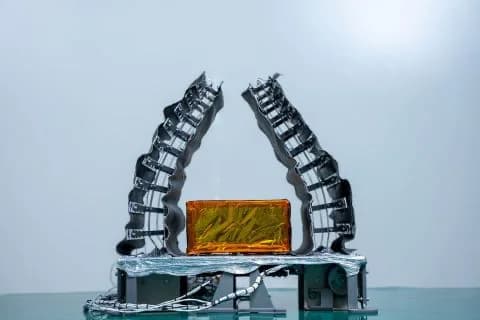
- Embrace, an in-orbit robotic arm built by Indian firm Cosmoserve Space, designed for satellite capture and debris work
- An in-orbit technology demonstration from German company DCUBED
- SCOPE, Skyroot's own satellite, which will collect data on how the rocket performed during flight
- Cosmic Bloom, a micro-art payload by Cosmos Diamonds
From Vikram-S to Vikram-1
Skyroot was founded in 2018 by Chandana and Daka, both former ISRO engineers who worked on the GSLV Mk-III programme before quitting to build rockets privately. That was a bold call at the time, since India had only opened its space sector to private players in 2020, with IN-SPACe set up as the regulator.
The company's first milestone came on November 18, 2022, when its suborbital rocket Vikram-S flew from Sriharikota under Mission Prarambh and reached an apogee of 89.5 km. That made Skyroot the first Indian private firm to send a rocket to space. Vikram-1 is the far harder step: actually reaching orbit.
Adding heft to the effort, former ISRO chairman S. Somanath has come on board as Skyroot's honorary Chief Technical Advisor.
The money behind the rocket
Skyroot is not a shoestring operation any more. In May 2026 it raised $60 million in a round co-led by Sherpalo Ventures and Singapore's GIC, with BlackRock-managed funds, Arkam Ventures, Playbook Partners and the Greenko founders among the backers. That round valued the company at $1.1 billion and made Skyroot India's first space-tech unicorn.
Total capital raised now stands at around $160 million. The company's Infinity Campus in Hyderabad is built to produce one orbital rocket a month, which is the kind of cadence Skyroot will need if it wants to compete with players like Rocket Lab.
Also Read | Mission MITRA: Why ISRO’s Ladakh experiment Matters Beyond One Space Mission?
What comes next
A single successful test does not make a launch company. Skyroot plans more developmental flights of Vikram-1 before moving to commercial service, which the company is targeting for 2027. Chandana has said around 80 per cent of its payload customers are expected to be global.
Beyond Vikram-1, Skyroot is developing Vikram-2, a heavier vehicle with a cryogenic upper stage capable of lifting up to 900 kg to low Earth orbit, with a launch targeted as early as 2027. A larger Vikram-3 is also on the roadmap.
For now, all eyes are on Sriharikota, where a seven-storey carbon rocket built by an eight-year-old startup is carrying a Prime Minister's postcard and a country's ambitions into the count.