

Carl Pei built one of India's biggest smartphone success stories with OnePlus. Then he watched it fall apart - from the outside, after he'd already left the company he co-founded.
Now his new company, Nothing, is chasing that same India growth curve with the Nothing Phone India story. The one that once made OnePlus a household name.
But this isn't just a story about a new brand doing well. It's a bigger question. Can the man behind two smartphone companies avoid repeating a mistake he's already lived through once?
Two Numbers That Tell the Whole Story
According to Counterpoint Research, Nothing grew 105 percent year-on-year in India in Q2 2026. It made Nothing the fastest-growing smartphone brand in the country.
India's overall smartphone market shrank 10 percent in the same quarter. That's its weakest June quarter in six years. Blame record-high memory chip costs and rising component prices across the industry.
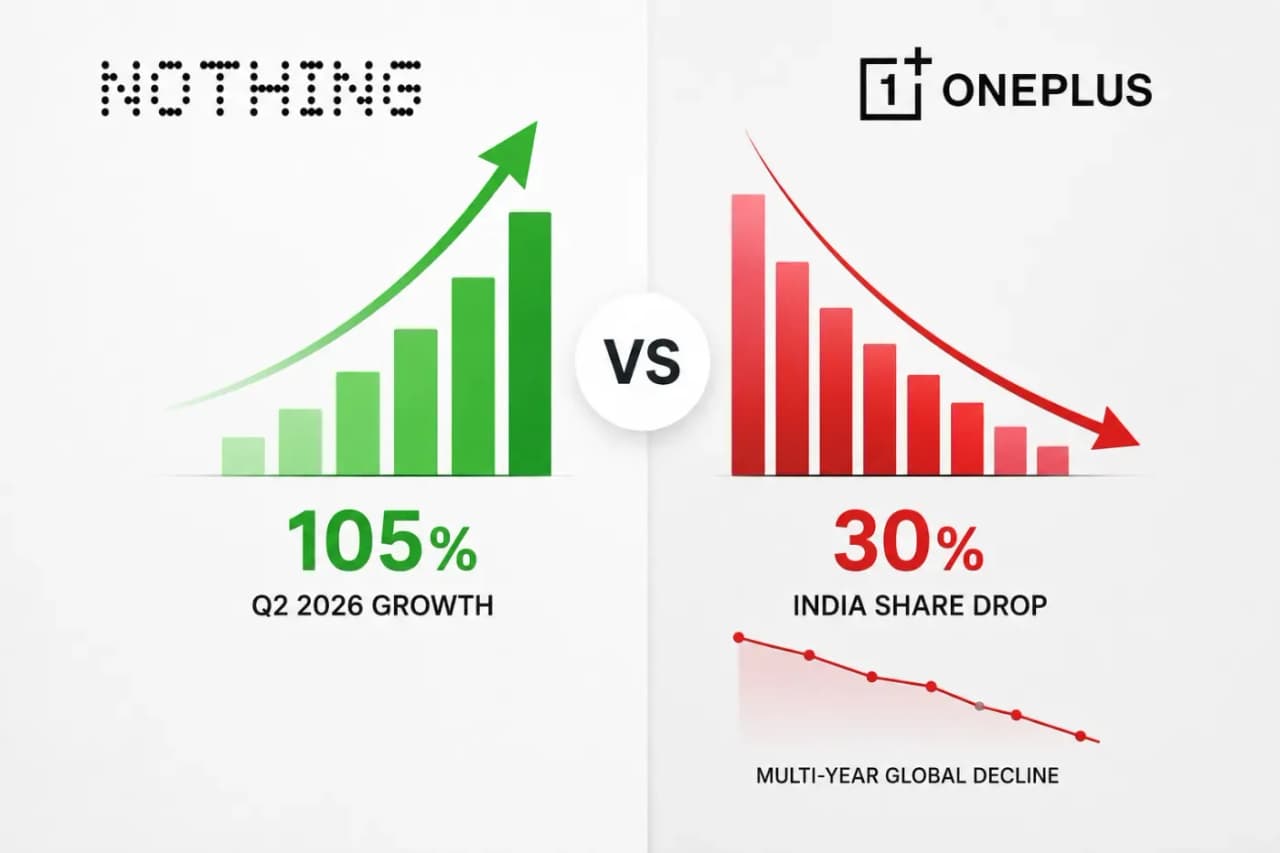
OnePlus, meanwhile, was living the opposite story. Its India market share dropped from 3.9 percent to 2.4 percent in a single year through 2025. That's a fall of nearly 30 percent. Few major brands tracked in India have fallen that fast.
Put these numbers side by side and one question jumps out. One founder. Two companies. Two completely different curves, in the same market, at almost the same time.
Also Read | " Nothing Phone 4b" Could Be Nothing’s Biggest India Bet Yet: Here’s What to Expect
The Founder Who Left His Own Success Story
Carl Pei co-founded OnePlus in 2013. He helped build its early identity around direct fan engagement, invite-only launches, and aggressive India-first marketing. That playbook turned OnePlus into one of the most recognised phone brands among young Indian buyers, in just a few years.
Pei left OnePlus in 2020. He started Nothing soon after, building it around a similar hype-driven, community-first approach — this time with a distinct, transparent design language.
Nothing's India growth today looks a lot like OnePlus's own early breakout years. That's not a coincidence. It's the same founder, applying lessons from one company to another, in the same country, chasing many of the same buyers.
What Actually Broke OnePlus in India
To see where Nothing could go wrong, it helps to look closely at what went wrong for OnePlus. Most coverage stays vague here.
- Problem one: the green line controversy. A display defect in several OnePlus models damaged buyer trust. The company later added a lifetime display warranty to fix it. But by then, the damage to its premium image had already spread through word of mouth and online reviews.
- Problem two: brand dilution. OnePlus's Nord series brought in strong sales volumes. But analysts point to Nord as a key reason the brand's premium identity weakened over time. Once OnePlus became known for budget Nord phones as much as its flagships, its positioning as a premium challenger brand started to blur.
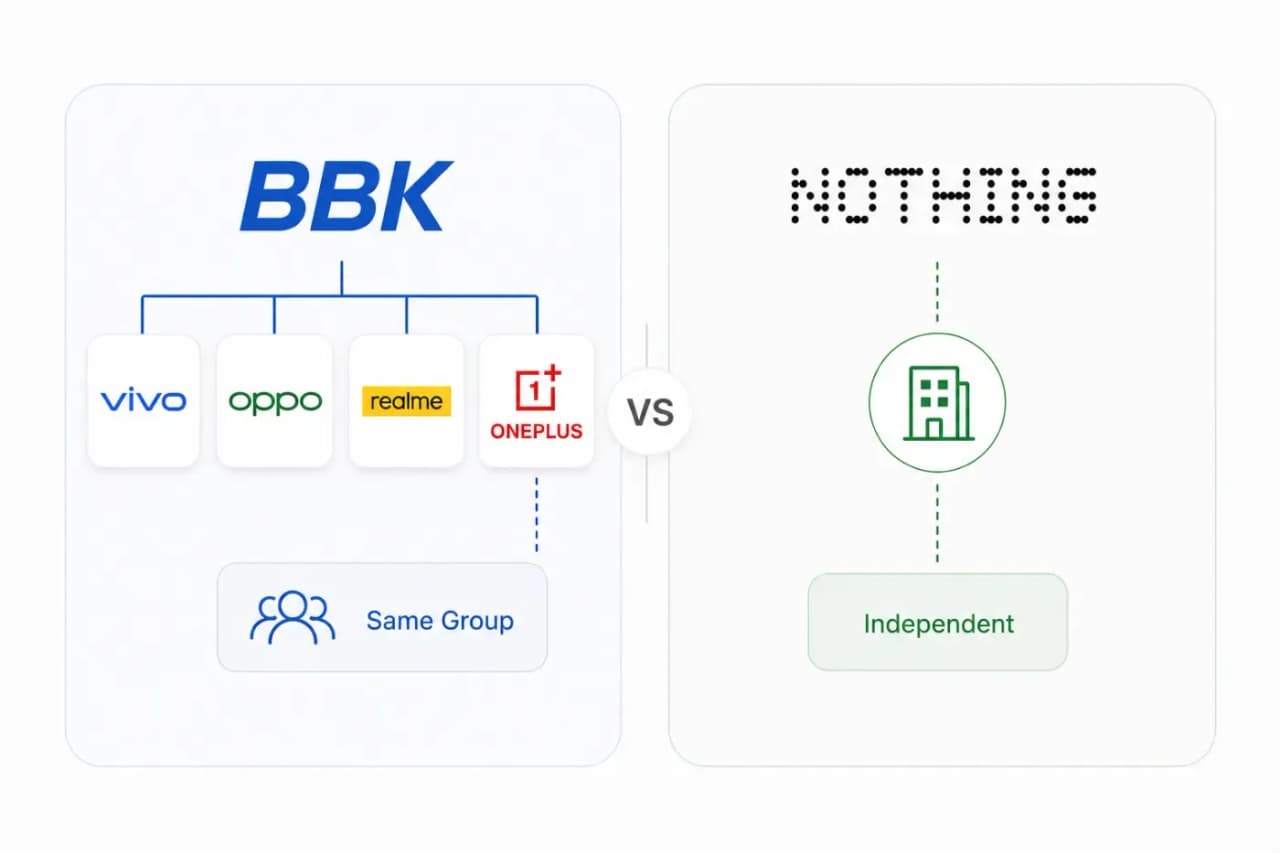
- Problem three: loss of independence. OnePlus has always operated inside BBK Electronics — the same group that owns Oppo, Vivo, iQOO, and Realme. As speculation grew that OnePlus was being folded deeper into Oppo's operations, buyers increasingly saw it as a sub-brand, not a standalone company. Real store closures in India through 2025 and 2026 only added to that impression.
The Mistake Checklist: Scoring Nothing Against OnePlus's Own Failures
Here's where Nothing stands on each of these three risks today.
Product trust: Nothing hasn't faced a comparable hardware controversy yet. This risk is low for now — though that can change fast in the smartphone business.
Brand dilution: This is a real and active risk for Nothing. Its 2026 growth is being driven heavily by its budget-focused CMF sub-brand and models like the Phone 4a — not its flagship line. That's the exact same pattern Nord followed for OnePlus a few years back. Strong volumes today, with a real risk of diluting the main brand's premium identity over time.
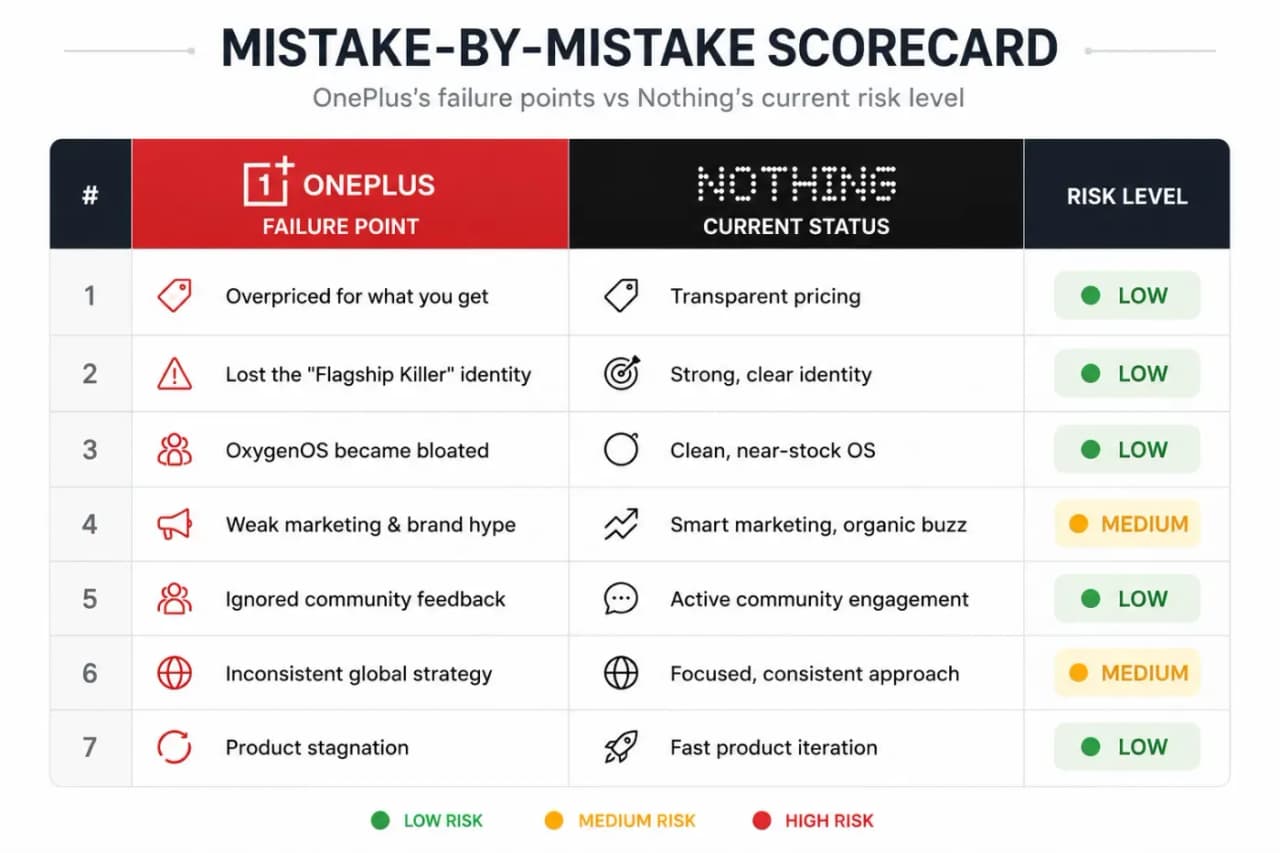
Independence: Nothing is in a much stronger spot than OnePlus ever was. It isn't owned by a larger conglomerate. It doesn't compete internally with sibling brands for marketing budgets or retail space. This one structural difference may end up being the biggest factor separating Nothing's future from OnePlus's recent past.
What' Still Not Covered?
Most articles on Nothing's India growth just repeat the shipment numbers. Few ask where that growth is actually coming from. The CMF-Nord parallel is one of the clearest, most checkable warning signs in this whole story — and hardly anyone has connected the two directly, even though the pattern is almost identical.
What Nothing is doing outside its product lineup. The company has talked about building a production and export hub in India through CMF, tied to the government's Make in India push. It has stated ambitions of building the country's first globally competitive smart hardware brand. OnePlus never built anything close to this level of manufacturing commitment in India, despite years of strong local sales.
OnePlus's struggles can't be separated from the fact that it sits inside BBK Electronics, sharing resources and retail attention with Oppo, Vivo, iQOO, and Realme. Nothing answers to no one but its own board and investors. That's not a minor footnote — it may be the single biggest reason Nothing has more room to protect its identity than OnePlus ever did.
Also Read | Vivo Bio Tech Q1 FY27 Results: Profit Returns Just One Quarter After a Rs 5.16 Crore Loss
Two Timelines, One Pattern
Line up OnePlus's early India breakout years next to Nothing's current growth phase, and the pattern is hard to miss.
Both stories start the same way: a founder-led, community-first, India-first product strategy that turns a niche brand into a buzzword among young tech buyers almost overnight. Both see fast early growth built on the same mix — flagship excitement pulling in attention, and a budget sub-brand pulling in the actual volume.
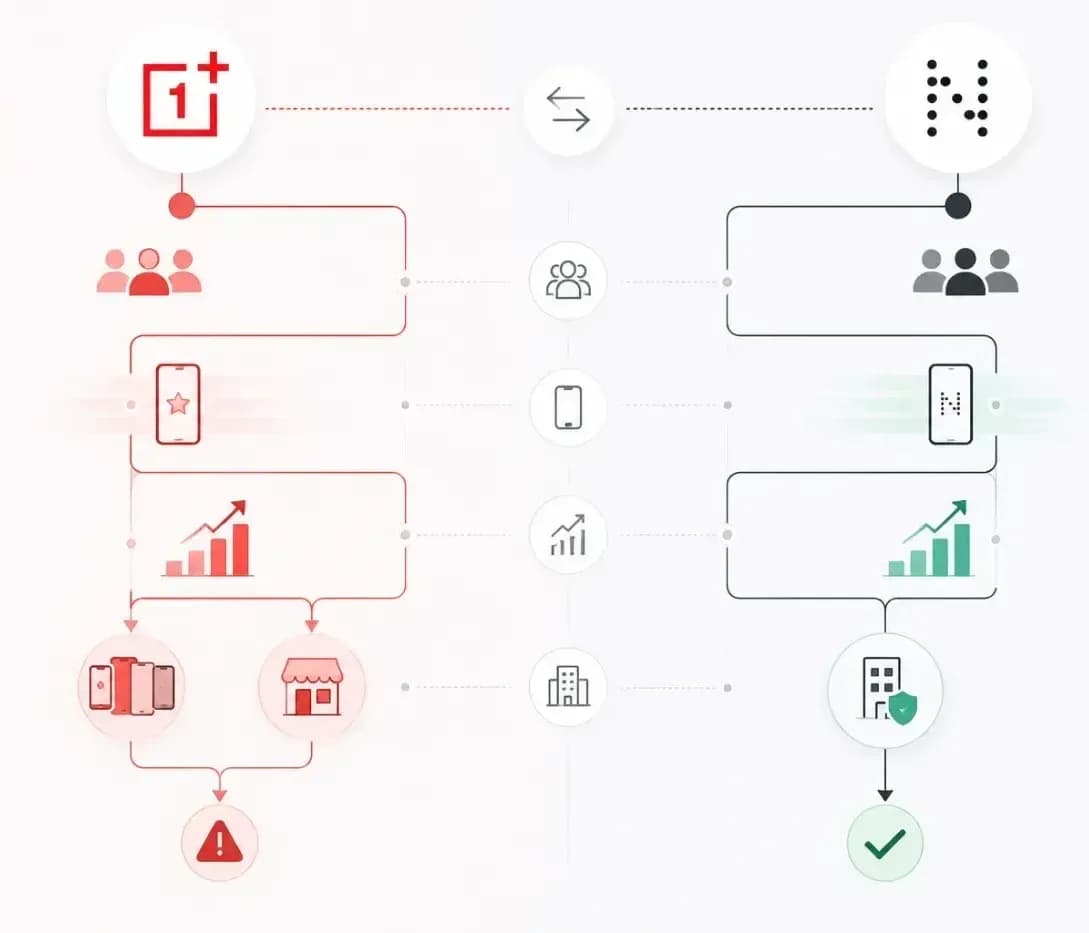
The two timelines start to split after that. OnePlus's story eventually bent toward brand dilution, as Nord's growth quietly outpaced the flagship line it was meant to support. It also bent toward reduced independence, as BBK's other brands competed for the same retail shelves and the same marketing rupee.
Nothing's current position on those same two risks looks meaningfully different — its ownership structure alone removes one entire failure point that OnePlus never had a way to avoid.
That doesn't mean Nothing is safe. It means Nothing is starting this phase of the race with one fewer obstacle in front of it. Whether that gap stays open, or slowly closes the way it did for OnePlus, is the part of this story still being written.
So, Can Carl Pei Avoid His Own Mistakes
Based on the data available today, the honest answer is: partly, and by design rather than luck.
Nothing has a real structural advantage OnePlus never had — no parent conglomerate pulling focus and retail space toward sibling brands. That single fact removes the third failure point from OnePlus's story entirely. It also hasn't hit a hardware trust crisis of the kind that hurt OnePlus's reputation for years.
But Nothing carries one clear, active risk of its own: a growing dependence on the budget-focused CMF line for its headline growth numbers. That's structurally the same bet OnePlus made with Nord — a bet that paid off in shipment numbers first, and cost the brand its premium identity later. Whether Nothing avoids OnePlus's fate will likely come down to how it manages that one specific risk over the next few product cycles. Marketing and hype alone won't be enough to dodge it, because they weren't enough for OnePlus either.
Also Read | Xiaomi 17 Max Launch Shakes Smartphone Market With Huge 8000mAh Battery
What This Means for Indian Buyers Right Now
Nothing's current lineup offers a distinct design identity and competitive pricing, at a time when most other brands are raising prices because of rising component costs. That makes it a genuinely attractive option for anyone shopping right now, regardless of how this founder-versus-founder story eventually plays out.
If you're buying into Nothing today expecting the same premium-challenger identity that first drew people to OnePlus, it's worth watching how the CMF and Phone 4a lines evolve over the next year. A brand that leans further into budget volume tends to change what it stands for, even when the sales numbers look great on paper. That shift, if it comes, would likely show up first in product positioning and pricing — not in a single dramatic headline.
News4Bharat POV
Nothing is not OnePlus 2.0 — at least not yet, and not by accident. Carl Pei appears to have learned the one lesson that mattered most from his OnePlus exit: independence from a larger conglomerate is worth protecting at almost any cost. That single structural choice already rules out the failure point that did the most long-term damage to OnePlus in India.
Where we'd urge caution is brand dilution. The CMF and Phone 4a-driven growth story is impressive on a spreadsheet, but it is following the Nord playbook almost line for line.
The next two to three product cycles — specifically, whether Nothing's flagship line keeps pace with its budget line in both innovation and marketing focus — will tell us whether this becomes a genuine OnePlus-style story of decline, or a rare case of a founder actually breaking his own pattern.