

For nearly two decades, Google has been the undisputed king of digital advertising, shaping how brands connect with consumers across Search, YouTube, Gmail, Maps, and millions of partner websites. But 2026 marks a historic turning point. According to the latest Emarketer Global Digital Advertising Forecast (April 2026), Meta is projected to overtake Alphabet for the first time ever in global net digital advertising revenue, signalling one of the biggest power shifts in the history of online advertising.
The numbers tell a remarkable story. Meta is expected to generate $243.46 billion in worldwide digital advertising revenue in 2026, narrowly surpassing Google's projected $239.54 billion. Just a year earlier, Google still enjoyed an $18-billion lead, earning $214.06 billion compared to Meta's $196.17 billion. The reversal has been driven not by chance, but by Meta's aggressive investment in artificial intelligence, short-form video, advanced ad automation, and its rapidly expanding ecosystem across Facebook, Instagram, WhatsApp, Reels and Threads.
The broader advertising industry is also entering a new era. Global advertising expenditure is expected to cross the $1-trillion mark for the first time in 2026, while digital advertising continues to account for the overwhelming majority of incremental ad spending worldwide. At the same time, Meta, Google and Amazon together are projected to control more than 62% of global digital advertising revenue, highlighting an unprecedented concentration of market power among just three technology giants.
Threads Continues to Grow
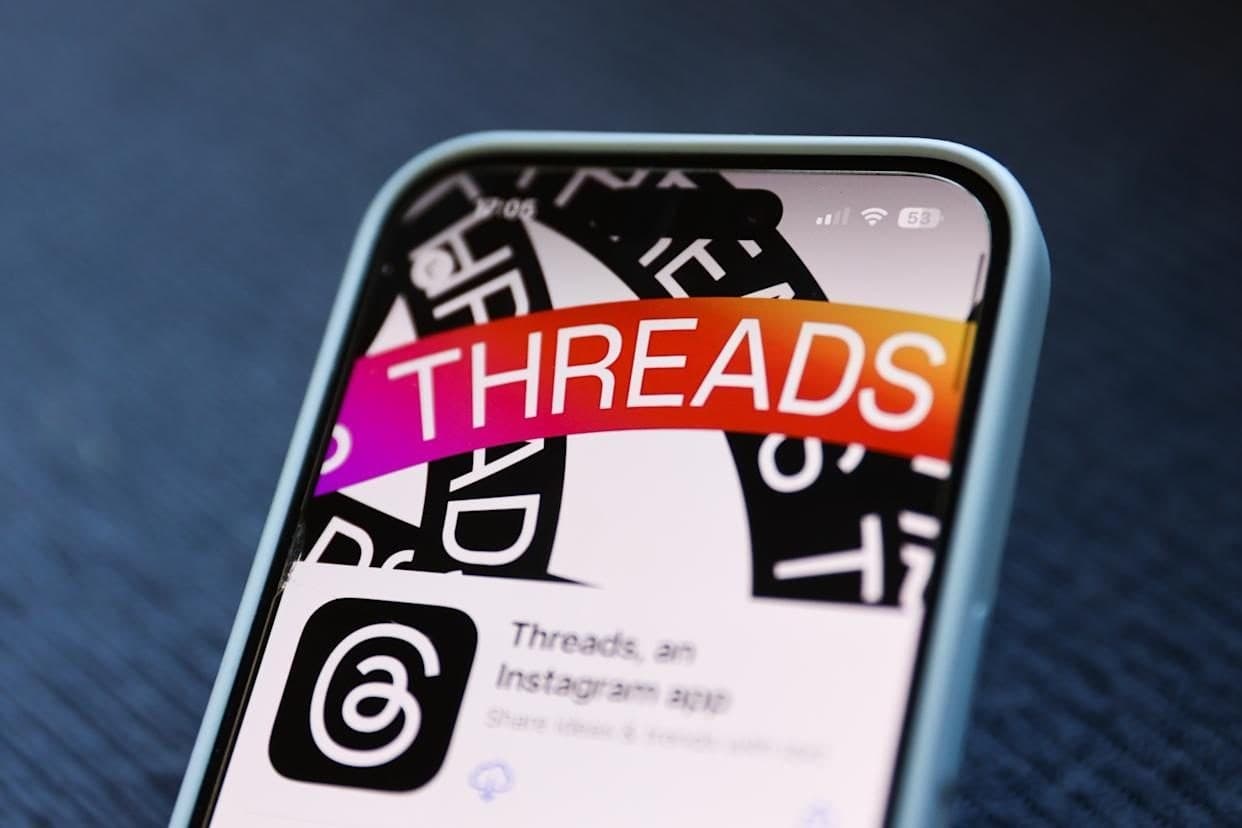
Meta's Threads has crossed 150 million daily active users, giving the company another large platform to attract advertisers. Advertising is now expanding globally on Threads, although Meta says monetisation will be gradual. Even so, the platform adds valuable ad inventory and strengthens Meta's long-term advertising ecosystem.
AI Is Powering Meta's Ad Growth
Meta's AI-driven advertising tools, particularly Advantage+, continue to gain traction among businesses. These tools help automate campaign creation, audience targeting, and budget allocation. Industry analysts believe AI-powered automation is one of the biggest reasons Meta's advertising revenue is growing faster than the wider digital ad market in 2026.
Google's AI Counteroffensive
Google is responding by bringing AI directly into Search. The company has introduced new ad formats within AI-powered search experiences and expanded advertiser tools such as AI Max. These efforts are aimed at protecting Google's search advertising business as more users turn to AI-generated answers.
Alphabet Is Increasing AI Investment
Despite projections that Meta could surpass Google in digital ad revenue this year, Alphabet continues to invest heavily in AI infrastructure, data centres, and Gemini-powered products. This signals that competition between the two tech giants is intensifying rather than slowing down.
Also Read | Google Pay Launches AI-Powered ‘Ask Google Pay’ to Simplify Personal Finance!
AI Search Is Changing Digital Advertising
A broader industry shift is also underway. AI-generated search results are changing how people discover information online. As users increasingly receive direct answers from AI systems, advertisers and publishers are rethinking traditional SEO strategies and placing greater focus on AI-driven advertising and content discovery.
What It Means
While eMarketer's forecast that Meta will overtake Google in global digital advertising revenue remains unchanged, the battle is far from over. Meta continues to benefit from AI-powered advertising tools, Reels, Threads, and WhatsApp monetisation opportunities, while Google is rapidly reinventing Search around AI experiences and new advertising formats.
Rather than marking the end of Google's dominance, 2026 may be remembered as the year the digital advertising industry entered a new AI-driven competitive era.
Also Read | Bugatti’s $500,000 Folding TV: Luxury Innovation or an Unnecessary Status Symbol?
OpenAI Has Entered the Advertising Business
In May 2026, OpenAI confirmed that conversion-focused advertising is being introduced within ChatGPT. Unlike traditional search ads that rely on keywords, ChatGPT's advertising model is designed around conversational intent, allowing ads to appear based on the context developed during an ongoing conversation. Industry observers view this as one of the first serious challenges to Google's search advertising model in years.
Google has held the number one spot in global digital advertising since the category was invented. That changes in 2026. According to fresh projections from Emarketer, the world's most authoritative tracker of digital advertising, Meta will generate $243.46 billion in net worldwide ad revenue this year — pushing past Google's $239.54 billion for the first time. The margin is thin, but the direction is unmistakable.
In 2025, the positions were still where everyone expected them: Google at $214.06 billion, Meta at $196.17 billion. That is an $18 billion gap. A year later, Meta not only closes that gap but crosses over. To understand how this happened — and why it matters — you have to look past the headline numbers and into what each company actually built over the last three years.
The Slow Play That Paid Off
Meta's rise in advertising is not a sudden breakout. It is the result of what Max Willens, principal analyst at Emarketer, describes as a very deliberate and patient strategy. Meta spent years building habit-forming products before trying to monetise them heavily. Reels on Instagram. Threads as a text platform. WhatsApp as a commercial messaging layer. The company waited until each of those products had deep, daily user behaviour before opening them to advertisers at scale.
Also Read | Redrob AI Launches India-First Professional AI Platform for Jobs, Productivity & Workflow Automation!
That patience is now paying out at a compounding rate. Meta's worldwide ad revenue growth is forecast at 24.1% in 2026 — accelerating from 22.1% in 2025. Google's growth rate, by contrast, is expected to hold at 11.9%. For a company as large as Meta — generating nearly $200 billion annually — growing at 24% is an extraordinary achievement. It reflects not just new users but a fundamental improvement in how effectively each impression is being converted into advertiser revenue.
The Engine Behind the Numbers: AI-Powered Advertising
The single biggest driver of Meta's ad growth is its Advantage+ suite — an AI-powered advertising toolkit that automates much of the campaign creation and optimisation process. Advertisers no longer need to manually build audiences, test creatives, and manage bids. Advantage+ does it autonomously, learns from performance data, and redistributes budgets toward what works.
The results are measurable. Ad impressions across Meta's family of apps — Facebook, Instagram, WhatsApp, Threads — rose 18% in the fourth quarter of 2025 and 12% for the full year. Average price per ad increased 6% in Q4 and 9% for the year. That combination of more impressions AND higher prices is the hallmark of a platform where advertisers are seeing real returns and coming back for more.
Reels has become a particular engine of this growth. Watch time for Reels in the US climbed more than 30% year-over-year in the most recent quarter, driven by Meta's AI recommendation system. More watch time means more inventory — more space for ads to run inside short-form video. This is the same structural shift that YouTube benefited from a decade ago, now playing out in Meta's favour.
Where Google Is Slipping
None of this means Google is in trouble. Alphabet's revenue crossed $400 billion for the first time in its history, as CEO Sundar Pichai announced on the February 2026 earnings call. Search revenue grew 17%, YouTube's annual revenue surpassed $60 billion, and Google Cloud grew 48% to a run rate exceeding $70 billion. These are not the numbers of a company in decline.
But Google's core advertising growth is slower. Its search dominance, while still enormous, is being nibbled at from multiple directions. Amazon is capturing an increasing share of commercial product searches — people looking to buy are going to Amazon first, not Google. OpenAI and other AI-native tools are emerging as alternative search surfaces. YouTube, while a strong video ad platform, competes directly with Reels for advertiser budgets.
Also Read | ASUS AI Healthcare Ecosystem Unveiled at Computex 2026 with DuoScan & VivoWatch 6 Plus
Google's market share of global digital ad spend has been falling since 2021. It will stand at 26.4% in 2026 — still massive, but down from its peak. Meta's share, which has been growing, hits 26.8% this year, crossing Google for the first time in the history of digital advertising.
| Platform | 2025 Revenue | 2026 Revenue (Projected) | 2026 Growth Rate | 2026 Market Share |
|---|---|---|---|---|
| Meta | $196.17 bn | $243.46 bn | +24.1% | 26.8% |
| Google (Alphabet) | $214.06 bn | $239.54 bn | +11.9% | 26.4% |
| Amazon | $68.64 bn | $82.07 bn | +19.6% | 9.0% |
| Combined Top 3 | $478.87 bn | $565.07 bn | — | 62.3% |
What This Means for Indian Advertisers
India is one of the world's fastest-growing digital advertising markets. Both Meta and Google are competing fiercely for a share of Indian ad budgets. The global shift toward Meta has practical implications for Indian brands and agencies.
Instagram and Facebook have a combined user base in India of over 500 million. Reels has reshaped how consumer brands — especially in fashion, FMCG, and D2C — buy media. Advantage+ is already being used by mid-size Indian brands with smaller teams who cannot afford dedicated digital agencies. The tool democratises advertising in a way that favours the challenger, not just the established player.
For Indian businesses still heavily invested in Google Search ads, the message is not to abandon that channel — search intent advertising remains among the highest-ROI formats available. But the case for spreading budgets more meaningfully into Meta's ecosystem, especially for discovery-led purchases and younger demographics, has never been stronger.
Also Read | Infosys Unveils ELI, an AI-Powered Editorial Engine to Strengthen Digital Journalism!
The Bigger Picture: When Three Companies Control Two-Thirds of Global Advertising
Meta, Google, and Amazon together will account for 62.3% of all digital advertising in 2026, up from 59.9% in 2025. The global advertising market itself is crossing $1 trillion for the first time this year, according to the dentsu December 2025 Global Ad Spend Forecast. Of that, an overwhelming 86% of CMOs surveyed expect their budgets to increase.
The concentration of this spending around three platforms is both a commercial reality and a growing regulatory concern. When three companies control nearly two-thirds of what the entire advertising world spends, smaller publishers, regional media, and independent platforms get squeezed. India's own digital publishers — news portals, regional video platforms, content creators — find themselves entirely dependent on how Google and Meta structure their revenue-sharing terms.
The ad wars at the top are being watched very carefully from the bottom of the chain. And for the first time in a generation, the top of that chain just changed hands.