
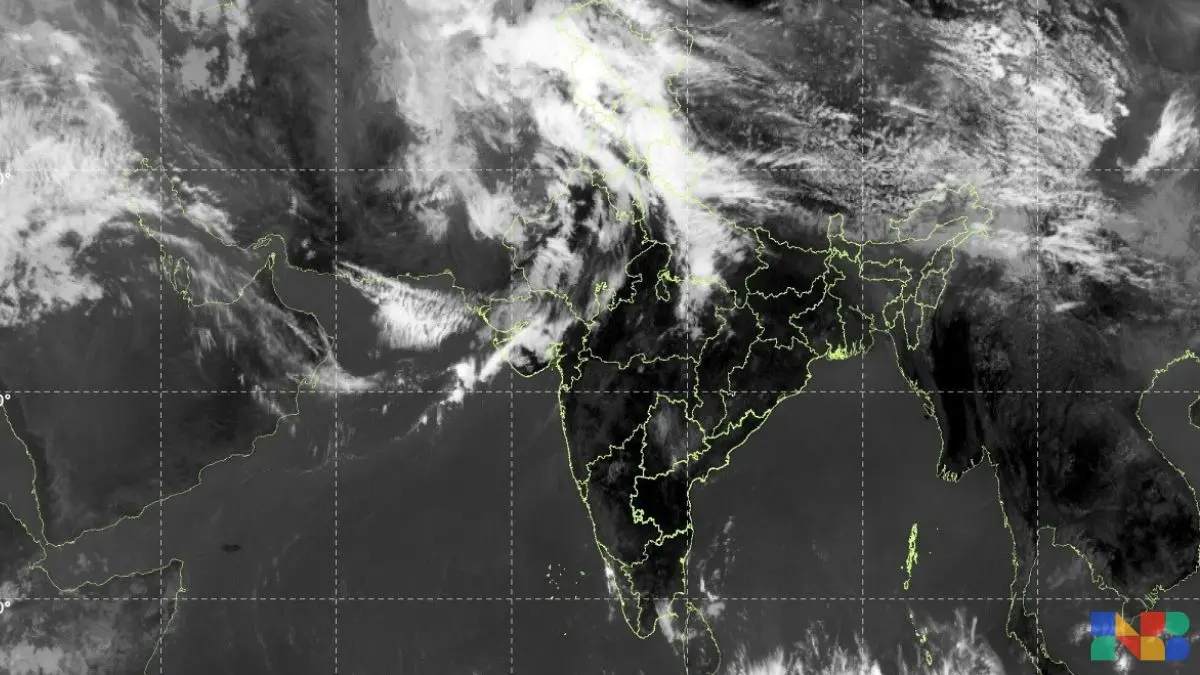
April is supposed to be the month India sweats. The time when ceiling fans go on full blast, lassi sells out at every corner stall, and people start drawing curtains before noon. But this April — and specifically this very Monday, April 6, 2026 — something different is happening over the subcontinent. The skies are not just warming up.
According to the India Meteorological Department (IMD), several parts of India are experiencing rain, thunderstorms, lightning, and gusty winds on April 6, 2026, especially across Delhi-NCR, Uttar Pradesh, Rajasthan, and Punjab. Meanwhile, Mumbai, Chennai, and Ahmedabad are seeing warm and humid conditions, while higher Himalayan regions of Jammu & Kashmir are receiving light snowfall due to a western disturbance.
That single paragraph from the IMD tells you everything — and yet, it barely scratches the surface of what's unfolding across the country right now.
The Western Disturbance
Most Indians hear "Western Disturbance" and zone out. It sounds technical. It sounds distant. But it isn't. The shift in weather is being driven by a Western Disturbance — a moisture-laden system that moves in from the Mediterranean and often brings rain, thunderstorms and hail to North India during the winter-spring transition. After a strong spell on April 3 and 4, conditions have remained unstable, especially over Delhi and nearby areas. Instead of the usual rising heat for this time of year, the region has seen cooler temperatures, thick cloud cover and occasional thunder.
Think of it this way: a weather system that was born somewhere over the Mediterranean sea has been travelling for days, picking up moisture, energy, and attitude — and it has arrived right at India's doorstep just when the wheat crop is standing ready to be harvested.
Also Read | Two Western Disturbances to Impact North India This Week; Hailstorms Expected
The rainfall pattern is expected to be uneven, with some locations receiving intense spells while nearby areas may see little to no impact. A total of nine states are expected to witness unstable weather conditions between April 6 and April 8. These include Delhi, Uttar Pradesh, Bihar, Rajasthan, Himachal Pradesh, Uttarakhand, Jammu & Kashmir, West Bengal, and Madhya Pradesh, along with parts of Haryana and Punjab.
That is nearly one-third of the country's most productive agricultural belt sitting under a storm cloud right now.
State by State — What Is Happening Where
Delhi-NCR: Within Delhi-NCR, weather activity is expected to stay uneven. Gurgaon, South Delhi, Faridabad and Noida are among the areas most likely to see rain or thunderstorms. However, the pattern will remain scattered, with nearly half of the region likely to stay dry even as some pockets receive brief but intense bursts of rain or hail. The maximum temperature is expected to stay around 31–33°C — a full 5–7 degrees below what April normally delivers in Delhi.
Mumbai: Mumbai woke up to clear blue skies with a morning temperature of around 27°C. According to RMC Mumbai, the weather is very likely to remain dry in Mumbai, Thane and Palghar till April 9. Partly cloudy sky is expected with maximum and minimum temperatures around 32°C and 25°C respectively. The city's AQI slipped slightly to 60 — moderate — but still a relief compared to recent weeks.
Hyderabad & South India: Hyderabad is expected to experience rain or thundershowers towards evening or night, with temperatures ranging between 24°C and 38°C and humidity levels between 41 and 80 percent. Bengaluru is expected to see thunderstorm with rain, with temperatures ranging between 23°C and 34°C.
Madhya Pradesh: Weather conditions across Madhya Pradesh are expected to remain unstable over the next few days, with thunderstorms, rain, and strong winds likely in many districts. Wind speeds may reach 50 to 60 km per hour in some areas. Usually, April and May are the hottest months in the state. However, this year the weather pattern has been slightly different.
Rajasthan: Areas like Jodhpur, Bikaner, Ajmer, and the Shekhawati region are seeing strong winds of 40–50 km/h, rain, and even hailstorms. The weather is expected to be most intense on April 7, with strong thunderstorms, faster winds of 50–60 km/h, moderate to heavy rain, and hailstorms likely in many parts, including Jodhpur, Bikaner, Ajmer, Jaipur, Bharatpur, and Kota.
Jammu & Kashmir and Himachal Pradesh: In the hill states, heavy snowfall and rain have been reported. Snowfall occurred in high-altitude areas of Himachal Pradesh on Sunday. The Gondola in the Lahaul-Spiti district received 28.2 cm of snowfall in the last 24 hours. That is not a small dusting — that is full winter-level snowfall in early April.
The Wheat Crisis: The Real Story Behind the Clouds
Here is where the weather stops being just an inconvenience and starts becoming a national economic concern. April is harvest season for wheat across Punjab, Haryana, Uttar Pradesh, and Rajasthan. Millions of farmers are waiting to cut their standing crops. And the weather is not cooperating.
On April 3 and 4, large hailstones — some as big as golf balls — destroyed standing wheat crops in parts of Rajasthan, Punjab, Haryana and Uttar Pradesh. A similar or even more intense spell could lead to further losses.
The damage has already been so severe that it has reached the doors of Parliament. Union Agriculture Minister Shivraj Singh Chouhan took cognisance of heavy rain and hailstorm damage across several states, directing ministry officials to conduct a comprehensive review of crop losses and coordinate with state authorities to gather ground-level information. The minister is scheduled to hold discussions with the agriculture ministers of the affected states.
Now here is the economic angle that connects to every household's kitchen table. If the wheat harvesting is delayed in its completion process, there could be a supply crunch that would most likely push prices higher.
Kolkata's Kalbaisakhi — When the IPL Meets the Storm
If the wheat crisis feels too rural and distant for urban readers, here is something that hits closer for the cricket fans among us. In Kolkata tonight, IPL 2026's Match 12 between KKR and Punjab Kings is scheduled at Eden Gardens. And the sky over the City of Joy has its own plans.
The IMD has warned that the state is likely to witness another round of Kalbaisakhi storms, with the possibility of hail and thunderstorms running from Sunday through Thursday. "The intensity and spread of rainfall are expected to peak on Tuesday and Wednesday," the IMD stated.
Kalbaisakhi — the nor'westers that Bengal experiences every pre-monsoon season — are among the most dramatic weather events in India. They arrive fast, hit hard, and leave just as quickly. But they can bring down trees, cause waterlogging, and yes, wash out cricket matches.
Training on the eve of the KKR vs PBKS game was effectively called off as steady rain kept the ground under covers. KKR shifted indoors, but even that was a limited session with only a few players turning up.
According to the weather report, the temperature will range between 29–33 degrees during the IPL 2026 clash between KKR and PBKS on April 6, while humidity will hover around 70%. There are chances of rain with thunder in the evening ahead of the game.
For KKR fans — already suffering from two back-to-back losses to start the season — even the weather seems to have turned against the team.
What Comes Next: After April 10, the Heat Returns
The weather is expected to worsen before it improves. The incoming Western Disturbance is likely to bring heavier rainfall, thunderstorms and hail across the plains between April 7 and 10. Relief, however, will be short-lived. After April 8 to 10, these systems are expected to weaken, making way for a sharp rise in temperatures.
So enjoy the temporary respite from summer — because the furnace is just on a brief pause. Once the Western Disturbance passes, North India's temperatures could spike by 5–8 degrees within days.
What You Should Do Right Now — A Practical Guide
If you are in North India or Central India today and tomorrow:
Avoid open fields, tall trees, and open grounds during thunderstorm hours, typically between 3 PM and 9 PM. If you are a farmer, the Agriculture Ministry's advisory is clear — complete harvesting as urgently as possible. Livestock owners should shelter animals from hailstorms. Drivers should exercise caution as gusty winds up to 60–70 kmph can make driving hazardous. Authorities have urged people to avoid unnecessary travel during storm periods. It is recommended to stay indoors during lightning, secure loose objects, and keep track of local weather updates.
The Big Picture Opinion: Climate Change Is Rewriting India's Seasons
Let this writer say something plainly, after four decades of covering India's weather events. What we are seeing this April is not random. The frequency of extreme weather events in India — unseasonal hailstorms, freak lightning strikes, flash floods in otherwise dry areas — has been increasing year after year.
April used to mean rising mercury, mango blossoms, and school holidays. It did not used to mean golf ball-sized hailstones destroying wheat fields in Rajasthan and snowfall in Himachal Pradesh at levels that would alarm even a January forecaster.
These are not anomalies anymore. They are patterns. And India's farmers — who grow the food that feeds 1.4 billion people — are the first to pay the price, every single time.
Sources: