
Delhi’s “toy train” terror plot is more than a sensational headline. It is a warning India cannot ignore.
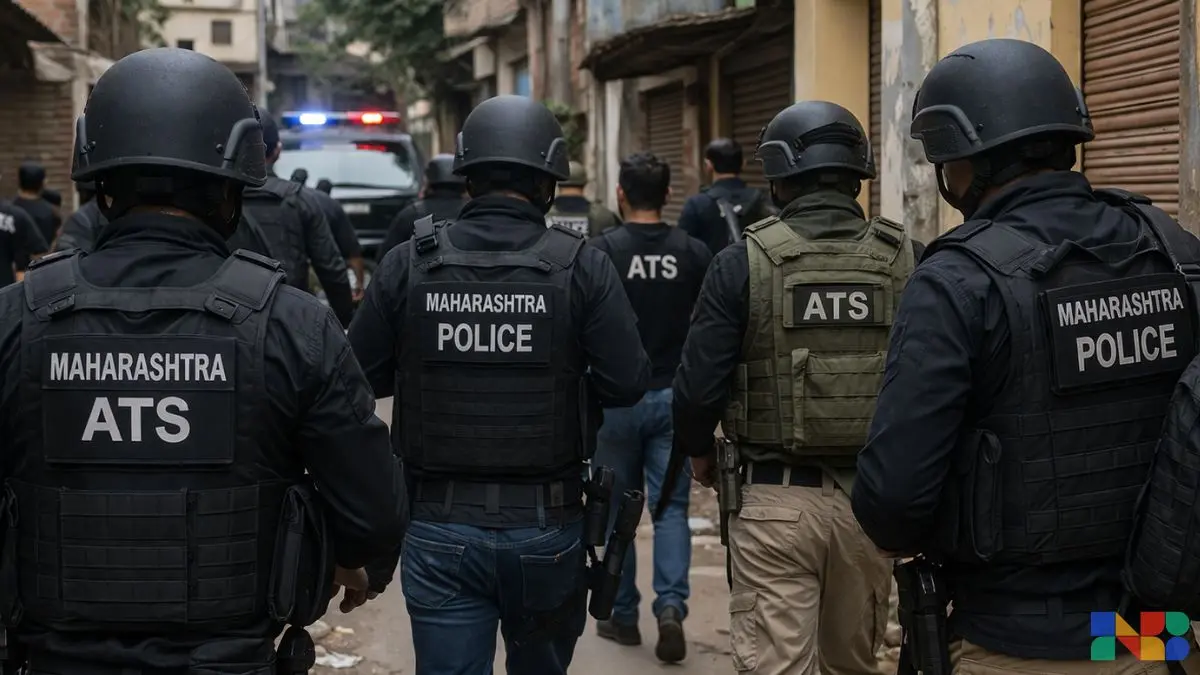
The arrest of two suspects in a joint operation by the Delhi Police Special Cell and the Maharashtra Anti-Terrorism Squad has once again reminded the country that terror networks are changing their methods faster than public attention can keep up. Early reports say the accused were picked up from the Mumbai region and brought to Delhi for interrogation, with agencies probing an alleged plan to trigger a blast in the national capital using a small, toy-like remote device described in some reports as a “toy car” and in others as a “toy train”-like mechanism. What is confirmed so far is that the operation was based on intelligence inputs, electronic gadgets and incriminating material were recovered, and the wider module is still under investigation. Some reports also say the network had a link to online radicalisation, while others describe a possible Jaish-e-Mohammed angle. At this stage, the exact operational details remain under probe, and some early media accounts differ on names and the precise nature of the device.
That difference in reporting is not unusual in fast-moving terror investigations. But even with the caution that responsible journalism demands, one truth is already clear: this was not merely about two men and one possible attack plan. It points to a darker shift in terror tactics — smaller platforms, low-visibility delivery systems, hybrid radicalisation, digital coordination, and psychological shock value.
For the ordinary citizen, the phrase “toy train like device” sounds bizarre, almost cinematic. That is exactly why it is dangerous. The logic of such a device, if the allegations are borne out, lies in deception. A harmless-looking object can lower suspicion, pass unnoticed in crowded spaces, and exploit the public’s instinct to ignore what appears playful, domestic or commercially ordinary. Security agencies across the world have long warned that modern terror planning increasingly seeks concealment in the everyday: cars, drones, household materials, improvised electronics, and commercially available components. India’s own official counter-terror architecture now explicitly tracks online radicalisation and extremist innovation as part of the national security challenge.
This fresh plot also cannot be viewed in isolation from the shadow of the November 2025 Red Fort blast in Delhi. That incident, which the Union government officially termed a terrorist incident, became a turning point in the national conversation on urban terror vulnerabilities. Subsequent reporting and enforcement action linked it to a wider network, and in January 2026 the Enforcement Directorate filed a chargesheet tied to the November 10, 2025 attack near Delhi’s Red Fort, while attaching assets worth ₹139 crore in the connected money-laundering probe. That matters because terror events are rarely stand-alone episodes; they are often nodes in a wider chain involving funding, logistics, ideology, local support, digital contact, and reconnaissance.
Delhi, by design and symbolism, remains a prime target. It is not just the national capital. It is also a city of political institutions, diplomatic missions, heritage sites, transport hubs, dense markets, religious gatherings and high-visibility public events. A plot in Delhi is always about more than damage. It is about spectacle, message, fear and media amplification. If a small remote-operated device could be planted or moved in a crowded or symbolic location, the intention would likely be to create disproportionate panic compared to the size of the apparatus itself. That is the grammar of asymmetric violence.
The deeper concern is the route through which such plots are taking shape. The Ministry of Home Affairs says its Counter Terrorism and Counter Radicalization Division monitors terror financing, online radicalization and extremist activities in coordination with central and state agencies. The latest arrests appear to fit that pattern, with reporting pointing to an online-radicalisation network and a multi-state operational trail. The FATF’s 2024 mutual evaluation on India also notes that India’s terrorist financing risk assessment identified multiple funding channels, including sources from outside India, organised criminal gangs, extortion, narcotics, fake currency, illicit arms trafficking and, importantly, virtual assets as an emerging trend that is harder to track.
This is where the story becomes bigger than a crime brief. The challenge before India is no longer only infiltration from across the border or the classic sleeper-cell model. It is also the radicalised individual or micro-module assembled through a phone screen, encrypted communication, ideological grooming, remote handlers and modular logistics. One person may source hardware. Another may spread ideology. A third may scout a location. A fourth may never meet the others physically but still serve as a crucial digital handler. That fragmented architecture makes detection harder and also makes prevention more dependent on intelligence fusion.
There is a broader statistical backdrop too. According to SATP’s India fatality data, terrorism-related fatalities in India stood at 626 in 2024 and 657 in 2025; for 2026, the count had already reached 92 by April 2. These are provisional figures compiled from reported incidents, but the trend still tells an important story: the threat has not disappeared, it has mutated. It may be regionally uneven, but it remains alive. That is why any attempt to dismiss such plots as isolated or exaggerated would be a serious mistake.
At the same time, alarmism would be equally irresponsible. India’s security agencies have shown repeatedly that intelligence-led policing works. In this case too, the key development is not just the alleged plot, but the fact that it appears to have been interrupted before execution. Joint operations between state ATS units and specialised cells in metropolitan police forces are increasingly central to prevention. The Maharashtra ATS operation in February this year, spread across multiple locations over suspected radicalisation links, showed that agencies are no longer waiting for an explosion to occur before moving in.
But prevention cannot remain only a police job. There are three public lessons here.
First, citizens must understand that suspicious behaviour does not always look dramatic. An unattended bag, an oddly modified toy device, repeated loitering near a sensitive point, unusual photography of security arrangements, or unexplained remote-controlled equipment in crowded public zones should never be brushed aside.
Second, digital vigilance is now inseparable from physical security. Families, schools, local communities and civil society have to stop treating online radicalisation as a distant problem. It often begins not with explosives, but with isolation, grievance, identity manipulation and coded propaganda.
Third, governments must invest more in urban surveillance intelligence, forensic electronics, public reporting systems and local police training for unconventional explosive concealment methods. India has strengthened its institutional response, but the pace of adaptation must match the pace of innovation among extremist actors.
There is also a media lesson. When phrases like “toy train bomb” enter the headline cycle, the temptation is to chase shock value. But journalism must do more than frighten people. It must explain how such plots emerge, what has actually been confirmed, what remains under investigation, and why society must be alert without becoming paranoid. In this case, the public deserves accuracy over adrenaline.
For now, the investigation is still unfolding. The exact chain of command, ideological affiliation, technical capability and intended target map will become clearer only after interrogation, forensic examination and court filings. Yet even at this preliminary stage, the message is stark enough: terror today may not arrive with a large convoy, a dramatic manifesto or a familiar face. It may come disguised as something ordinary, trivial, even childlike.
And that is precisely why India must take it with utmost seriousness.