

5 Key Highlights
- ISRO cleared 3 crew module qualification tests on July 12, 2026, all part of the Gaganyaan safety tests before India's first human spaceflight.
- The tests checked the crew module uprighting system, the crew-service module separation system and the apex cover structure.
- These systems protect astronauts during splashdown, re-entry and parachute deployment, the three riskiest phases of any human spaceflight.
- ISRO has also completed a parachute air drop test and a rocket sled test called SOLVE earlier this month, adding to a long list of Gaganyaan safety tests done so far.
- India still needs 2 to 3 uncrewed flights before the crewed mission, with the first astronaut launch now expected sometime in 2027 or later.
ISRO has passed three more safety tests for Gaganyaan. This time, the tests focused on one thing: keeping astronauts safe. ISRO announced the results on Sunday, July 12, 2026. All three tests on the crew module passed with no problems.
This may sound like routine news. It isn't. Every human spaceflight program depends on tests like these. They check the systems that bring astronauts home safely. These tests are not about getting the rocket into space. They are about making sure the crew comes back alive.
India wants to become the fourth country to send its own citizens into space on its own rocket. Only the US, Russia, and China have done this so far. Reaching that goal takes more than ambition. It takes thousands of hours of testing. These three tests add to a long list of safety checks ISRO has run over the past two years.
Also Read | Reusable Rockets Are Changing Space Forever, Here Is Why Every Nation Suddenly Wants One?
What Were The Three Safety Tests?
The first test checked the crew module's "uprighting" system. After the capsule lands in the sea, it might flip upside down. This system uses cold gas to fill floatation bags. The bags flip the capsule right-side up, so astronauts don't get stuck underwater.
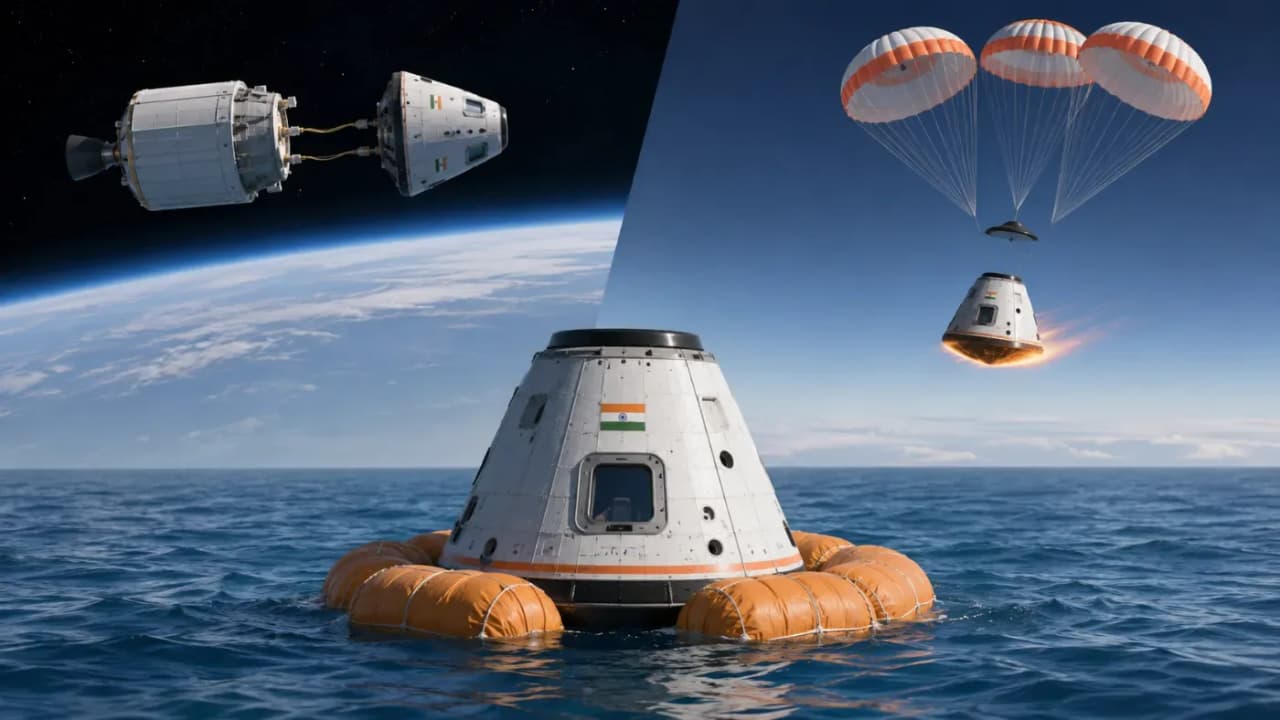
The second test checked the connection between the crew module and the service module. Think of it like an umbilical cord. It carries power and life-support signals between the two parts of the spacecraft. One connector detaches when the service module separates. The second disconnects just before the crew module re-enters the atmosphere. ISRO confirmed both separations worked cleanly.
The third test checked the crew module's strength when its apex cover comes off. This cover protects the parachutes during flight. It must separate cleanly, right before the parachutes open, without damaging the structure below it.
Also Read | From Tokyo To Orbit, Japan's Reusable Rocket Dream Just Got Closer
Why These Tests Matter For Astronaut Safety
Re-entry and landing are the most dangerous minutes of any space mission. Speed drops from thousands of kilometers per hour to zero in just minutes. Heat, pressure, and stress all peak at once. If one system fails at this stage, it can be fatal. That's why space agencies repeat these tests again and again before trusting them with human lives.
NASA's Apollo 1 fire in 1967 and the Columbia disaster in 2003 show what can go wrong when ground testing misses something. ISRO Chairman V Narayanan has said the agency wants to "score a hundred out of a hundred" on every system before astronauts fly. That's why these tests keep happening one at a time, instead of all together.
What's Next For The Gaganyaan Mission
These three tests come right after two other milestones: the Integrated Main Parachute Air Drop Test, and a ground test called SOLVE on July 3, 2026. SOLVE sent a mock crew module past 100 km in altitude to test parachute deployment during descent.
India still has one uncrewed mission left to fly, called G1. It will carry a humanoid robot named Vyommitra instead of a human crew. Two more uncrewed flights, G2 and G3, will follow. Each mission tests a fuller version of the real crewed flight. ISRO had hoped to launch G1 in 2026. But recent reports suggest it could slip further. That may push India's first astronaut launch, called H1, past the original 2027 target.
Souce: The Print, News9live
Also Read | Mission MITRA: Why ISRO’s Ladakh experiment Matters Beyond One Space Mission?
Why This Is A Big Step For India's Space Programme
Gaganyaan isn't a one-time mission. It's the foundation for India's own space station, called the Bharatiya Antariksha Station, planned for 2035. India may also send astronauts to the Moon after that. Each safety test builds the technical base India needs for that longer journey.
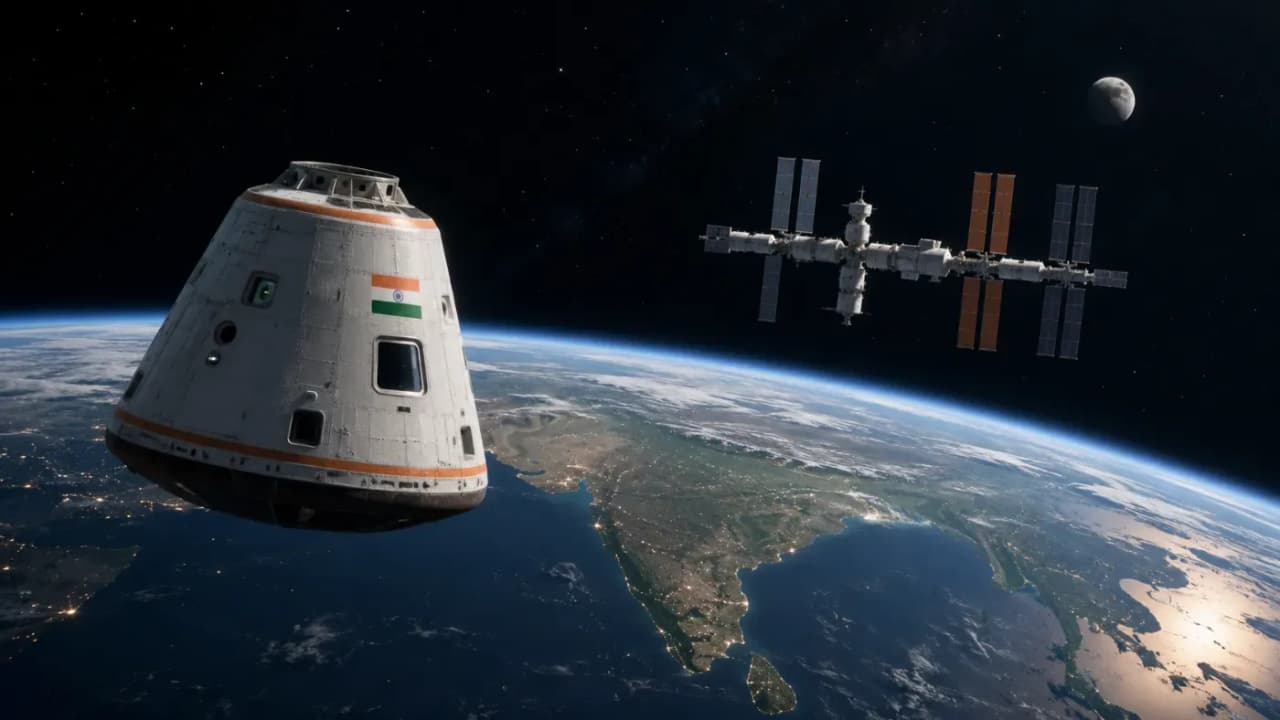
It also puts India in a small group of nations that can launch, support, and safely bring back astronauts using their own technology. That opens the door to global partnerships, research in orbit, and a stronger voice in how the world manages space.
What Mainstream Media Missed
Most news reports covered the three tests as one announcement and moved on. Few mentioned that the Gaganyaan program's total budget is Rs 20,193 crore across eight missions. That makes it one of India's most expensive science projects ever. Parliament's Standing Committee has flagged budget pressure on the program in the past year.
There's also a quiet debate inside ISRO about G1. Some wonder if it will carry Vyommitra at all, or just a dummy module. Engineers are still working out seat design and how to collect turbulence data. This choice affects how much real data India gets before risking a human crew. Yet it barely made the headlines. Another missed detail: ISRO has run more than 8,000 ground tests for Gaganyaan, with a 97 % success rate, by the agency's own count. That scale of testing rarely gets discussed. It also explains why the program has taken years longer than first planned.
Finally, almost no report connected these tests to the four astronauts waiting for their turn: Prasanth Balakrishnan Nair, Ajit Krishnan, Angad Pratap, and Shubhanshu Shukla. All four are Indian Air Force test pilots who have trained for years for a mission whose date keeps shifting. Their patience is as much a part of this story as the machines being tested.
News4Bharat Verdict
Gaganyaan just cleared another hurdle. ISRO passed three crucial safety tests on the crew module, checking uprighting systems, module connectors, and parachute cover separation. These systems protect astronauts during the most dangerous minutes of any mission: re-entry and landing. The tests follow a parachute air-drop trial and the SOLVE ground test earlier this month. ISRO has now completed over 8,000 ground tests with a 97 percent success rate.
As News4Bharat sees it, India's human spaceflight programme is moving with discipline, not haste. Every system is tested individually before astronauts fly. That patience, though it delays timelines, is exactly what builds a safe, credible path to India's first astronaut launch.