
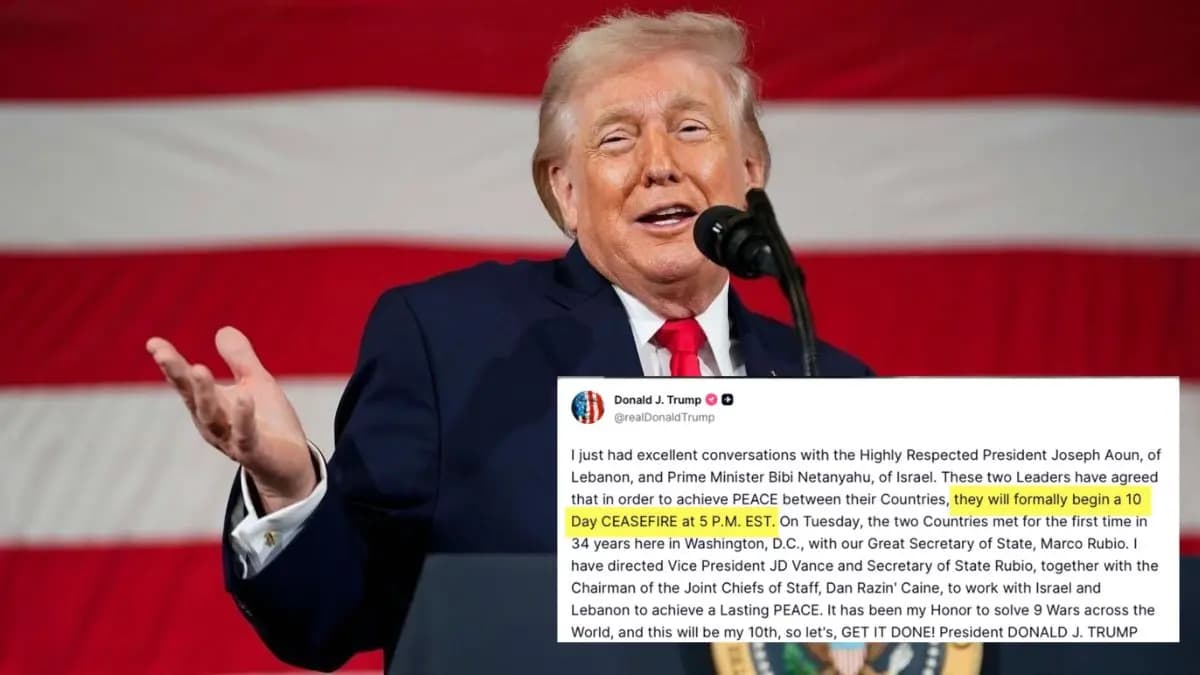
After more than a month of relentless Israeli bombardment of Lebanon — bombardment that has killed over 2,196 people, displaced more than one million and systematically destroyed every major bridge in southern Lebanon — a 10-day ceasefire came into effect on Thursday evening, April 16. US President Donald Trump announced it, Lebanese President Joseph Aoun welcomed it, Israeli PM Benjamin Netanyahu accepted it, and Hezbollah said it would abide by it as long as Israel stops attacking. That last condition is the one that matters most right now.
How We Got Here
Lebanon was drawn into the wider US-Israel war against Iran on March 2, 2026. Hezbollah, the Iran-backed militant group that also operates as a major political party in Lebanon, fired rockets at Israel in response to the Israeli killing of Iranian Supreme Leader Ali Khamenei on February 28 — the opening day of the US-Israel military campaign against Iran. Israel's military response against Hezbollah in Lebanon has been severe. More than 2,196 people have been killed and thousands wounded. Israel has issued forced evacuation orders covering roughly 15 percent of Lebanese territory.
Also Read | “Trump’s ‘War Is Over’ Claim Meets a Region Still on Edge”
The destruction of infrastructure has been methodical. Human Rights Watch documented that between March 12 and April 8, Israeli forces destroyed or severely damaged all main bridges connecting areas south of the Litani River to the rest of Lebanon. The Qasmiyeh Bridge was the sole operational crossing remaining as of April 10. This has crippled the movement of aid, medical personnel, and civilians trying to flee.
LEBANON: THE HUMAN COST AS OF APRIL 16
- 2,196+ people killed in Lebanon since March 2, 2026
- Over 1 million people displaced within Lebanese territory
- 15% of Lebanese territory under Israeli evacuation orders
- All main bridges south of the Litani River destroyed (March–April 2026)
- 9 people killed in Tyre district in the two days before ceasefire
- 8 killed, 33 wounded in Israeli strike on Ghaziyeh hours before ceasefire took effect
- First direct meeting between Lebanon and Israel senior officials in 40+ years held just before ceasefire
What the Ceasefire Agreement Says
Trump announced on Truth Social that Lebanese President Aoun and Israeli PM Netanyahu had agreed to a 10-day ceasefire beginning at 5 pm US Eastern Time on April 16 (9 pm GMT). The State Department issued a formal statement that the 10-day period could be extended by mutual agreement if both sides demonstrate progress in negotiations and if Lebanon demonstrates an ability to assert its sovereignty over its territory — a direct reference to limiting Hezbollah's independent military operations.
The agreement gives Israel the explicit right to take "all necessary measures in self-defense, at any time, against planned, imminent, or ongoing attacks." That is a significant carve-out. Israeli Ambassador to the UN Danny Danon told reporters bluntly: "If we feel threatened, we will react. We are not going anywhere. We are holding our positions." Israel did not agree to withdraw its forces from southern Lebanon — a key Hezbollah demand — which remains an open wound in any prospect of a lasting settlement.
Hezbollah lawmaker Ibrahim al-Moussawi said the group would comply "as long as the Israeli occupation forces stop their aggression." He added that the ceasefire should cover all Lebanese territories and include restraint of Israeli troop movements, and should be a starting point for full Israeli withdrawal. Hezbollah separately told its supporters they retain "the right to resist" Israeli forces present on Lebanese soil.
Trump's Diplomatic Role and Next Steps
Trump said he had spoken to both Netanyahu and President Aoun before making the announcement. He has invited both leaders to the White House for direct peace talks. He directed VP JD Vance, Secretary of State Marco Rubio, and Joint Chiefs of Staff Chairman General Dan Caine to work toward a lasting settlement.
The ceasefire is strategically important not just for Lebanon but for the broader US-Iran negotiations. Tehran had repeatedly cited Israel's massive attacks on Hezbollah in Lebanon as a violation of the broader US-Iran ceasefire framework, and had made stopping those attacks a precondition for returning to nuclear talks. The Lebanon ceasefire thus directly clears one major obstacle to the Iran peace process.
Will it Hold?
The honest answer is: uncertain. The Tuesday meeting between Lebanese and Israeli senior officials was the first public contact between the two countries in over 40 years — a remarkable moment, but also a sign of how far apart the formal positions of these two technically enemy states remain. Hezbollah, which is a political force inside Lebanon's government, has explicitly said it opposes direct Lebanon-Israel negotiations. "We reject any direct negotiations between the two sides," Hezbollah's Moussawi told CNN, even while agreeing to the ceasefire itself.
Israel keeping its troops in southern Lebanon while Hezbollah insists on complete Israeli withdrawal — and while the Lebanese government tries to assert sovereignty over a force it cannot easily disarm — is a structural contradiction that 10 days will not resolve. The ceasefire buys time. Whether that time is used productively depends on diplomacy that is still very much in progress.
Sources:
- The White House
- President Donald Trump Twitter
- Fox News
