

India's Net Zero 2070 journey moved forward this week. Policymakers, judges, lawyers, industry heads and sustainability experts met in New Delhi for the Net Zero Hour Summit & Awards 2026. The Integrated Health & Wellbeing (IHW) Council organised the event. The idea was simple. India has made big climate promises. Now the real work of turning those promises into action has begun.
The theme of the summit was "Policy, Innovation & Investment for a Net Zero India." The event brought together voices that rarely share a stage. Government officials, senior judges, lawyers, energy experts, doctors and business leaders all spoke about one goal. This mix shows how wide the Net Zero 2070 challenge really is. It is not just about power plants or the environment ministry. It touches law, finance, health and everyday life.
Who Led the Discussions
Hon'ble Justice Shri Madan B. Lokur inaugurated the summit. He is a Former Judge of the Supreme Court of India, a Judge of the Supreme Court of Fiji and Chairperson of the United Nations Internal Justice Council. Four other leaders joined him. Dr. Lalit Bhasin, President of the Society of Indian Law Firms and Founder of Bhasin & Co. Adv. Sudhir Mishra, Founder and Managing Partner of Trust Legal. Suyash Gupta, Director General of the Indian Auto LPG Coalition. And Kamal Narayan, Founder and CEO of IHW Council.
Hon'ble Shri Tushar Mehta, Solicitor General of India, was the Chief Guest for the valedictory session and the Net Zero Hour Awards 2026. This was one of the biggest appearances at a climate event this year.
Also Read | IIT Ropar's ANNAM.AI Launches HACK CORE 2026 - India's National AI Hackathon for Agriculture
The Numbers Behind India's Clean Energy Push
India's clean energy shift is not just talk. The numbers back it up. The Ministry of New and Renewable Energy says India has crossed 297 GW of installed non-fossil fuel capacity. That means more than half of India's total power now comes from sources that do not burn coal or gas. India hit this mark well ahead of its 2030 Paris Agreement target.
The next target is bigger. India wants to reach 500 GW of non-fossil fuel capacity by 2030. It also aims for Net Zero emissions by 2070. Speakers at the summit were clear on one thing. Good intentions alone will not get India there. It will need strong policy, private investment, new technology, climate finance and teamwork between sectors that rarely work together.
What the Solicitor General Said
Hon'ble Shri Tushar Mehta, Solicitor General of India, addressed the gathering. He said this work cannot be left to one group alone. He said:
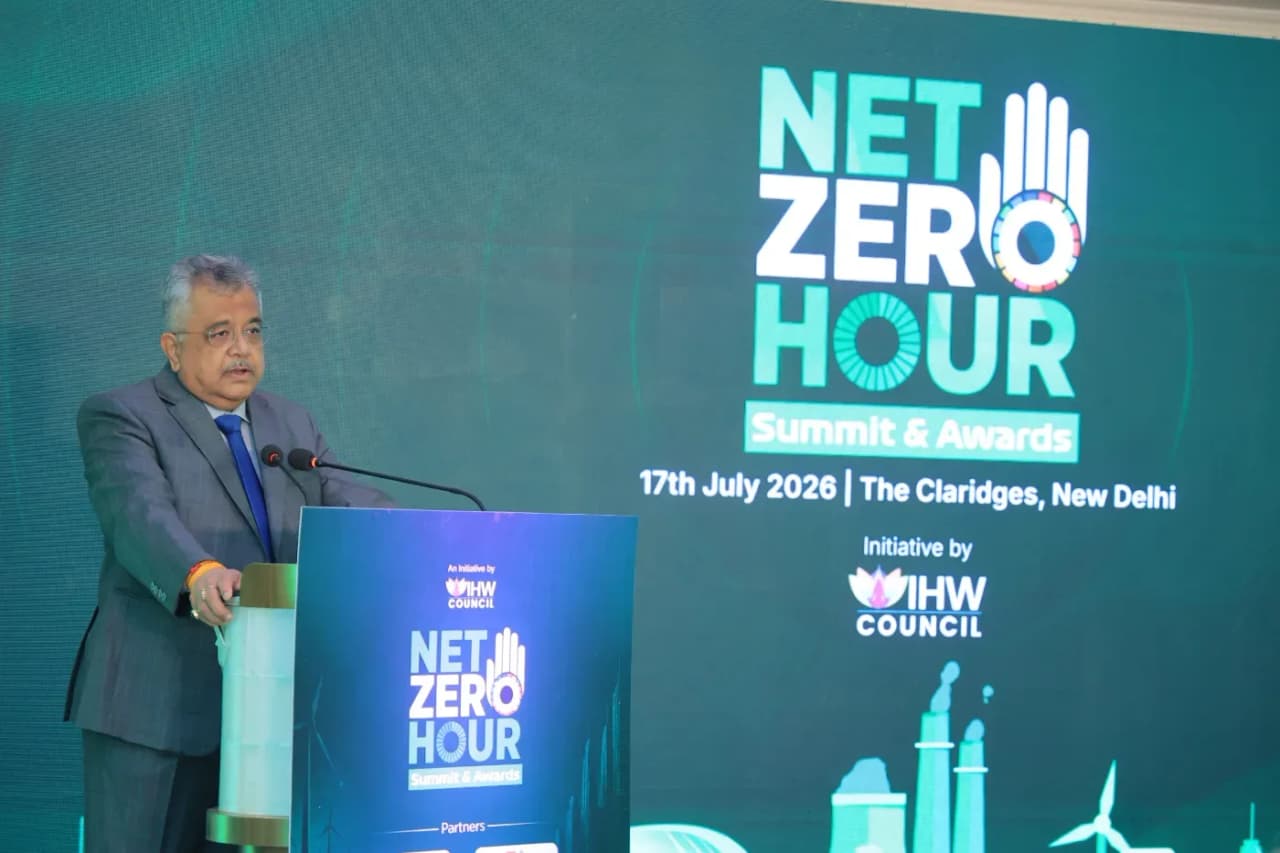
"India's journey towards Net Zero is not solely an environmental objective but a national commitment that calls for collective action across governments, industry, legal institutions, and citizens. As we pursue sustainable economic growth, it is equally important to strengthen the legal and institutional frameworks that support responsible development, encourage innovation and ensure accountability. Achieving long-term climate goals will depend on our ability to work together to create solutions that are environmentally responsible, economically viable, and socially inclusive."
— Hon'ble Shri Tushar Mehta, Solicitor General of India
Also Read | Finance Minister Launches New SIDBI Initiatives to Support MSME Financing in India
Justice Lokur on Growth and Environment
Hon'ble Justice Shri Madan B. Lokur, Former Judge, Supreme Court of India, Judge of the Supreme Court of Fiji and Chairperson, United Nations Internal Justice Council, stated that, "Sustainable development and environmental protection cannot be viewed as competing priorities. Economic progress can be truly meaningful only when it is achieved while preserving our natural resources and safeguarding the interests of future generations. Addressing climate change requires collective responsibility, where governments, institutions, industry and citizens work together with a shared sense of purpose. Equally important is creating greater public awareness so that sustainability becomes an integral part of everyday decision-making. India's journey towards a greener and more resilient future will depend on our ability to translate commitment into collective action."
Inside the Summit Sessions
The summit was not just about speeches. It had detailed sessions on policy, clean energy, ESG, green finance, sustainable infrastructure and new climate technologies. One session was called Net Zero for All: Building Awareness, Action & Impact from Homes to Nations. It made a clear point. Climate action cannot stop at government offices and company boardrooms. It must reach households and neighbourhoods too.
Another session was called Decoding Net Zero: Aligning Sustainability with Growth and the Sustainable Development Goals. It looked at how businesses can build sustainability into their growth plans. It also covered ways to improve ESG performance and governance. The programme showcased real projects too. These included industry led sustainability work already happening across sectors.
Dr. Lalit Bhasin, President, Society of Indian Law Firms and Founder, Bhasin & Co., said:
"Climate change and sustainability are among the defining challenges of our time, and addressing them requires collective responsibility. Governments can frame policies and institutions can provide direction, but lasting change will come only when citizens, businesses and future generations embrace sustainability as a way of life. Platforms like the Net Zero Hour Summit play an important role in bringing together policymakers, legal experts, industry and academia to build awareness, encourage dialogue and inspire collaborative action for a more sustainable India."
Also Read | ANNAM.AI and Syngenta Sign MoU at Bharat Innovates 2026 to Boost AI-Driven Farming
Awards for Climate Leaders
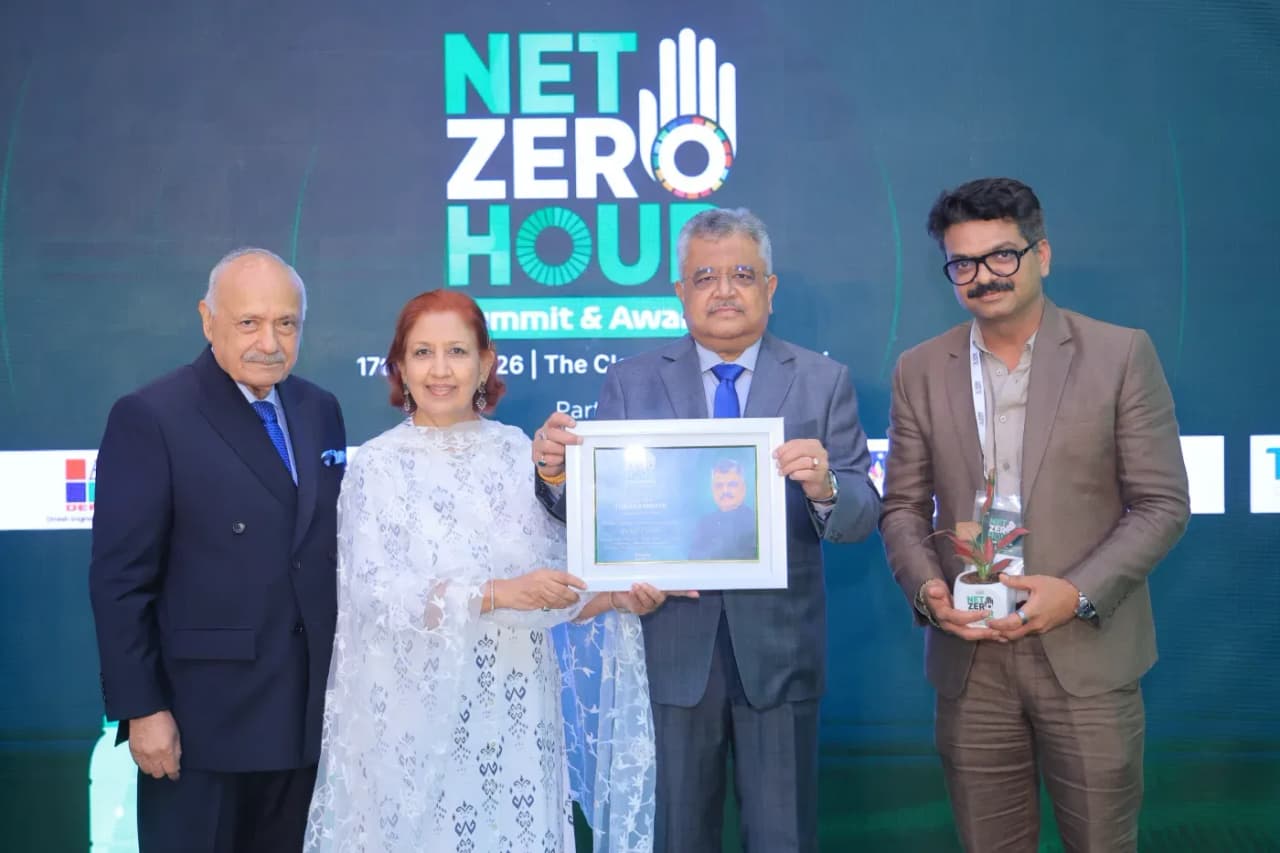
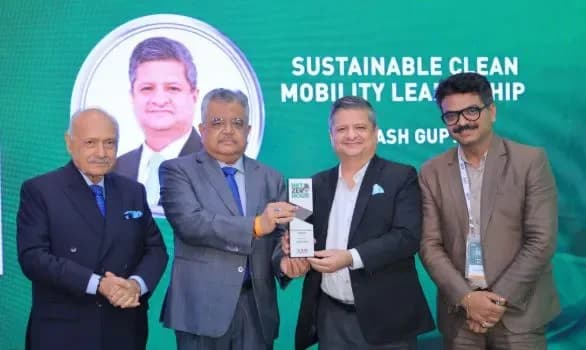
The event ended with the Net Zero Hour Awards 2026. These awards recognised organisations and individuals with real leadership in sustainability, ESG practices, climate innovation and responsible business. They highlighted projects that are already making a measurable difference on the ground. They also honoured businesses and individuals helping India move faster on its low-carbon path.
India is working towards 500 GW of clean energy capacity by 2030 and Net Zero emissions by 2070. Summits like this one show where the country stands. They also show how much distance is still left to cover. The message from Delhi was simple. India's Net Zero 2070 goal will not be met by one ministry or one industry alone. It needs law, policy, business and ordinary citizens pulling in the same direction.