

Apple did launch the iPhone 18 generation in September 2026, but there is no standard iPhone 18. Apple introduced only the iPhone 18 Pro and iPhone 18 Pro Max on September 9, while keeping the year-old iPhone 17 as its main standard model. The bigger surprise for Indian buyers is its price. The iPhone 17 launched at ₹82,900 in 2025 but Apple now lists it from ₹99,900.
So what happened to the base iPhone 18, why is the iPhone 17 still here, and why are iPhones becoming more expensive? The answer lies in Apple's new split launch cycle and rising component costs.
That sounds contradictory, but it is the main story of this year’s iPhone launch.
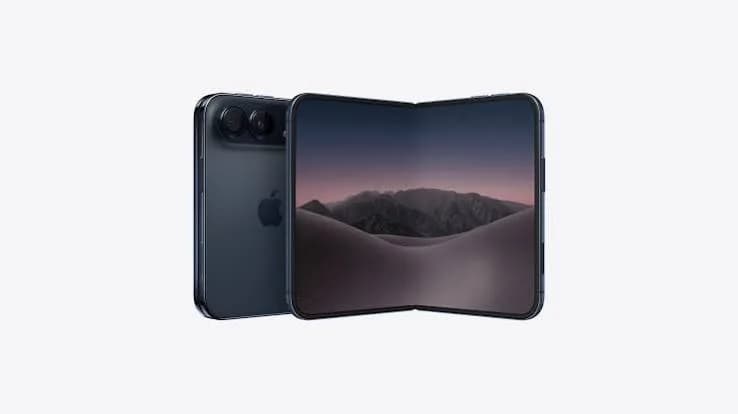
Apple announced the iPhone 18 Pro and iPhone 18 Pro Max, along with its first foldable phone called the iPhone Duo. The standard iPhone 18 did not appear. Apple is still selling last year’s iPhone 17 as its main non-Pro model, and it now costs considerably more in India than it did at launch.
So Apple has done something it has avoided for years. The model number has changed at the top of the range without changing at the centre of it.
For an Indian buyer visiting Apple’s store today, the choice starts with an iPhone 17e at ₹79,900, an iPhone 16 at ₹89,900 and an iPhone 17 at ₹99,900. Move into the new 2026 generation and the next step is the iPhone 18 Pro at ₹164,900. The iPhone 18 Pro Max starts at ₹179,900. The iPhone Duo starts at ₹299,900.
That ₹65,000 gap between the standard iPhone 17 and iPhone 18 Pro tells us more about Apple’s 2026 strategy than a list of camera specifications ever could.

Apple Did Launch the iPhone 18, Just Not the Standard Model
The first thing to clear up is the name.
There was an iPhone 18 launch in 2026.
Apple officially announced the iPhone 18 Pro and iPhone 18 Pro Max on September 9. Both use the A20 Pro chip. The main camera now has a variable aperture. Apple has also reduced the size of the Dynamic Island and added changes to cooling, battery life and camera controls. Pre-orders begin September 12 and sales start September 18.
Read Apple’s official iPhone 18 Pro announcement
What Apple did not announce was the standard iPhone 18.
That is the phone which would normally replace the iPhone 17 around this time of year.
This is why searches such as “why Apple did not launch iPhone 18” are appearing after the event. The more precise question is why Apple did not launch the base iPhone 18 in September 2026.
Apple has not publicly given a detailed explanation for the missing model.
There is, however, a long trail of supply-chain reporting that predicted exactly what happened.
Why the Standard iPhone 18 Is Missing
Reports about a split iPhone launch started more than a year before Apple’s September 2026 event.
In May 2025, supply-chain reporting said Apple planned to separate the iPhone 18 family into two launch periods. The iPhone 18 Pro models and a foldable iPhone were expected in the second half of 2026. The standard iPhone 18 and iPhone 18e were expected in the first half of 2027.
Analyst Ming-Chi Kuo reported a similar timetable. His roadmap placed the iPhone 18 Pro and Pro Max in the second half of 2026 and the iPhone 18 and iPhone 18e in the first half of 2027.
In other words, the absence of the standard iPhone 18 does not look like a phone that was suddenly pulled a few weeks before launch.
It looks like a change in how Apple wants to sell iPhones.
The September event has become the place for Apple’s higher-priced phones. The lower-priced part of the new generation can arrive months later.
If the reported timetable holds, buyers should expect the standard iPhone 18 sometime in the first half of 2027. Apple has not confirmed that date, so it should still be treated as reported information rather than an official release schedule.
Why Apple Split the iPhone 18 Launch
There are several reasons, and they fit together.
The first is the number of phones Apple now sells.
Apple no longer has a simple standard, Plus, Pro and Pro Max structure. It has added the e series, the Air family and now the iPhone Duo. Trying to manufacture and push every major iPhone at the same time creates a much larger production task.
The Information’s reporting, cited by TechCrunch and MacRumors, said splitting the launch could reduce the number of manufacturing workers and resources required at one time.
The second reason is marketing.
Kuo argued that Apple had a gap in the first half of the calendar year. Chinese phone makers often release major models during that period, while Apple’s main numbered iPhones traditionally arrived in September.
Putting the standard iPhone and the e model into an early-year window gives Apple another release period.
There is also a simpler commercial reason.
If the iPhone 18 Pro, Pro Max and Duo arrive first, buyers who insist on buying a new-generation 2026 iPhone have to start much higher up the price ladder.
Apple may eventually sell a less expensive iPhone 18. It just is not giving buyers that option at the same time as the Pro launch.
That changes the upgrade decision.
The iPhone Duo; A Real Game-Changer?
Apple’s first foldable iPhone was no longer a rumour after September 9.
The iPhone Duo has a 5.4-inch outer display and a 7.6-inch display when opened. It uses the A20 Pro chip and starts at ₹299,900 in India. Pre-orders begin October 16 and availability begins October 23.
See Apple’s official iPhone Duo announcement
A phone starting at nearly ₹3 lakh is obviously not a replacement for an ordinary iPhone 18.
It does, however, explain why Apple had another product to put at the centre of its September event.
News4Bharat examined India’s foldable market before Apple entered it and found that foldable demand in India was growing more slowly than the global market, with price remaining one of the barriers.
Read News4Bharat’s analysis of India’s foldable phone market
The ₹299,900 iPhone Duo now gives that question a real Apple product to test.
Will Indian users pay almost ₹3 lakh to enter Apple’s foldable ecosystem, or will the Duo remain a low-volume product while the iPhone 17 and future base iPhone 18 account for much more of the demand?
That will take time to answer.

What happened to the iPhone 17?
Nothing happened to it in the usual sense.
Apple did not discontinue the standard iPhone 17 when it introduced the iPhone 18 Pro.
It kept it in the lineup. That is important because the iPhone 17 now has a different job.
When it launched in September 2025, the iPhone 17 was the new standard-generation iPhone. In September 2026, it has become the bridge between Apple’s older phones and its 18 Pro range.
Apple’s current Indian store lists the iPhone 17 alongside the iPhone 17e and iPhone 16. The iPhone 17 Pro and iPhone 17 Pro Max no longer appear in the main active lineup after the arrival of the 18 Pro models. Retailers may continue to have remaining stock.
The stranger part is the price.
The iPhone 17 launched in India at ₹82,900 for 256GB.
Apple now lists it from ₹99,900.
That is ₹17,000 more for the same generation of phone.
This is the part of Apple’s 2026 launch that deserves more attention.
Consumers are used to seeing an older iPhone become cheaper when its successor arrives. This year, the direct successor did not arrive and the old phone became more expensive.
Apple iPhone Prices Before and After the 2026 Launch
| iPhone model | Earlier starting price in India | Current or new starting price | Difference |
|---|---|---|---|
| iPhone 16 | ₹79,900 at launch | ₹89,900 | ₹10,000 higher |
| iPhone 17e | ₹64,900 at launch | ₹79,900 | ₹15,000 higher |
| iPhone 17 | ₹82,900 at launch | ₹99,900 | ₹17,000 higher |
| iPhone 17 Pro | ₹134,900 at 2025 launch | Replaced by iPhone 18 Pro at ₹164,900 | ₹30,000 generational difference |
| iPhone 17 Pro Max | ₹149,900 at 2025 launch | Replaced by iPhone 18 Pro Max at ₹179,900 | ₹30,000 generational difference |
Why Apple Increased iPhone Prices in 2026
The clearest answer is memory.
This issue did not start at the September event.
In June 2026, Reuters reported that then Apple CEO Tim Cook had told The Wall Street Journal that Apple planned to raise prices because of a global shortage of memory and storage chips.
Demand from AI data centres has put pressure on memory supply. That has raised the cost of components used across computers and phones. Cook said Apple had tried to shield buyers from the increases but indicated that continued rises could not simply be absorbed.
Read Reuters reporting on Apple and the memory shortage
Then came the September launch.
Reuters reported that the iPhone 18 Pro and Pro Max received a $100 increase in the United States, with higher memory-chip costs playing a role. The iPhone 18 Pro now begins at $1,199 and the Pro Max at $1,299.
The shortage is therefore not a theory invented after Apple changed its prices. Apple had been warning about component costs months earlier.
Why iPhone India Pricing Is Different in India?
Readers who have followed smartphone prices in India through 2026 will recognise the pattern.
News4Bharat has already tracked repeated price increases on OnePlus phones this year. IDC data cited in that report showed pressure from memory costs across the Indian smartphone market, including phones that were already on sale.
Read why OnePlus phones have also become more expensive in 2026
That does not mean every Apple price increase can be blamed entirely on memory.
Apple controls its retail pricing. Currency movements, product positioning, taxes, supply agreements, margins and local market decisions can all affect what a company ultimately charges.
What can be said with confidence is that the memory shortage is real, Apple publicly warned that it could lead to price increases, and the company subsequently raised iPhone prices.
iPhone 18 Pro Price in India Compared With iPhone 17 Pro
The iPhone 18 Pro starts at ₹164,900 in India.
The iPhone 18 Pro Max starts at ₹179,900.
For comparison, the iPhone 17 Pro launched at ₹134,900 and the 17 Pro Max at ₹149,900 last year. That puts both new models ₹30,000 above the starting prices of their direct predecessors.
The US generational increase is $100.
That naturally raises another question for Indian buyers.
Why is the rupee jump so large?
There is no single official Apple statement breaking the ₹30,000 difference into component cost, currency effect, tax and margin.
Apple does state that prices on its Indian online store include GST.
See Apple India’s GST and payment information
It is therefore better to avoid claims that a single tax or a single import duty explains the full India price.
An iPhone is assembled from parts sourced through a global supply chain. Some iPhones are assembled in India, but local assembly does not remove the cost of imported components, memory, displays, processors, logistics, distribution or tax.
Apple also sets prices by market rather than converting a US sticker price directly into rupees.
The US price itself usually appears before local sales tax, while Apple’s Indian displayed price includes GST. So a direct multiplication of $1,199 by the dollar-rupee rate will not produce an apples-to-apples retail comparison.
News4Bharat POV
The important question after Apple’s September event is not “where is the iPhone 18?”
There are two iPhone 18 models sitting at the top of Apple’s range.
The question is what happened to the ordinary upgrade. That is the change Indian buyers will feel.
Someone who bought an iPhone 17 at its ₹82,900 launch price last year paid less than someone buying the same generation directly from Apple today.
Someone waiting for the usual September replacement now has to wait longer or jump from ₹99,900 for an iPhone 17 to ₹164,900 for an iPhone 18 Pro.
And someone who wants Apple’s first foldable phone needs at least ₹299,900.
The iPhone 18 launch therefore does not mark the disappearance of the base iPhone.
It marks the separation of Apple’s iPhone calendar by price and product type.
The expensive phones came first.
The standard iPhone appears to be coming later.
The question that remains is what Apple will charge when it finally arrives.