

The next successful business in India may not begin in Bengaluru, Mumbai or Delhi. It could emerge from a small warehouse in Indore, a food-processing unit near Lucknow, a solar installation team in Jaipur or a digital services company in Bhubaneswar.
For decades, large metropolitan cities dominated conversations about entrepreneurship. They offered investors, infrastructure, customers and skilled workers. Smaller cities were commonly viewed as places where businesses needed to overcome limited purchasing power and weaker market access.
That perception is changing.
According to the government's 9 November 2026 entrepreneurship report, India has crossed 2.62 lakh DPIIT-recognised startups, with nearly half originating from Tier-II and Tier-III cities.
Meanwhile, data released by the Ministry of MSME on 6 October 2026 places combined Udyam and Udyam Assist Platform registrations at approximately 9.78 crore, with registered enterprises reporting 43.28 crore employment opportunities.
These numbers demonstrate the growing scale of formal entrepreneurship. They do not, however, mean every registered business is active, profitable or expanding.
For first-time entrepreneurs, that distinction matters.
The real opportunity is not to copy a metropolitan business model and operate it at lower prices. It is to solve a specific local problem, find customers willing to pay, and build an operation capable of generating repeat revenue.
This News4Bharat guide examines 10 tier-2 city business ideas for 2026, their investment requirements, possible revenue models, growth drivers and operational risks.
Chart 1. India's monthly UPI transactions in 2026
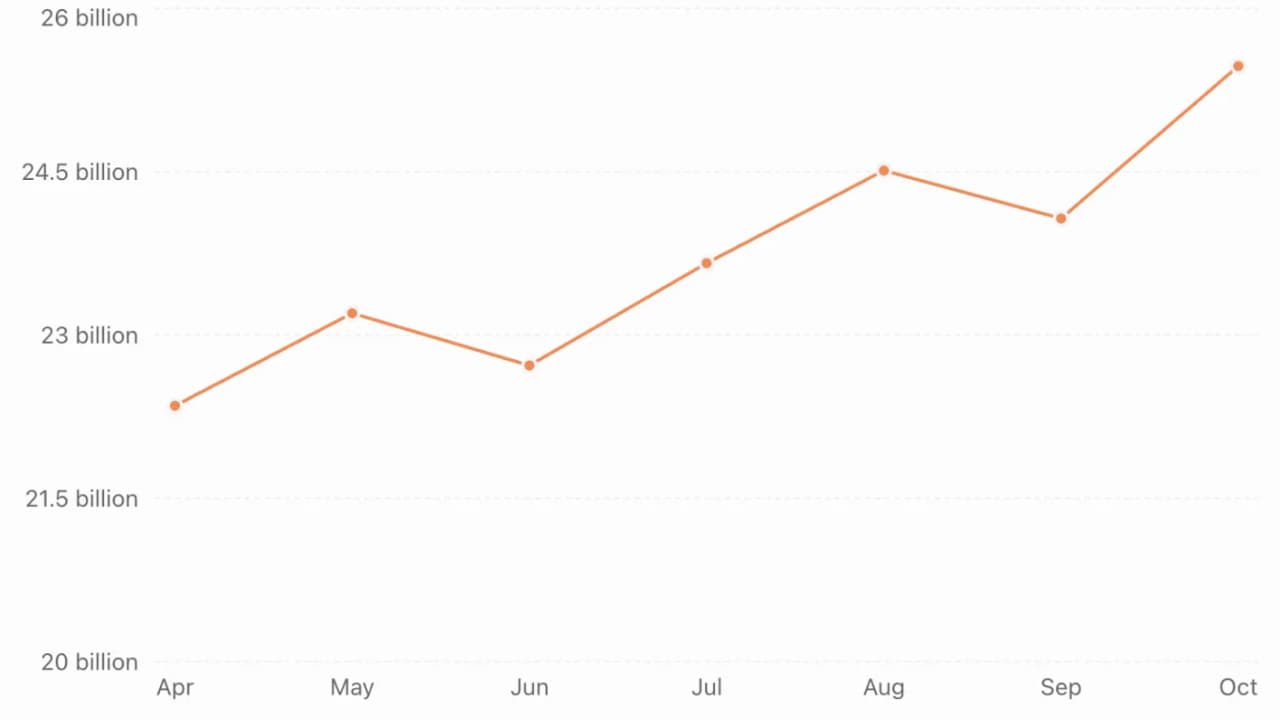 Source: NPCI UPI Monthly Statistics. Values rounded to two decimal places; vertical scale starts at 20 billion to show monthly changes.
Why Tier-2 Cities Are Becoming Important Business Markets?
Several changes are reshaping the economics of India's smaller urban centres.
Digital payments have reduced transaction friction. The National Payments Corporation of India recorded 25.47 billion UPI transactions worth approximately ₹31.53 lakh crore in October 2026 alone. That is a nationwide figure, not a tier-2-specific total, but it illustrates the scale of India's digital payment infrastructure.
Small businesses are entering formal markets. The Ministry of MSME reports that MSMEs contribute 31.1% of India's GDP and 48.58% of exports, citing the Economic Survey 2025-26.
Digital commerce infrastructure is expanding. According to the government's October 2026 update, the Open Network for Digital Commerce (ONDC) has enabled more than 500 million cumulative transactions. Platforms for online ordering, catalogue management, payments and logistics are creating new ways for local businesses to reach customers.
Entrepreneurship is becoming geographically dispersed. An October 2026 DPIIT release reported that 52% of recognised startups came from non-metro cities. This is a slightly different geographical measure from the Tier-II/Tier-III classification, but both indicate decentralisation.
As explored in News4Bharat's analysis of India's changing middle class, digital access is influencing how consumers discover products, compare prices and make purchasing decisions.
Together, these shifts create opportunities across traditional and emerging industries.
10 Business Ideas: Investment and Revenue Comparison
The following investment figures are News4Bharat editorial planning estimates, not government quotations or verified market averages. They assume a modest rented or home-based operation, basic equipment and initial working capital. Property purchases, major construction costs and significant franchise fees are excluded.
| Business opportunity | Illustrative starting investment | Main revenue model |
|---|---|---|
| AI and vernacular digital services | ₹75,000–₹3 lakh | Monthly retainers |
| E-commerce seller enablement and fulfilment | ₹2–8 lakh | Service fees and commissions |
| Regional food processing | ₹6–25 lakh | Wholesale and branded sales |
| Rooftop solar services | ₹3–12 lakh | Installation and maintenance |
| Electric vehicle service workshop | ₹5–15 lakh | Repairs and servicing |
| Diagnostic collection and home sample services | ₹4–14 lakh | Partner laboratory fees |
| Job-linked skills training | ₹2–10 lakh | Training and employer contracts |
| B2B packaging and light manufacturing | ₹5–20 lakh | Repeat institutional orders |
| Regional tourism experiences | ₹1.5–8 lakh | Bookings and partnerships |
| Commercial waste recovery services | ₹3–15 lakh | Collection and material sales |
Actual investment may be substantially higher depending on location, machinery, staffing, permits and working capital.
1. AI-Powered Digital Services for Local Businesses
Estimated investment: ₹75,000–₹3 lakh
A business does not need to develop its own artificial intelligence model to benefit from the AI economy.
A small agency could help retailers, clinics, coaching centres, manufacturers and restaurants automate everyday activities such as customer enquiry handling, appointment booking, product catalogue creation, inventory reporting and multilingual customer communications.
The strongest opportunity is not simply selling AI tools. It is setting up, training staff on and maintaining workflows that genuinely save time or increase sales.
For example, a local agency serving 20 businesses at ₹5,000 per month would generate ₹1 lakh in monthly revenue before operating expenses.
Potential cities include Indore, Lucknow, Jaipur, Bhubaneswar and Coimbatore, although demand must be established locally.
How to start: Interview 30 business owners, identify one repetitive problem, demonstrate a working solution and seek three paying pilot customers before hiring a team.
Main risk: Customers may cancel if the service provides little measurable value. Data privacy, accuracy and human oversight also matter, especially for financial or medical information.
2. E-Commerce Enablement and Local Fulfilment
Estimated investment: ₹2–8 lakh
Thousands of local manufacturers, artisans and retailers possess marketable products but lack the systems needed to sell them efficiently online.
A business that helps these enterprises photograph products, create catalogues, manage orders, package shipments and handle returns can earn service fees without manufacturing inventory.
The opportunity is particularly relevant as platforms such as ONDC connect merchants, buyers and logistics providers.
Government data released in March 2026 showed that over 1.16 lakh retail sellers were live on ONDC across more than 630 cities and towns as of December 2025.
A specialised seller-enablement company could charge ₹3,000–₹8,000 per client monthly for catalogue and account management, with fulfilment fees charged separately.
Consider targeting a single product cluster: handicrafts in Jaipur, textile suppliers around Surat, or processed foods near Indore.
News4Bharat's 2026 quick-commerce versus value-commerce analysis explains why affordability and distribution efficiency are important competitive factors in smaller markets.
Main risk: Returns, shipping costs and inconsistent seller inventory can destroy margins. Avoid promising guaranteed sales or search rankings.
3. District-Speciality Food Processing and Packaging
Estimated investment: ₹6–25 lakh
Food processing offers an opportunity to convert regional agricultural strengths into longer-lasting, higher-value products.
Potential businesses include spice grinding, millet-based snacks, makhana processing, fruit dehydration, pickle manufacturing, ready-to-cook mixes and regional packaged foods.
Rather than launching dozens of products, entrepreneurs could begin with two or three items supported by reliable local sourcing.
The government's July 2026 PMFME update reported more than two lakh sanctioned loans for micro food-processing enterprises. These projects represented over ₹20,300 crore of project investment, with nearly 90% of beneficiaries described as first-generation entrepreneurs.
Illustrative economics: A unit selling 4,000 packets monthly at an average wholesale realisation of ₹60 would record ₹2.4 lakh in revenue. Ingredients, packaging, labour, wastage, distribution and overheads must be deducted before determining profit.
How to start: Test demand with a small batch, establish shelf life, secure institutional or retail buyers, and expand only after repeat orders.
Main risk: Food spoilage, product consistency, packaging costs and distributor credit periods. Relevant FSSAI registration or licensing, labelling and hygiene compliance are essential.
Chart 2. India's registered MSME base by business activity
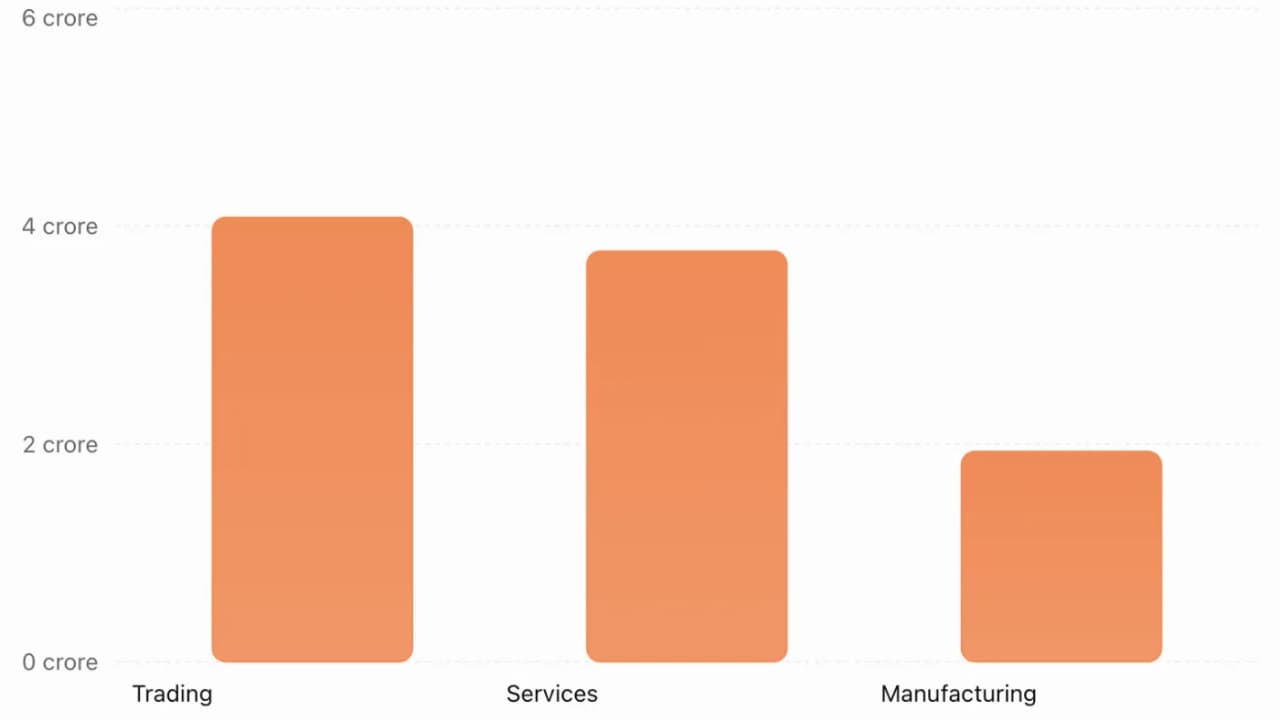 Source: Ministry of MSME, 6 October 2026. Registrations are not equivalent to independently verified active enterprises.
4. Rooftop Solar Installation and Maintenance
Estimated investment: ₹3–12 lakh
The solar opportunity extends beyond panel manufacturers.
Small businesses can participate through site surveys, customer acquisition, installation coordination, electrical work, panel cleaning, inverter servicing and annual maintenance contracts.
The Ministry of New and Renewable Energy reported in August 2026 that more than 50.06 lakh households had benefited under the PM Surya Ghar programme.
This creates a potential long-term service market: installed rooftop systems require inspection, troubleshooting and maintenance.
Entrepreneurs should build relationships with approved vendors, trained electricians and equipment suppliers.
Illustrative revenue: Maintaining 100 customer systems under ₹2,000 annual service contracts would generate ₹2 lakh annually, before labour, transport and other costs. Installation projects could provide additional revenue.
Main risk: Electrical safety, low-quality equipment, warranty disputes and customer acquisition expenses. Installations must comply with relevant DISCOM requirements and scheme conditions.
5. Electric Two-Wheeler and Three-Wheeler Repair Centres
Estimated investment: ₹5–15 lakh
Electric mobility creates demand for technicians who understand batteries, motors, controllers, diagnostics and charging systems.
The government's PM E-DRIVE factsheet reports 26.59 lakh vehicle sales supported under the scheme as of June 2026. The programme also includes funding for charging infrastructure.
For smaller cities, a specialised workshop servicing electric scooters, e-rickshaws and delivery fleets may provide a more accessible entry point than developing a public charging network.
Illustrative revenue: Servicing 12 vehicles daily at an average labour realisation of ₹350 over 26 days would produce about ₹1.09 lakh in monthly service revenue, excluding parts sales and operating expenses.
A fleet maintenance contract could make revenue more predictable.
Main risk: High-voltage safety, battery fire hazards, spare-parts availability and manufacturer warranty restrictions. Technicians need appropriate training and equipment.
6. Diagnostic Sample Collection and Home Healthcare Support
Estimated investment: ₹4–14 lakh
Healthcare customers increasingly value convenient access to reliable diagnostics.
A smaller-city entrepreneur could establish a sample collection centre or a home collection operation through an authorised diagnostic laboratory, rather than investing immediately in a full pathology laboratory.
India's public digital-health infrastructure demonstrates the scale of remote-service adoption. The Ministry of Health reported that eSanjeevani crossed 50 crore teleconsultations in September 2026.
This figure measures a government telemedicine service; it should not be interpreted as evidence of private diagnostic demand.
Potential services: Scheduled home sample collection, preventive-health packages sold through laboratory partners, secure report delivery and appointment coordination.
How to start: Partner with a qualified laboratory, assess neighbourhood demand, establish documented sample-handling procedures and use appropriately trained personnel.
Main risk: Patient safety, confidentiality, sample integrity and local licensing requirements. Do not provide diagnoses or advertise medical expertise without appropriate qualifications and authorisation.
7. Job-Linked Training and Industry Skills Centres
Estimated investment: ₹2–10 lakh
A training centre should solve an employment problem, not simply sell certificates.
Potential courses include bookkeeping software, retail operations, warehouse management, machine operation, spoken English, EV servicing, hospitality and practical digital skills.
The government's August 2026 skilling update reported that PMKVY 4.0 had trained more than 5.44 lakh candidates in emerging technology-related areas as of 30 June 2026.
For private entrepreneurs, the opportunity lies in identifying actual employer demand before developing a course.
A 30-student programme charging ₹6,000 per participant would generate ₹1.8 lakh in gross course revenue. Instructor fees, rent, equipment, marketing and placement support would reduce the surplus.
News4Bharat has separately examined India's graduate employability and skills challenge.
Main risk: Weak placement outcomes and misleading employment promises. Build employer partnerships and report verified placement rates transparently.
8. B2B Packaging and Light Manufacturing Services
Estimated investment: ₹5–20 lakh
Not every manufacturing business requires a large factory.
Small units can specialise in packaging materials, labels, corrugated boxes, customised cartons, product assembly, quality checks or basic fabrication.
Demand may come from local food processors, pharmaceutical distributors, textile enterprises, engineering suppliers and online sellers.
This business model is particularly attractive when customers place repeat orders.
Illustrative economics: A packaging supplier delivering 50,000 units monthly at ₹8 per unit would record ₹4 lakh in sales. If variable costs average ₹5.50 per unit, the monthly contribution before fixed expenses would be ₹1.25 lakh.
That contribution is not net profit.
How to start: Secure written trial orders from several potential buyers, compare machinery quotations and verify minimum viable production volume.
Main risk: Customer concentration, machine downtime, material-price fluctuations and delayed payments. Working capital can matter more than the purchase price of equipment.
9. Heritage, Religious and Regional Experience Tourism
Estimated investment: ₹1.5–8 lakh
Tourism businesses need not begin with owning a hotel.
Entrepreneurs can organise guided heritage walks, regional food experiences, craft demonstrations, local transport coordination, specialised pilgrim itineraries or curated weekend activities.
The Ministry of Tourism's World Tourism Day 2026 report recorded 428.55 crore domestic tourist visits during 2025.
These are visits, not unique individuals, and the national total does not reveal demand at any particular destination.
Cities with established visitor attractions, including Varanasi, Udaipur, Mysuru, Ajmer and Guwahati, can be investigated for specific market gaps.
Illustrative revenue: Eight tours per month with 15 guests paying ₹1,000 each would generate ₹1.2 lakh in gross bookings.
Main risk: Seasonal demand, cancellations, guide quality, transport safety and permissions. Build partnerships with existing hotels and travel operators before expanding.
10. Commercial Waste Segregation and Recovery Services
Estimated investment: ₹3–15 lakh
Shops, restaurants, institutions and commercial complexes generate recurring waste-management requirements.
A licensed or appropriately authorised service company could offer segregated collection, recyclable-material aggregation, documentation and responsible transfer to approved processors.
It could begin with a narrowly defined service: collecting clean, recyclable cardboard and plastic packaging from commercial establishments.
Illustrative revenue: Forty customers paying ₹2,500 monthly would generate ₹1 lakh in recurring collection fees before transport, wages, sorting expenses and compliance costs. Any revenue from recyclables would be additional and dependent on material quality and market prices.
How to start: Identify local municipal arrangements, secure agreements with authorised recyclers and obtain the permissions applicable to the waste categories handled.
Main risk: Contamination, volatile scrap prices, worker safety and environmental compliance. Avoid hazardous, biomedical or electronic waste unless specifically authorised and equipped.
Which Business Idea Is Best for Your City?
A strong business in Jaipur may not work in Nagpur. The right opportunity depends on local demand, existing competitors, disposable income, industrial clusters and purchasing patterns.
| City or market | Opportunities worth testing | Local demand to verify |
|---|---|---|
| Indore | Food processing, packaging, digital services | Manufacturer and retailer orders |
| Jaipur | Tourism, craft commerce, solar services | Visitor spending and homeowner enquiries |
| Lucknow | Digital commerce, food brands, training | Consumer demand and repeat purchases |
| Surat | Packaging, manufacturing support | Industrial procurement requirements |
| Coimbatore | Technical servicing, B2B manufacturing | Equipment and fleet maintenance demand |
| Bhubaneswar | Skills, digital services, healthcare support | Institutional and household demand |
| Guwahati | Regional distribution, tourism | Logistics costs and visitor bookings |
| Varanasi | Heritage experiences, artisan e-commerce | Tourism seasonality and seller economics |
These are illustrative market hypotheses, not a government ranking of tier-2 business opportunities. City-tier classifications vary between institutions and commercial datasets.
A Practical Business Selection Formula
Before committing capital, score each opportunity from one to five on five factors:
- Demand: Can at least 10 customers demonstrate a genuine need?
- Repeat purchases: Will customers return monthly or quarterly?
- Competition: Can the business offer a meaningful advantage?
- Capital efficiency: Can the service launch without excessive fixed costs?
- Compliance: Are the legal and technical requirements manageable?
A business scoring 20 or more out of 25 deserves further investigation. This is an editorial screening framework, not a validated prediction of success.
Government Schemes and Financing Options
Entrepreneurs should distinguish between business registration, borrowing eligibility and actual access to financial assistance.
- Udyam Registration: The official Udyam Registration Portal allows eligible enterprises to complete MSME registration without a government registration fee.
- PMEGP: The Prime Minister's Employment Generation Programme supports eligible new non-farm enterprises through credit-linked assistance. Government documentation identifies project-cost ceilings of ₹50 lakh for manufacturing and ₹20 lakh for services. Subsidy, contribution and eligibility conditions vary.
- PMFME: The food-processing programme has provided credit-linked support, including assistance linked to eligible project costs. Entrepreneurs should verify current application windows, scheme continuation and state-level conditions before preparing a financing plan.
- Startup India: DPIIT recognition may enable eligible innovative startups to access certain schemes or regulatory benefits. Ordinary small businesses do not automatically qualify merely because they are newly established.
- GeM: Eligible suppliers can explore institutional procurement opportunities through the official Government e-Marketplace.
The National Single Window System can help identify applicable business approvals.
Bank finance should be evaluated using expected cash flow, repayment capacity and documentation requirements. Government scheme availability does not guarantee loan approval.
A 90-Day Roadmap for Starting a Business in a Tier-2 City
Days 1–30: Validate the Problem
Interview at least 30 prospective customers. Study existing competitors, expected prices, customer complaints and purchase frequency.
Obtain three actual supplier quotations and estimate the full cost of delivering the product or service.
Do not count expressions of interest as confirmed revenue.
Days 31–60: Test with Paying Customers
Run a limited pilot involving 5–10 paying customers, where feasible.
Record revenue, direct costs, customer acquisition expenses, refunds, working-capital requirements and customer feedback.
Measure contribution margin: Contribution per sale = Selling price − Direct variable cost
A positive contribution is necessary, but fixed expenses and financing costs must also be covered.
Days 61–90: Decide Whether to Expand
Evaluate repeat purchases, payment collection, customer satisfaction and the financial impact of increasing volume.
Expand only when evidence suggests that additional customers will improve rather than weaken the operation's economics.
For example, ₹2 lakh monthly revenue with ₹1.3 lakh variable costs produces ₹70,000 contribution. If fixed monthly costs are ₹80,000, the business still loses ₹10,000 before financing costs and taxes.
Growth without positive unit economics can accelerate losses.
The Bigger Opportunity: Solve Local Problems at Scale
The defining advantage of a smaller-city business is not necessarily cheap rent or labour.
It may be better knowledge of local customers, easier supplier relationships, access to regional products or an underserved service category.
India's growing startup base, digital payment infrastructure and formal MSME ecosystem provide a supportive backdrop. Yet national growth statistics cannot substitute for city-level customer research.
The most sustainable business may be one that solves an ordinary problem exceptionally well: delivering packaging on time, repairing electric vehicles reliably, helping local merchants sell online, or providing safe access to essential services.
For entrepreneurs looking at tier-2 city business ideas in 2026, the first question should not be Which sector is growing fastest?
It should be Which customer problem can I solve profitably, repeatedly and better than the available alternatives?
That answer is where a scalable business begins.
Research methodology and disclosure: Government statistics in this article are drawn from dated releases by DPIIT, the Ministry of MSME, NPCI and other Union ministries, reviewed as of 13 November 2026. Investment ranges, customer examples, revenue scenarios and the business selection framework are editorial illustrations, not surveyed averages, guaranteed returns or official financial projections. Entrepreneurs should independently validate location-specific prices, licensing requirements and scheme eligibility before investing.