

India's mutual fund industry is attracting record monthly investments, but choosing the right mutual fund in 2026 has become more complicated than simply checking which scheme delivered the highest return last year.
According to the Association of Mutual Funds in India (AMFI), systematic investment plan (SIP) contributions reached ₹32,490 crore in September 2026, compared with ₹32,297 crore in August. Net inflows into equity-oriented mutual funds climbed to approximately ₹38,307 crore, a rise of about 31% from the preceding month.
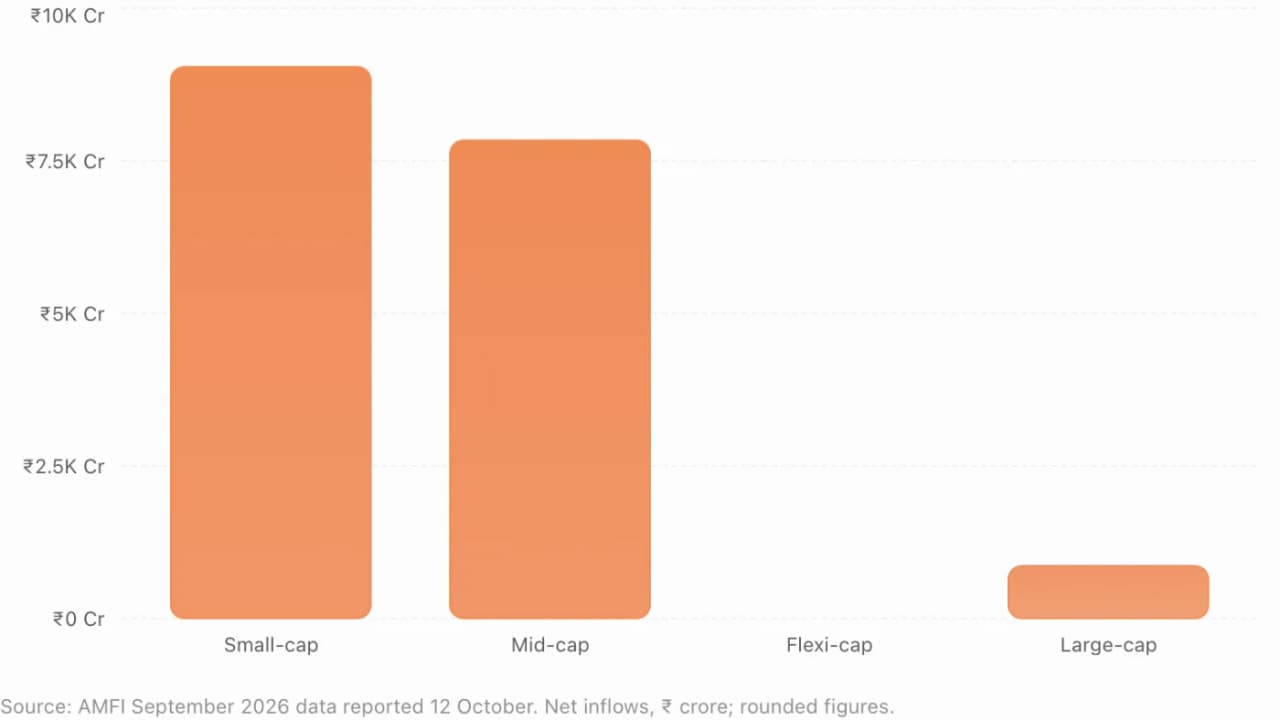
Interestingly, much of this money flowed into relatively riskier market segments. Small-cap mutual funds attracted approximately ₹9,039 crore, while mid-cap funds received around ₹7,835 crore in September.
These numbers demonstrate continued investor participation, but they raise an equally important question: Are investors choosing funds that match their financial goals, or simply following where the money is going?
Consider two investors. One is 27 years old and investing ₹5,000 every month for retirement. The other is 42 and saving for a house down payment needed in two years. Both might be interested in mutual funds, but putting their money into the same equity scheme could be a serious mistake.
The first investor may have time to recover from market corrections. The second could be forced to withdraw during a market decline.
That is why the best mutual fund in India is not necessarily the scheme with the highest five-year return, the largest assets under management (AUM), or the most popular SIP.
Also Read | Index, Flexi-Cap or Mid-Cap: What Should You Choose in 2026?
TOP MUTUAL FUNDS IN 2026 BY CATEGORY
- Flexi Cap (Best for most investors): Parag Parikh Flexi Cap Fund — AUM Rs 48,000+ crore; 3Y CAGR 23.65%; Expense Ratio 0.74%. Invests across large, mid, and global stocks. Consistent performer across market cycles.
- Large Cap (Stability + growth): Mirae Asset Large Cap Fund, Axis Bluechip Fund, SBI Bluechip Fund — solid track records, low-volatility, suitable for 5+ year horizons
- Mid Cap (Higher growth, higher risk): HDFC Mid-Cap Opportunities, Nippon India Growth Fund — strong for 7+ year horizons; expect short-term swings
- Small Cap (For aggressive, long-term investors only): Quant Small Cap Fund, Nippon India Small Cap Fund, Bank of India Small Cap Fund — high return potential, high volatility; minimum 10-year horizon recommended
- Index / Passive (Low cost, market returns): UTI Nifty 50 Index Fund, HDFC Index Fund Nifty 50 Plan — expense ratios under 0.20%; ideal for first-time investors or those who want consistent, predictable exposure
- Hybrid / Balanced (Moderate risk, lower volatility): Bandhan Large & Mid Cap Fund (3Y return: 23.54%); ICICI Prudential Balanced Advantage Fund — for investors who want equity growth with some fixed-income cushion
HOW TO INVEST IN MUTUAL FUNDS — STEP BY STEP
- Step 1: Define your goal — retirement? Child's education? Emergency fund? Each goal has a different time horizon and risk tolerance
- Step 2: Decide SIP or Lump Sum — SIP (Systematic Investment Plan) is better for most salaried investors; start with as little as Rs 500/month
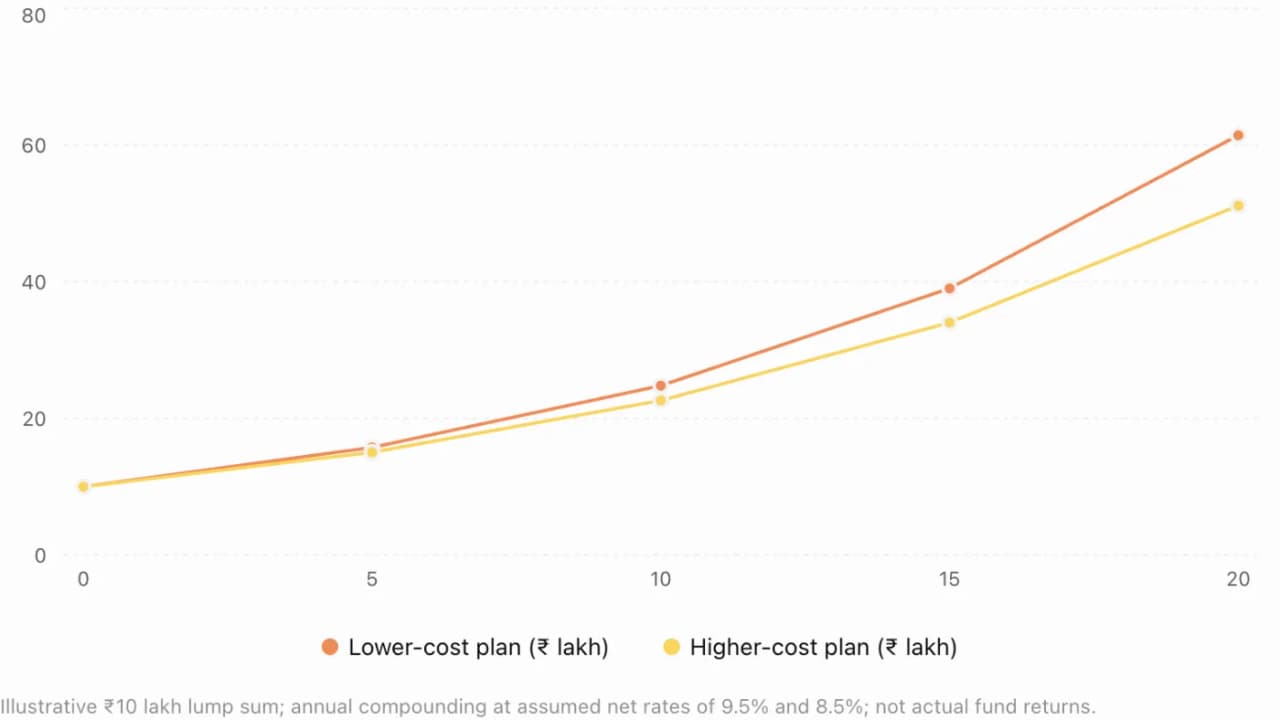
- Step 3: Choose Direct Plan over Regular Plan — Direct plans have no distributor commission and give 0.5–1% higher returns annually (compounding matters enormously over 10–20 years)
- Step 4: Pick your platform — Groww, Zerodha Coin, INDmoney, Dhan, or directly through fund house websites. All allow 100% Direct plan investing
- Step 5: Start KYC — PAN card + Aadhaar + bank account. Takes under 10 minutes online via Digilocker
- Step 6: Diversify across 3–4 funds maximum — avoid owning 15 funds that essentially hold the same stocks
- Step 7: Don't stop SIPs during market falls — that is exactly when rupee cost averaging works best
The biggest mistake most Indian investors make in 2026 is chasing last year's top-performing fund. Small cap funds that returned 50%+ in 2023–24 have underperformed significantly since. Past returns don't guarantee future performance — this isn't a legal disclaimer, it's a literal mathematical reality. The funds that have held up best through 2025's volatility and the 2026 Iran-war market shock are the ones with diversification built in — flexi cap, index, and large & mid cap categories.
Also Read | Mutual Fund vs ETF: Which Is Better for Beginners in India (2026 Guide)
Direct vs Regular Mutual Funds in 2026: How Much Does the Expense Ratio Matter?
Two investors can own units of the same mutual fund and still earn different returns over time.
One reason is the difference between direct and regular plans.
A direct plan allows investors to invest without a mutual fund distributor. A regular plan includes distribution-related expenses, resulting in a generally higher expense ratio.
Both plans follow the same underlying investment strategy and portfolio, but their net returns may differ because of costs.
| Feature | Direct plan | Regular plan |
|---|---|---|
| Investment route | Directly through AMC or eligible platform | Through a distributor or intermediary |
| Distributor commission | Not included | Included in plan expenses |
| Expense ratio | Generally lower | Generally higher |
| Underlying portfolio | Same scheme portfolio | Same scheme portfolio |
| NAV | Separate NAV | Separate NAV |
| Assistance | Investor manages decisions or separately seeks advice | Distributor may provide assistance |
| Suitability | Investors comfortable selecting and managing investments | Investors who value distribution-related services |
ILLUSTRATIVE IMPACT OF AN ANNUAL COST DIFFERENCE
India's Mutual Fund Market in September 2026: What the Latest Numbers Reveal
September brought another strong month for India's mutual fund industry. Monthly SIP contributions touched ₹32,490 crore, while equity mutual funds attracted approximately ₹38,307 crore in net investments.
Small-cap and mid-cap funds were among the biggest beneficiaries of investor interest, receiving roughly ₹9,039 crore and ₹7,835 crore, respectively.
However, strong inflows should not be interpreted as proof that these categories offer better risk-adjusted returns.
Large inflows can reflect investor confidence, sustained SIP participation or increasing interest in a particular market segment. They do not establish that valuations are attractive or that future returns will match historical performance.
For someone investing for retirement over the next 20 years, equity-market fluctuations may be manageable. But for an investor saving for a near-term financial goal, the same volatility can create a serious shortfall.
The lesson from September's data is therefore not that every investor should buy mid-cap or small-cap funds. It is that investment decisions should begin with financial goals and risk capacity, not recent fund-flow trends.
Best Mutual Funds by Financial Goal: Where Should You Invest in 2026?
Before choosing a mutual fund, ask one question: When will I need this money?
A person saving for an international holiday next year should not invest in the same way as someone building a retirement corpus over 25 years. The difference is not necessarily income or age. It is the amount of market risk the investor can afford to take before needing the money.
The following table explains which categories investors may evaluate based on their goals and time horizons.
| Financial goal | Approximate time horizon | Categories worth evaluating | Main concern |
|---|---|---|---|
| Emergency reserve | Immediate access | Savings accounts, bank deposits and selectively liquid mutual funds | Liquidity and capital preservation |
| Holiday or planned purchase | Under 1 year | Overnight or liquid funds, alongside bank deposits | Avoiding short-term market losses |
| Car purchase or house down payment | 1–3 years | High-quality, short-duration debt categories where appropriate | Interest-rate and credit risks |
| Child's education | 5–10 years | Diversified equity funds, combined with safer assets as the goal approaches | Market decline near withdrawal |
| Long-term wealth creation | 7–15 years | Broad-market index funds or diversified active equity funds | Equity volatility and fund-selection risk |
| Retirement | 15 years or more | Diversified equity-oriented portfolio with periodic asset-allocation review | Inflation, prolonged market declines and inadequate savings |
| Aggressive long-term wealth creation | 10 years or more | Diversified equity core with limited mid-cap or small-cap exposure | Deep drawdowns and extended underperformance |
For Short-Term Goals: Protect the Money Before Trying to Grow It
If your money is needed within the next 12 months, the possibility of losing part of it may matter more than earning a higher return.
Overnight and liquid mutual funds can be considered for certain short-term parking needs, but they are not guaranteed deposits. Investors should review the portfolio's credit quality, interest-rate sensitivity, liquidity rules and applicable exit loads.
Bank savings accounts and fixed deposits may also be relevant, especially when capital protection is the priority.
For Medium-Term Goals: Balance Risk and Predictability
For goals three to five years away, investors may consider a carefully selected combination of fixed-income investments and limited equity exposure, depending on their capacity to absorb losses.
Hybrid funds should not automatically be treated as safe alternatives to debt funds. Their actual equity exposure, derivatives strategy and asset allocation can materially affect risk.
For Long-Term Goals: Diversification Matters More Than Predictions
When the goal is at least seven to ten years away, diversified equity mutual funds become worth evaluating for their long-term growth potential.
Broad-market index funds and flexi-cap funds are two possible approaches, although they involve different costs and investment risks.
Mid-cap and small-cap exposure may be considered by investors who understand that these categories can experience substantial declines and may underperform larger companies for prolonged periods.
What does 2026's market context specifically mean for mutual fund investors? Three things stand out.
- First, the Iran war has created an opportunity in beaten-down segments — aviation, consumer discretionary, and some export-oriented IT stocks are all trading below their long-term fair values, and well-managed flexi cap funds can capture this recovery.
- Second, elevated oil prices are a headwind for domestic consumption plays, which means pure midcap/smallcap funds with heavy domestic consumption bets face margin pressure.
- Third, RBI's rate cuts — the MPC cut rates in April 2026 — are good for debt funds and hybrid funds, whose bond holdings appreciate when rates fall.
For first-time investors, the honest advice is simple: start with a Nifty 50 index fund via SIP. No complexity, very low cost, market returns. Add a well-managed flexi cap fund alongside it. Don't touch the money for 7 years minimum. That is a better strategy than spending six months researching the "perfect" fund and never investing.
Also Read | CKYC 2.0 Explained: One KYC for Banks, Insurance & Mutual Funds from August 2026
Key metrics to evaluate any mutual fund before investing:
WHAT TO CHECK BEFORE INVESTING
- 3-year and 5-year CAGR returns — look for consistency, not just peak returns
- Expense Ratio — below 0.5% for index funds; below 1% for active large-cap; up to 1.5% is acceptable for small/mid-cap
- AUM (Assets Under Management) — very small AUMs under Rs 500 crore can be volatile; very large AUMs above Rs 50,000 crore can face deployment challenges in mid/small cap
- Fund Manager track record — how long has the current manager been running this fund? Consistency across 5+ years is a signal
- Sharpe Ratio / Risk-adjusted returns — a fund returning 20% with lower volatility than its benchmark is better than one returning 22% with much higher risk
- Rolling returns (not point-to-point) — check if the fund consistently beats its benchmark over any random 3-year period, not just the best window
What Changed for Mutual Fund Investors in 2026? SEBI's New Fund Categorisation Rules
One development investors should understand is the Securities and Exchange Board of India's revised mutual fund scheme-categorisation framework, issued on February 26, 2026.
The circular updates how mutual fund schemes are categorised and described, with the objective of making different strategies easier to distinguish and compare.
Under the revised framework, the broad classification includes five groups:
- Equity schemes
- Debt schemes
- Hybrid schemes
- Life Cycle Funds
- Other schemes, including passive schemes and funds of funds
Among the notable changes are the introduction of Life Cycle Funds, revisions affecting particular equity and hybrid categories, and measures relating to portfolio overlap and strategy differentiation.
The earlier Solution Oriented Schemes category has also been discontinued under the revised categorisation framework, subject to the prescribed transition arrangements.
What Does This Mean for Existing Investors?
A change in scheme classification does not mean that every existing investment must be redeemed or switched.
However, investors should check whether their fund house has issued a notice describing changes to a scheme's name, category, mandate, asset allocation or benchmark.
This is particularly important for investors comparing historical fund performance. When a scheme's investment mandate changes, its older track record may not fully represent the strategy under which it will operate going forward.
The practical lesson is simple: Never select a mutual fund using only an old category label or past-performance chart. Review its current Scheme Information Document and recent portfolio disclosures.
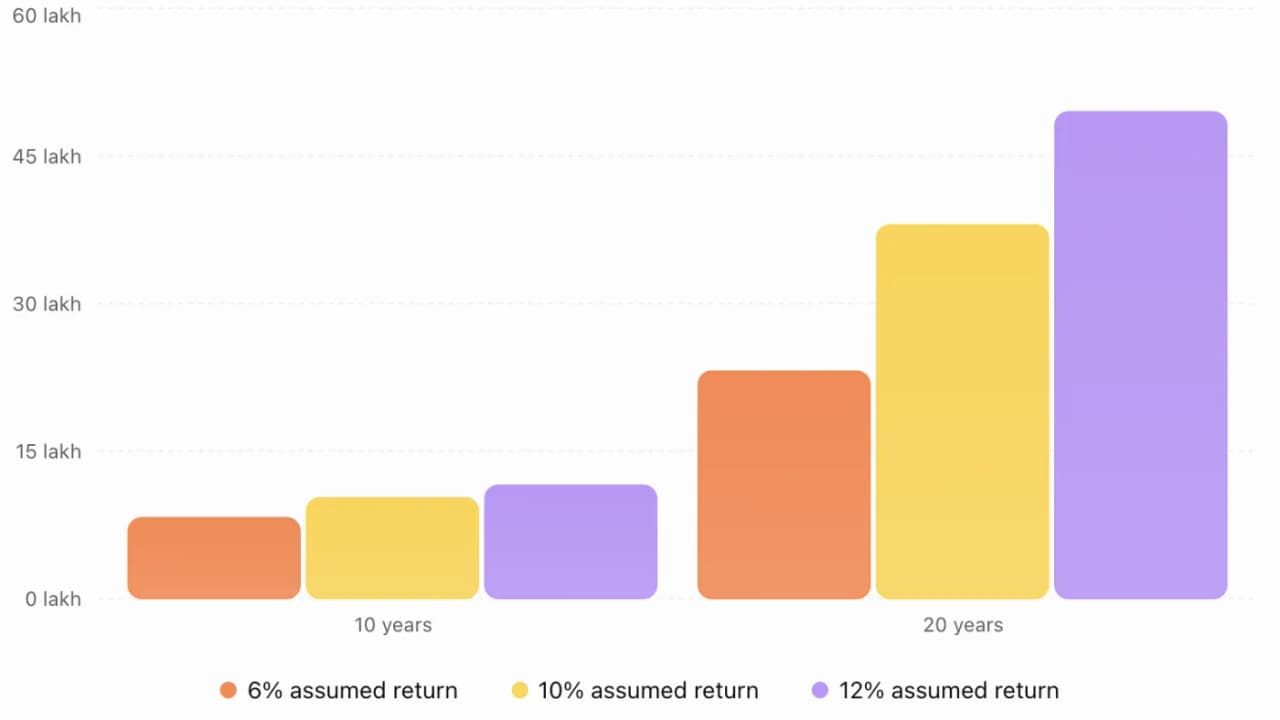
HYPOTHETICAL ₹5,000 MONTHLY SIP OUTCOMES
Gold, International and Sectoral Mutual Funds: Should They Be Part of Your Portfolio?
Not every investment opportunity needs to be pursued through a diversified Indian equity fund. Gold-related schemes, international funds and sectoral funds provide other forms of market exposure, but each serves a different purpose.
Gold Mutual Funds: Diversification, Not Guaranteed Protection
Gold exchange-traded funds and gold funds of funds provide exposure to gold without requiring investors to physically store the metal.
Gold may behave differently from equities during some periods of market uncertainty, making it potentially useful as part of a diversified portfolio.
However, gold prices can also decline substantially. A gold fund is not a substitute for an emergency reserve, and its investment value is not guaranteed.
International Mutual Funds: Geographic Diversification With Currency Risk
International mutual funds can provide exposure to companies and markets outside India.
This may help reduce dependence on the performance of the domestic equity market. But investors must consider foreign-market valuations, currency fluctuations, scheme expenses and applicable regulatory or overseas-investment limits.
The availability of fresh subscriptions should also be verified because overseas-investment restrictions can affect individual schemes.
Sectoral and Thematic Funds: Attractive Stories Can Carry Concentrated Risks
Technology, healthcare, manufacturing, infrastructure and other themes may appear promising over the long term.
Yet a strong business trend does not automatically mean the stocks in that sector are attractively valued.
Sectoral and thematic funds generally offer narrower exposure than diversified equity funds. They can underperform for extended periods when expectations, valuations or economic conditions change.
For most beginners, diversification across companies and industries is a more important starting point than trying to identify the next winning sector.
How to Compare Mutual Funds in 2026: A 10-Point Investor Checklist
With hundreds of mutual fund schemes available in India, comparing funds using only their latest returns can lead to poor decisions.
A more effective approach is to evaluate funds according to their objectives, portfolio characteristics, risks, costs and performance across different market conditions.
| Evaluation parameter | What investors should check |
|---|---|
| 1. Investment objective | Does the fund's stated strategy match your financial goal? |
| 2. Category and mandate | What securities can the fund hold, and under what investment restrictions? |
| 3. Rolling returns | How has the fund performed across multiple three-, five- or ten-year periods? |
| 4. Benchmark comparison | Has the fund performed competitively against an appropriate total-return benchmark? |
| 5. Downside risk | How did the scheme behave during difficult market periods? |
| 6. Expense ratio | What is the latest expense ratio of the specific direct or regular plan? |
| 7. Portfolio concentration | How much exposure is concentrated in its largest holdings and sectors? |
| 8. Fund-management consistency | Has there been a significant change in manager, strategy or mandate? |
| 9. Riskometer and liquidity | What risks does the fund disclose, and how easily can investors redeem? |
| 10. Tax and exit costs | What taxes, exit loads and other implications apply when redeeming? |
News4Bharart POV
India's mutual fund market offers investors more choices than ever, from low-cost index funds and actively managed equity schemes to debt, hybrid and multi-asset strategies.
The latest AMFI figures show that investors are continuing to commit substantial sums through SIPs even amid uncertain equity-market conditions.
But an expanding industry does not make investment decisions easier.
A fund may outperform its benchmark, attract record inflows and still be unsuitable for an investor who needs the money in two years. Another scheme may appear less exciting but fit the investor's risk capacity and time horizon more appropriately.
The better approach is to begin with the goal, decide how much risk is acceptable, select the appropriate asset classes and then compare funds within those categories.
Pay attention to costs, portfolio quality, taxation, diversification and the possibility of losses. Avoid frequently switching schemes based on short-term rankings.
Ultimately, successful mutual fund investing is not about finding the most talked-about scheme of 2026. It is about building a portfolio with a clear purpose, understanding its risks and making decisions that remain sensible when markets become difficult.
Investment Disclaimer: This article is published by News4Bharat for general educational and informational purposes. It does not constitute personalised investment advice, investment research, a solicitation to buy or sell securities, or a recommendation tailored to any individual's financial circumstances.
The mutual funds named in this article are examples for independent research and are not ranked as guaranteed or predicted outperformers.
Mutual fund investments are subject to market risks, including possible loss of capital. Past performance does not indicate or guarantee future performance. SIP illustrations and hypothetical return scenarios are mathematical examples, not projections or promises of investment results.
Fund performance, portfolios, expense ratios, assets under management, Riskometer classifications, tax provisions and investment restrictions can change.
Readers should independently verify the latest Scheme Information Document (SID), Key Information Memorandum (KIM), factsheet, portfolio disclosures and applicable regulatory requirements before making investment decisions.
News4Bharat does not assess individual risk profiles or financial suitability through this article. Investors should consult a SEBI-registered investment adviser where personalised advice is required, and a qualified tax professional for specific taxation questions.
Mutual Fund investments are subject to market risks. Read all scheme-related documents carefully.
Data methodology: Industry statistics refer to September 2026 unless otherwise specified. Fund-specific historical figures must be read with their original reporting dates. Mathematical examples assume fixed hypothetical rates and do not represent actual investment performance.