

The BRICS Summit 2026 ended in New Delhi on September 13 with a long list of statements on trade, terrorism, global governance, payments, artificial intelligence, health, food security, energy and conflicts in West Asia.
But the most useful way to understand the summit is not by counting announcements.
It is by separating four things that often get mixed together in summit coverage: what BRICS members formally agreed to, what India proposed for future action, what individual leaders agreed during bilateral meetings, and what BRICS still has not resolved.
The 18th BRICS Summit was held in New Delhi on September 12 and 13 under India's chairship and the theme "Building for Resilience, Innovation, Cooperation and Sustainability." The summit also marked 20 years since BRICS cooperation began. India's official 2026 BRICS brief lists 11 members: Brazil, China, Egypt, Ethiopia, India, Indonesia, Iran, Russia, Saudi Arabia, South Africa and the United Arab Emirates. Together, the group accounts for about 49.5 percent of the world's population, 40 percent of global GDP and 26 percent of global trade.
The central outcome was the New Delhi Declaration, a 140-paragraph document covering global governance, trade, security, finance, development, technology, health, energy and several international conflicts. India also reported more than 400 BRICS meetings and engagements across 30 cities during its chairship.
Readers looking for the primary text can refer to the BRICS New Delhi Declaration released through the Prime Minister's Office.
BRICS Summit 2026 Key Highlights
| Question | Answer |
|---|---|
| Where was BRICS Summit 2026 held? | New Delhi, India |
| When? | September 12-13, 2026 |
| Host | India |
| Main document | New Delhi Declaration |
| Key areas | Trade, terrorism, AI, payments, health, energy and global governance |
| BRICS common currency launched? | No |
| Major Indian proposal | BRICS implementation and continuity mechanism |
| Next BRICS chair | China in 2027 |
BRICS Summit 2026 in one sentence
The New Delhi summit did not create a new world currency or a military alliance. Its main effort was to turn an expanded BRICS into a platform for trade coordination, payment links, institutional reform, technology cooperation and Global South representation while preserving consensus among countries that do not agree on every geopolitical issue.
That distinction matters.
BRICS now contains countries with different relationships with the United States, China, Russia, Iran and the Gulf. Reaching agreement across that group was itself one of the main tests facing the New Delhi summit, especially as the war in West Asia was unfolding during the meeting. Reuters reported that Iran and the UAE both backed the declaration's call for restraint, civilian protection, sovereignty and stability in trade and maritime routes.
1. Global governance reform moved to the centre of India's BRICS agenda
One of India's main messages at the BRICS Summit 2026 was that BRICS should spend less time repeating demands for reform and more time tracking what happens after leaders make them.
Prime Minister Narendra Modi proposed a BRICS Continuity and Implementation Mechanism that would work through the BRICS Troika. Under his proposal, a secure repository could record the responsible authority, timeline and implementation status for BRICS decisions.
Modi also proposed that members prepare ten proposals for global governance reform and attempt to turn them into a BRICS Reform Roadmap before the next summit.
His focus covered representation in the UN Security Council, voting power and leadership in international financial institutions, the response capacity of international organisations and participation by developing countries in writing rules for AI, cyberspace, outer space, biotechnology and other technologies.
The full remarks are available in the official PIB transcript of PM Modi's BRICS Summit address.
This may prove more important than another declaration calling for reform. BRICS has demanded changes in global institutions for years. India's 2026 proposal tries to introduce a system for recording whether agreed work is actually moving.
That is now one of the first things to watch under China's chairship in 2027.
2. BRICS challenged tariffs and trade restrictions, but stayed within the WTO framework
Trade was one of the clearest parts of the New Delhi Declaration.
BRICS members reiterated support for a multilateral trading system centred on the World Trade Organization while raising concern over unilateral tariff and non-tariff measures that can restrict trade and disrupt supply chains.
The statement came at a time when tariffs, sanctions, trade controls and supply chain security are being used more frequently as instruments of national economic policy. Reuters reported that the declaration objected to unilateral measures while also calling for dialogue and multilateral approaches.
This does not mean BRICS created a separate trade regime outside the WTO.
The position taken in New Delhi was closer to this: members want reform of the existing international trade system, greater influence for developing economies within it, and fewer unilateral barriers affecting trade between countries.
That difference is important for businesses watching the BRICS Summit 2026 key decisions. BRICS is not replacing the WTO. It is trying to increase the bargaining weight of its members within and around the existing system.
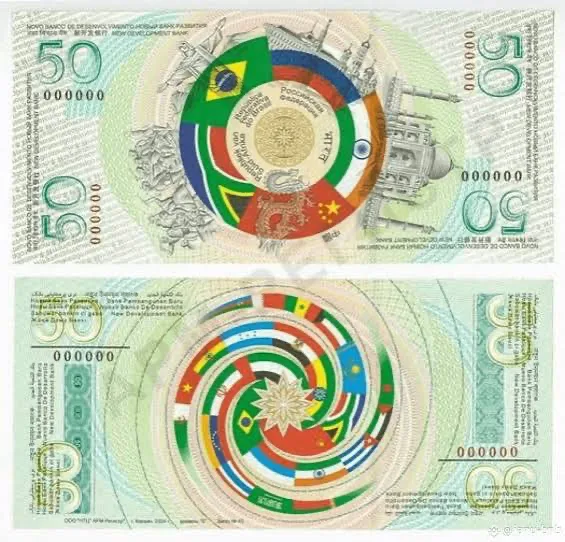
3. Local currency payments advanced, but there is still no BRICS common currency
Perhaps no BRICS subject produces more misleading headlines than currency.
The New Delhi Declaration confirms that the BRICS Payment Task Force is continuing work on cross-border payment systems, including interoperability between payment and messaging channels. Members also discussed greater settlement of trade and investment using their own currencies.
At the same time, the declaration explicitly recognises that national priorities differ and that there is no single approach suitable for every member.
India's BRICS Sherpa Sudhakar Dalela separately made the position clear: BRICS does not currently have a proposal to create a common BRICS currency. The focus is on national-currency trade, payment connectivity and reducing transaction costs.
What BRICS actually decided on money
The direction is toward more trade in member currencies, payment-system interoperability, financing through BRICS institutions and reduced friction in cross-border transactions.
It is not the launch of a BRICS euro, BRICS dollar or common central bank.
For Indian readers, this also connects with India's wider push around UPI, digital payments and payment infrastructure. News4Bharat has been tracking the wider technology side of this shift through its coverage of India's digital economy and AI.
The distinction should remain clear in future reporting because searches such as "BRICS currency 2026" and "BRICS common currency" can otherwise lead readers to conclusions not supported by the summit declaration.
4. The Pahalgam attack entered the BRICS declaration
Terrorism was another area where India secured language of direct domestic relevance.
The declaration condemned terrorism and referred to the April 22, 2025 terrorist attack in Jammu and Kashmir that killed 26 people, commonly identified as the Pahalgam attack. It did not name Pakistan.
The broader terrorism section also addressed terrorist financing, misuse of virtual assets, money laundering, organised scam networks, cross-border fraud and the need for cooperation among financial intelligence units, customs authorities, law-enforcement agencies and regulators.
This matters because India has repeatedly sought language in multilateral forums that rejects distinctions between forms of terrorism and calls for action against financing and support networks.
For News4Bharat's wider security coverage, this section can also be connected internally to its reporting on cyber scam networks and cross-border security involving Myanmar. Read News4Bharat's report on cross-border security and cyber scam networks
5. West Asia became a test of whether expanded BRICS could still agree
The timing of the summit placed Iran, the UAE, Saudi Arabia and other BRICS members in the same framework during a period of conflict and pressure on energy and shipping routes.
The New Delhi Declaration called for restraint, protection of civilians, respect for sovereignty, dialogue and diplomacy, and protection of international trade and maritime stability. Reuters described the agreement by Iran and the UAE on the common text as an important test of cohesion within the expanded grouping.
The declaration also dealt with Gaza and Palestine.
BRICS backed a negotiated two-state solution, Palestinian self-determination and full Palestinian membership of the United Nations. It opposed forced displacement and called for humanitarian access.
For India, the discussion was not separate from its economic interests. Disruptions in the Gulf and Strait of Hormuz affect crude oil, LNG, freight, insurance, seafarers and trade routes.
News4Bharat readers can see the wider context in the publication's recent explanation of the Strait of Hormuz and its role in global energy trade and its earlier report on the 2026 Hormuz shipping crisis.
6. India proposed support for seafarers as maritime risk moved onto the BRICS agenda
One proposal received less attention than tariffs and currencies but deserves closer scrutiny.
Modi proposed a Seafarers Emergency Support Network connecting maritime authorities and diplomatic missions. The idea is to improve distress alerts, medical assistance, communication with families and evacuation support when sailors are caught in conflict or emergencies.
The proposal reflects a problem that has moved beyond traditional foreign policy. Conflict around shipping routes can affect workers at sea before it reaches consumers through oil prices, freight charges or product shortages.
Whether BRICS members turn the network into an operating system with contact points and response protocols will be worth tracking during 2027.
7. AI is now a BRICS governance issue, not only a technology issue
Artificial intelligence appeared in the BRICS discussion as an economic, development and rule-making issue.
India argued that developing countries should help write international rules for AI rather than simply adopt frameworks created elsewhere. The New Delhi Declaration also records work around AI, digital transformation and the use of technology for development.
Chinese President Xi Jinping used the summit to push wider cooperation through what he described as "Greater BRICS." Reuters reported Chinese proposals involving AI cooperation, a BRICS AI Open Source Zone, a service trade forum planned for 2027 and work around special economic zones.
This is where BRICS may begin to intersect more directly with competition over data, computing power, standards, chips, digital infrastructure and AI governance.
For context, News4Bharat has already examined this issue in its AI and Geopolitics 2026 explainer and its more recent guide to AI safety standards and rules in India.
8. Health cooperation produced one of the more operational BRICS outcomes
Health received less international attention during the leaders' summit, but it is one of the areas where India's chairship produced defined mechanisms.
At the BRICS Health Ministers' Meeting in Chandigarh in July, members supported a dedicated sub-working group for the BRICS Integrated Early Warning System for Prevention and Response to Mass Infectious Diseases.
The framework covers surveillance, information sharing, preparedness and response. BRICS members also supported cooperation in digital health, medical-product regulation, tuberculosis research, mental health and public health institutions. NIMHANS was selected to coordinate the BRICS Network of Centres of Excellence on Mental Wellness.
The detailed outcomes can be read in the official Health Ministry release on the BRICS Health Ministers' Meeting.
This is an example of why the BRICS Summit 2026 outcomes should not be measured only through geopolitics. Some of the group's work is happening through technical networks that continue between annual leaders' meetings.
9. Agriculture, food security and digital farming became part of the implementation agenda
India also used its chairship to expand BRICS work around agriculture.
Programmes developed during the year included cooperation on agro-ecology, digital agriculture and agricultural inputs and genetic resources. The larger aim is to share technology, research and practices between countries dealing with food security, climate risks and farm productivity.
This matters because BRICS contains large agricultural producers, food importers and countries exposed to commodity shocks.
It is also part of a wider shift in BRICS from broad summit statements toward sector-specific networks. The value of those networks will depend on what data, research, technology and financing members actually exchange after the summit.
10. Energy policy exposed both cooperation and differences inside BRICS
Energy produced a balanced formulation.
The New Delhi Declaration supported a transition that reflects national circumstances and development needs while also recognising the continued role of fossil fuels in many developing economies. Members emphasised energy security, diversified supplies, infrastructure, technology and work on critical minerals.
This has direct relevance for India.
New Delhi is simultaneously expanding renewable power, securing oil and gas supplies, investing in critical minerals and building partnerships with countries that sit on different sides of global geopolitical alignments.
News4Bharat's reporting on the Quad's 2026 critical minerals cooperation framework provides a useful comparison. India is now discussing supply chain security in both BRICS and Quad settings, even though the membership, political context and goals of the two forums differ.
The same pattern is visible in India's Gulf policy. The country's energy and technology relationship with Abu Dhabi has also expanded, as covered in News4Bharat's report on India-UAE cooperation in energy, defence and AI.
That is one reason India's BRICS role cannot be understood simply as choosing one geopolitical bloc over another.
11. Modi-Xi meeting mattered, but it was not a BRICS decision
One of the most watched developments in New Delhi was the meeting between Prime Minister Modi and Chinese President Xi Jinping.
Xi's visit was his first to India in seven years. The two leaders discussed the border, trade, business links, mobility and supply chains. India's official account said both sides agreed differences should not become disputes and that peace along the border remained necessary for continued improvement in relations.
They also discussed structural trade imbalances, supply chain concerns and more predictable market access.

The official Indian readout is available through the PIB account of the Modi-Xi meeting.
This meeting could affect India-China relations well beyond BRICS, but it should not be presented as a collective BRICS outcome. It was a bilateral meeting held on the sidelines of the summit.
That distinction is important for accurate coverage.
12. Modi-Putin talks covered defence, energy, trade and conflicts
Modi also met Russian President Vladimir Putin in New Delhi on September 11 ahead of the leaders' sessions.
According to the Prime Minister's Office, the two reviewed political, economic, defence, energy, space, skill mobility and people-to-people cooperation.
They also discussed conflicts affecting West Asia and maritime trade. Modi repeated India's position that disputes should be addressed through dialogue and diplomacy.
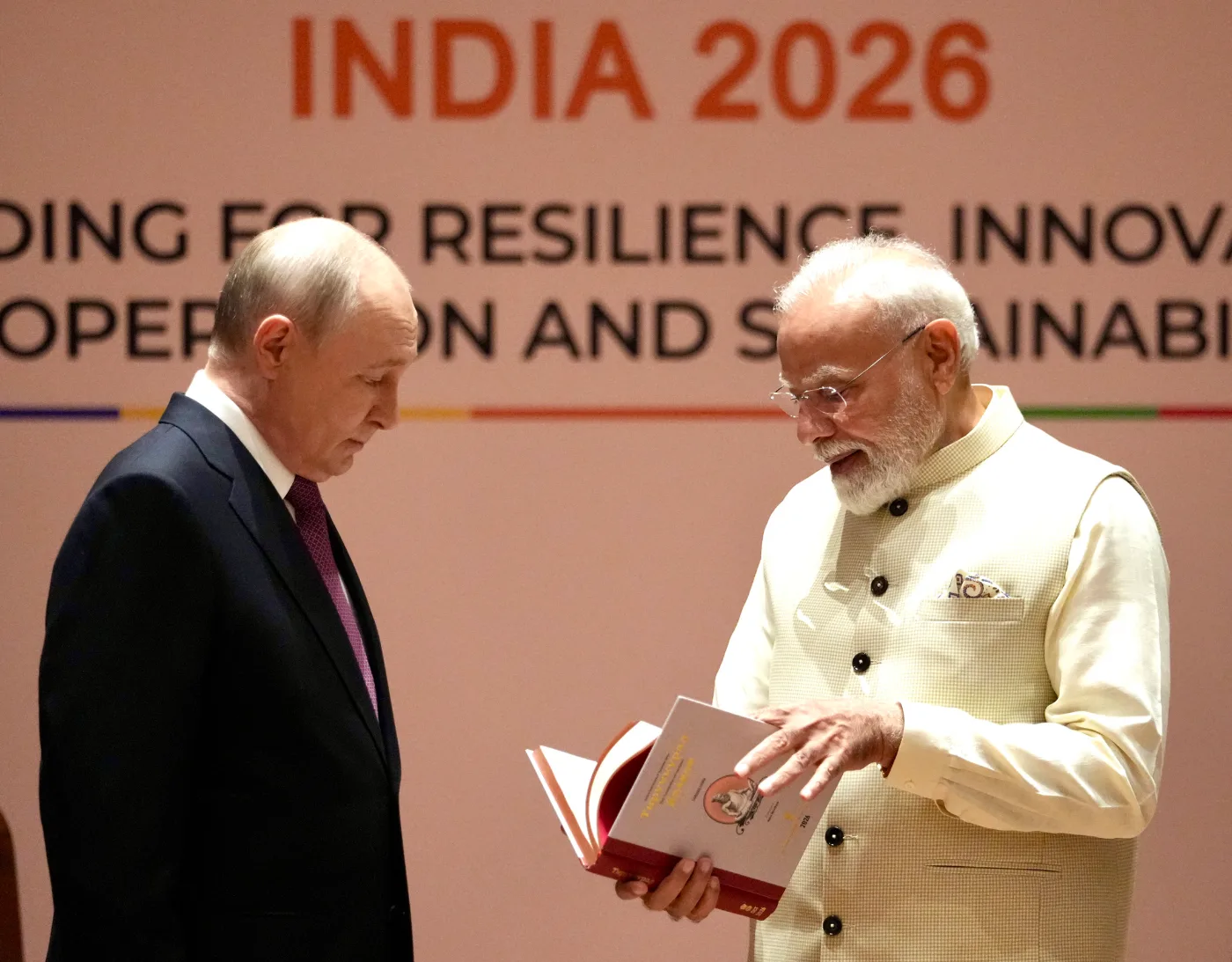
India-Russia relations remain an important part of the BRICS story, but again, bilateral agreements between New Delhi and Moscow should not be mixed with decisions formally approved by all BRICS members.
13. Modi-Pezeshkian talks put navigation and shipping on the India-Iran agenda
Modi's meeting with Iranian President Masoud Pezeshkian was shaped by the situation in West Asia.
According to India's official account, Modi called for dialogue and diplomacy, regional stability, freedom of navigation and commerce, and protection of seafarers..
For India, these are not distant issues. Gulf instability feeds directly into energy prices, shipping costs, the rupee, trade and the safety of Indian workers.
14. What the BRICS Summit 2026 did not do
Several points are as important as the announcements.
- BRICS did not launch a common currency. Members are working on local-currency settlement and cross-border payment connections.
- BRICS did not become a military alliance. Its members continue to have different security relationships and foreign-policy positions.
- BRICS did not resolve the India-China boundary dispute. Modi and Xi discussed the relationship and the need for border peace, but the boundary issue remains subject to bilateral mechanisms.
- BRICS did not solve the conflicts in West Asia or Ukraine. It set out collective positions and calls for diplomacy where consensus was possible.
- BRICS did not produce binding reform of the UN Security Council. Reform remains a political goal, and India's proposal now seeks a roadmap for broader global governance changes.
- BRICS did not replace the dollar, WTO, IMF or World Bank. It is pushing for payment alternatives, reform and greater representation rather than announcing replacements for all existing institutions.
15. India's bigger BRICS strategy is not simply "East versus West"
One of the more useful ways to read the New Delhi summit is through India's wider diplomatic positioning in 2026.
India chaired BRICS while continuing relations with the United States, Europe, the Quad, Gulf states, Russia and countries across the Global South.
That gives New Delhi a different incentive from countries that may want BRICS to function primarily as a counterweight to Western institutions.
Modi said BRICS seeks to move forward without being "against anyone." India instead framed the group around wider representation, development and reform.
News4Bharat has tracked the same pattern elsewhere. Its coverage of Modi's participation in the 2026 G7 process examined India's role across both G7 and BRICS settings, while an earlier analysis looked at
India's attempt to act as a bridge between different international groupings.
The BRICS Summit 2026 strengthens that argument, but also makes India's task harder.
The larger BRICS becomes, the more economic weight it carries. The larger it becomes, the harder consensus can also become.
16. Why the New Delhi Declaration matters for businesses
Companies should pay less attention to geopolitical labels and more attention to the parts of BRICS that could change transaction costs.
The areas worth following include cross-border payment interoperability, local-currency settlement, customs cooperation, logistics, development finance, startup links, supply chains, energy, critical minerals, digital infrastructure and AI.
Prime Minister Modi told the BRICS Business Forum that the BRICS countries account for about half the world's population, around 40 percent of global GDP and more than a quarter of global trade. He also said the combined GDP of BRICS economies had grown faster over the past two decades than world GDP as a whole.
Those numbers make even incremental changes in payments, finance or customs worth monitoring.
The important word is incremental.
Most BRICS initiatives will not change international commerce the morning after a summit. Their significance will depend on whether central banks, finance ministries, customs authorities, development banks and businesses turn declarations into working arrangements.
17. China's 2027 BRICS chairship is now the implementation test
India has handed the BRICS chairship to China for 2027, when the 19th BRICS Summit is expected to be held under Chinese leadership.
That makes the next year important for the New Delhi agenda.
Watch whether India's proposed continuity mechanism is formalised, whether local-currency settlement and payment interoperability move from technical studies to wider use, or whether the BRICS Reform Roadmap is actually prepared.
Key things to watch out for the BRICS 2027
- Watch what happens to the proposed startup fund, incubator network and other business mechanisms.
- Watch whether AI cooperation produces common technical work rather than another set of principles.
- Watch whether health surveillance and disease-warning networks become operational.
- Watch whether India-China trade and border discussions continue after the summit atmosphere disappears.
- And watch whether an expanded BRICS can maintain consensus if conflicts among or around its members intensify.
The takeaway from BRICS Summit 2026
The most important outcome of the BRICS Summit 2026 in New Delhi may not be one sentence from the declaration.
It is the attempt to answer a structural question facing BRICS after 20 years: can a larger group with different political interests turn its economic scale into programmes that people, governments and businesses can actually use?
New Delhi produced a framework for testing that question.
There is a declaration on trade and global governance. There is movement on payments in national currencies. There are health and technology mechanisms. There is agreement on terrorism language. There are common positions on West Asia and Palestine. India has proposed a system for tracking implementation. China now takes over the chair.
The summit therefore leaves BRICS in a different position from where it began.
Its problem is no longer gaining attention.
Its next problem is delivery.