

The Tragedy Unfolds in Delhi's Student Hub
A catastrophic event has completely shaken the heart of India's capital. On a quiet Sunday afternoon, the devastating Satya Niketan building collapse turned a vibrant, bustling student neighborhood into a chaotic disaster zone.
Around 1:30 PM, a massive three to four-storey residential structure came crashing down. This was not an abandoned structure or an empty office space. It was a highly populated student paying guest (PG) accommodation named "Daze." Owned by a prominent local figure in the PG business named Bobby, this huge building housed dozens of young, bright minds studying at the nearby university.
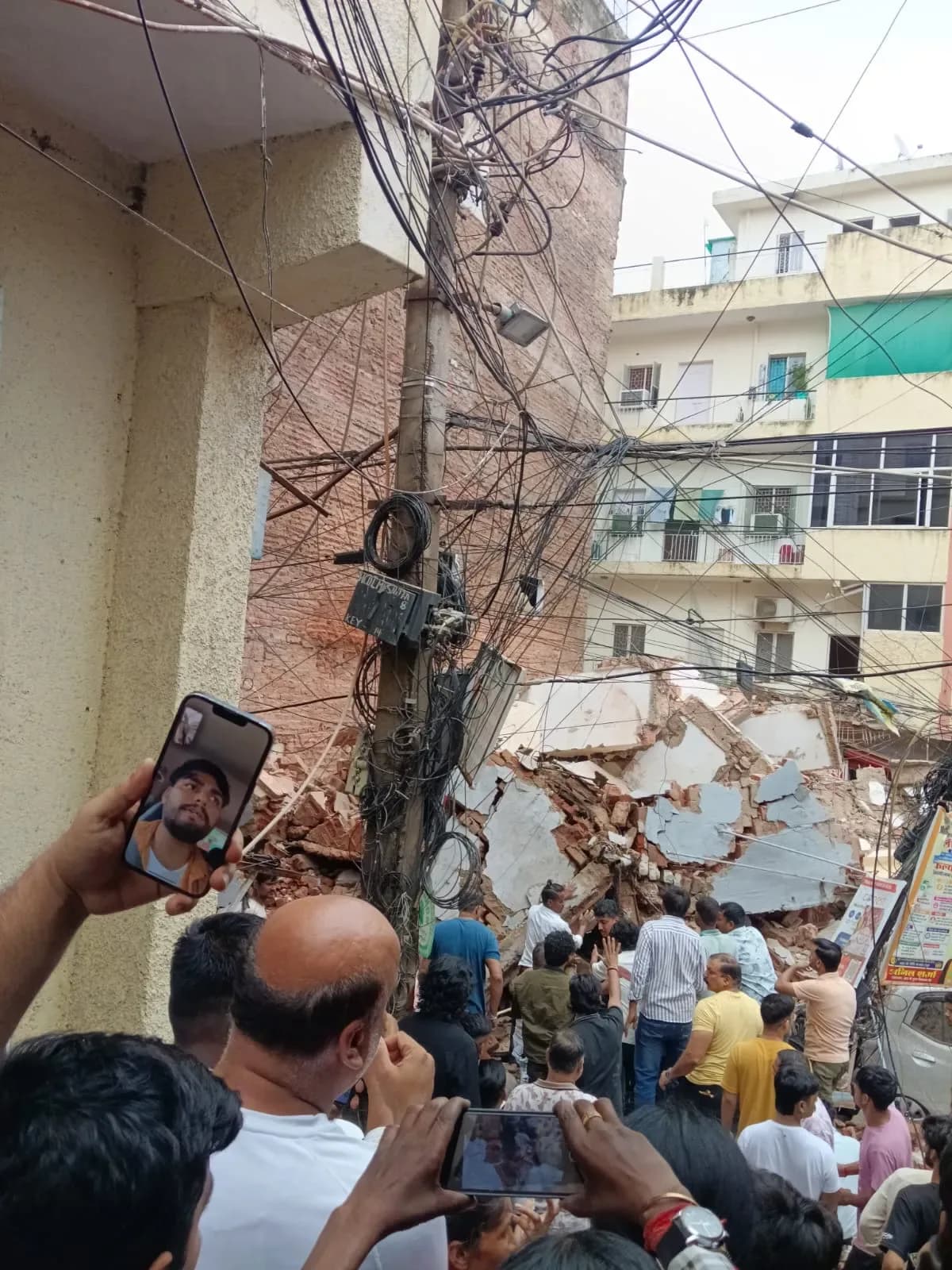
The collapsed structure was situated right next to the local Shiv Mandir, a major landmark in the community. It specifically fell on the front right side of the temple, instantly crushing the ground-level parking area beneath tons of concrete, twisted iron, and brick.
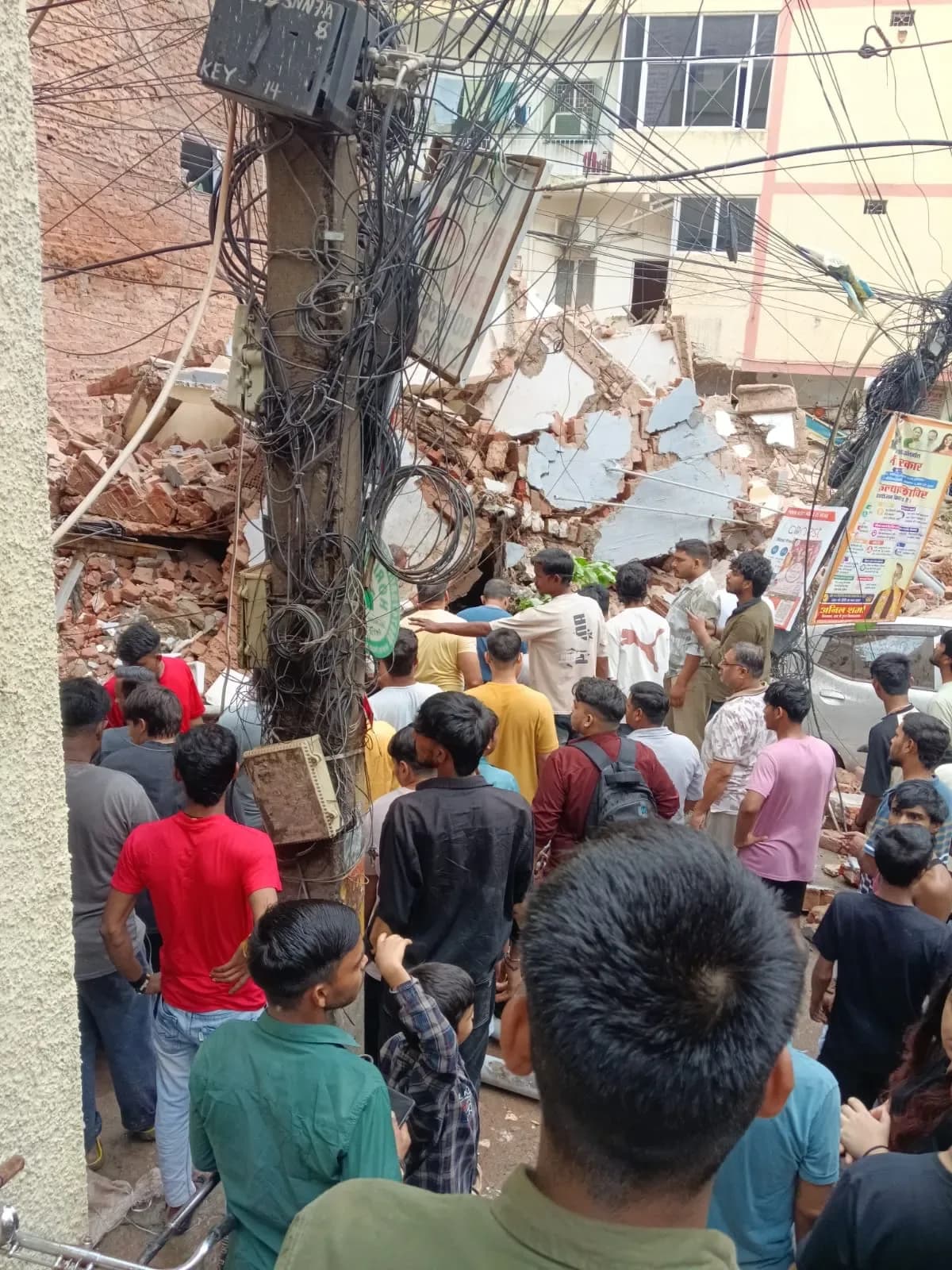
Tragically, firsthand accounts from the ground confirm at least three fatalities. Lifeless bodies were rushed from the rubble to nearby medical facilities. Witnesses standing mere meters away described a horrific scene, comparing the deafening rumble of the collapse to a massive earthquake tearing through the streets. Once the thick cloud of dust settled, the muffled, desperate screams of trapped children could be heard pleading for rescue from beneath the heavy debris.
A War-Footing Rescue Operation
When disaster strikes on this scale, every single second counts. Local emergency networks activated instantly.
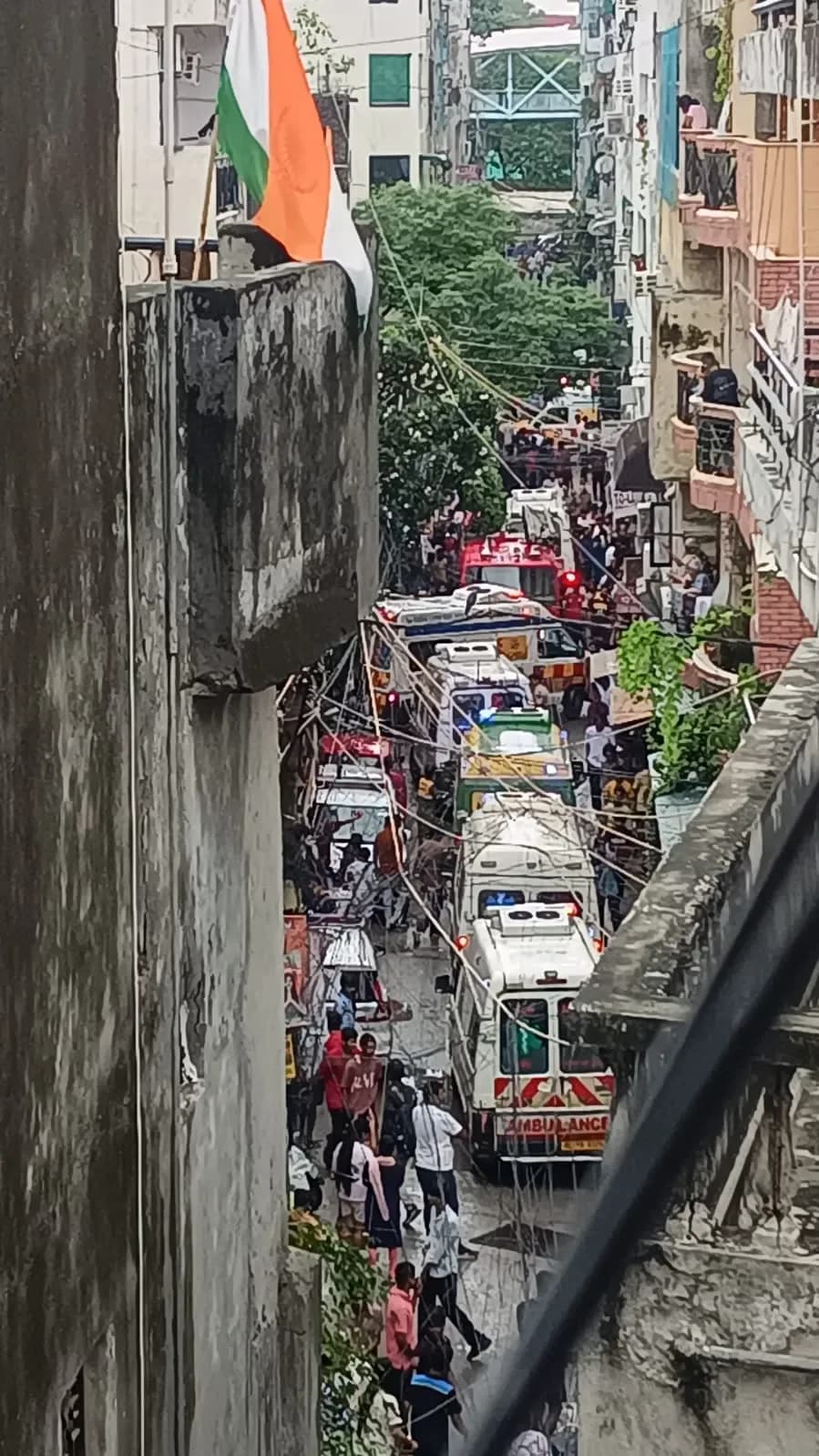
The Delhi Fire Service officially received the emergency call at exactly 1:33 PM. They immediately classified it as a severe house-collapse case and dispatched initial teams. Given the immense scale of the multi-storey Daze PG, the response was quickly upgraded. A total of 12 fully equipped fire tenders were eventually deployed to the site.
They were not alone. Specialized disaster teams from the National Disaster Response Force (NDRF), alongside local Delhi Police and Civil Defence personnel, swarmed the area to begin digging through the wreckage. Heavy machinery, including earth-moving JCBs, was brought into the narrow lanes to carefully lift massive slabs of concrete.
The Importance of the Green Corridor
In massive urban disasters, traffic can be as deadly as the event itself. Ambulances need a clear path to save lives.
To ensure that rescued students received immediate, life-saving medical attention, authorities swiftly established a "green corridor". This means local police blocked off all regular civilian traffic on the routes leading to major hospitals. Emergency vehicles could rush victims to emergency rooms without ever having to hit the brakes.
Additionally, the Rapid Action Force (RAF) was called in to manage the massive, panicked crowds. Friends, locals, and fruit vendors had immediately gathered near the rubble, desperately trying to help. The RAF's presence ensured that professional rescue teams had the space they needed to operate safely.
Why Satya Niketan Matters
To understand the full emotional weight of this tragedy, you have to understand the area. Satya Niketan is not just a standard residential block. It is a massive student hub.
Located adjacent to Delhi University’s prestigious South Campus, it is effectively a "second home" for youth from all over the country. Students from more than 10 different colleges, pursuing over 50 varied courses, live in these exact lanes. Institutions like Atma Ram Sanatan Dharma College, Motilal Nehru College, Sri Venkateswara College, Jesus and Mary College, and Maitreyi College are just a stone's throw away.
The Daze PG was a significant fixture in this tight-knit community. Early reports suggest the building operated with roughly 75 beds. It was a bustling, lively space filled with young adults preparing for exams and building their futures.
How Many Lives Are at Stake?
The sheer number of potential victims is staggering. Initial reports indicate that up to 50 students might have been inside the hostel when it suddenly collapsed.
Rescue workers have been working tirelessly, pulling out five people from the massive pile of debris shortly after the incident began. However, the tension remains incredibly high. Some of the trapped students managed to use their mobile phones to make calls from deep within the ruins. While this heartbreaking detail gave rescuers hope that survivors were still breathing in air pockets, it also highlighted the terrifying reality of their situation.
What Caused the Building to Fall?
While an official government investigation will determine the exact legal and structural faults, early indicators point to a deadly combination of factors.
- First, locals and eyewitnesses reported that the building was already in a highly dilapidated, weakened state. Buildings require constant maintenance, especially those holding the weight of 75 residents.
- Second, Mother Nature played a role. Recent, continuous rainfall in the Delhi region likely seeped into the ground, softening the earth and weakening the structure's foundation further.
Finally, and perhaps most alarmingly, eyewitnesses mentioned that active construction was taking place in the basement of the PG. In construction terms, the basement is the root of a building. Digging, expanding, or altering a basement in an older, heavily loaded three to four-storey building is incredibly risky. If the load-bearing pillars or the foundational earth are disturbed without proper engineering support, the entire building can pancake straight down—which is exactly what appears to have happened here.
The Aftermath and Future Safety
This horrific incident raises massive red flags regarding the safety of student housing across India. Thousands of students migrate to big cities every single year, relying on affordable PG accommodations. Unfortunately, many of these structures skip strict municipal safety codes or build unauthorized extra floors to maximize profit.
As a strict precautionary measure, the Delhi Disaster Management Authority (DDMA) and municipal workers immediately ordered the evacuation of the buildings directly adjacent to the collapsed site. When a large building falls, the seismic shock and shifting ground can easily crack the foundations of the houses next door. Evacuating these neighboring buildings ensures that no more lives will be put at risk while the rescue operation continues.
As the heavy machinery continues to lift concrete and the NDRF teams dig tirelessly into the night, the entire nation waits with bated breath. The Satya Niketan tragedy is a stark, heartbreaking reminder of the paramount importance of structural safety in our most densely populated neighborhoods.
Read More: RBI Approves LIC ICICI Bank Stake Hike Up to 9.99% Limit