

Every year on September 5th, India comes together to honor its educators with flowers, speeches, and cultural events. However, Teachers Day 2026 is about much more than a simple greeting card or a school assembly. It is a critical moment to reflect on the very foundation of a nation's future.
When we talk about building a superpower, we often think of physical infrastructure. We picture massive airports, sprawling highways, new semiconductor plants, and towering bank headquarters. But none of these things can function without human infrastructure.
A nation needs engineers to design the roads, bankers to finance the projects, and data scientists to manage the technology. That human capability begins in a single place: the classroom. If you want to understand the true significance of this day, you must look at it through the lens of human capital, economic growth, and global development.
What Is Teachers’ Day?
In India, this annual event is a tribute to the teaching profession and a celebration of the individuals who guide, mentor, and shape the minds of the youth. It is a day that acknowledges the quiet, relentless work of educators across the country.
But at a broader level, it recognizes the role of educators in transmitting knowledge and values. Teachers develop skills and prepare future citizens and workers. They are the early-stage builders of what economists call "human capital."
The President of India’s 2026 message highlighted this profound contribution. The message emphasized the role of teachers in nurturing talent, strengthening character, encouraging independent thinking, and adapting to modern technology.
Why Is Teachers’ Day Celebrated on 5 September?
To understand the date, we have to look back at one of India's most brilliant minds. The answer lies in the life and legacy of a remarkable individual who believed deeply in the power of education.
Who Was Dr. Sarvepalli Radhakrishnan?
Dr. Sarvepalli Radhakrishnan was born on September 5, 1888. He was not just a politician; he was an intellectual giant.
Beginning his career in academia and teaching, he went on to become one of India's best-known philosophers. He taught at prestigious institutions like the University of Mysore and the University of Calcutta. Later, he achieved global recognition as the Spalding Professor of Eastern Religions and Ethics at Oxford University.
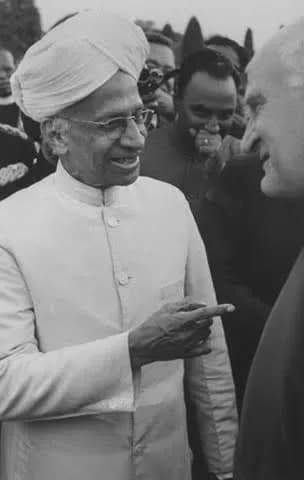
His career crossed several major fields. He transitioned from a teacher and academic to a diplomat, serving as India's ambassador to the Soviet Union. Eventually, he served as India's first Vice-President from 1952 to 1962, and then as the second President of India from 1962 to 1967.
History of Teachers’ Day in India
When Dr. Radhakrishnan became the President of India in 1962, his friends, students, and admirers were eager to celebrate his 75th birthday in a grand manner.
According to Government of India accounts, when admirers sought to celebrate his birthday, Dr. Radhakrishnan expressed a different wish. He suggested that instead of a personal celebration, September 5 should be observed as a day to honor the entire teaching profession.
Read More: India's Sovereign AI Ambition Has A Hidden Weak Link, And It Is Not The Models
Thus, the tradition was instituted in 1962. It is a powerful symbol. India honors a man who reached the highest constitutional office in the land, yet preferred to be remembered simply as a teacher.
Teachers’ Day vs World Teachers’ Day: What Is the Difference?
A common point of confusion for many readers is the difference between the Indian celebration and the international one. They are not the same event, and they have entirely different historical foundations.
India's celebration is strictly on September 5, tied to Dr. Radhakrishnan's birth anniversary.
World Teachers’ Day, on the other hand, is observed globally on October 5. It commemorates the adoption of the 1966 ILO/UNESCO Recommendation concerning the Status of Teachers. This important international document addresses the professional status, employment, working conditions, and rights of educators worldwide.
UNESCO subsequently established the global observance, and it has been celebrated annually since 1994.
Teachers as Human Capital Infrastructure
This is where the celebration becomes much more than a cultural observance. To truly grasp the importance of educators, we must look at economics.
A teacher is an early-stage human-capital investment mechanism. Think of it like planting a seed that will eventually grow into a massive, fruit-bearing tree. A student enters a classroom and learns basic literacy and numeracy. Over time, a teacher helps develop their critical thinking and digital skills.
This leads to professional skills, which leads to employment, which leads to national productivity. The World Bank describes human capital—which includes knowledge, skills, health, and experience—as a foundational pillar of economic growth and poverty reduction.
How Teachers Contribute to India’s Economic Growth
The economic transmission chain can be understood simply:
- Schools flow into Higher Education and Skill Institutions. These produce a Skilled Workforce. That workforce enters Businesses, driving Productivity, which ultimately fuels Economic Growth.
- Government data for 2021–22 reported a staggering 95.07 lakh school teachers under the UDISE+ system. Additionally, there were 15.98 lakh faculty and teachers in higher education under the AISHE system.
The teaching workforce itself represents a major national institution. It has direct, profound effects on students, families, and the broader education ecosystem. They influence the economy long before a worker ever steps foot inside a corporate office.
Teachers’ Day and the BFSI Sector
At first glance, you might wonder what a classroom has to do with Banking, Financial Services, and Insurance (BFSI). The answer is: absolutely everything.
The financial sector increasingly depends on financially literate customers. A bank cannot thrive if the public does not understand how a bank account works. An insurance company cannot succeed if people do not understand risk.
Financial Literacy, Digital Finance and Fraud Awareness
A financially literate student can eventually become an adult who understands inflation, savings, credit, and retirement planning.
Financial literacy can improve people's ability to understand savings, investments, and digital financial risks. This creates potential long-term benefits for household financial resilience. It encourages greater participation in formal financial services.
Furthermore, we are living in the era of UPI, mobile banking, and digital wallets. While technology makes finance accessible, it creates new risks like phishing and payment scams.
Financial and digital literacy can give students an early foundation for recognizing common forms of online financial fraud. When teachers educate students on basic cyber hygiene and OTP safety, they are actively supporting the stability of the modern fintech ecosystem.
Teachers and India's Industrial Transformation
India is currently undergoing a massive industrial shift. The country is expanding its footprint in semiconductor manufacturing, artificial intelligence, electric vehicle (EV) production, and renewable energy.
You can build the most advanced factories in the world, but factories cannot run themselves. India desperately needs engineers, data scientists, skilled operators, cybersecurity professionals, and managers.
Teachers, Skills and India's Demographic Dividend
India is famous for having a large, youthful, working-age population. But demographics alone do not guarantee economic growth.
A young population becomes an economic advantage only when it is healthy, educated, skilled, able to participate in the labor market, and matched with productive employment opportunities. Without these factors, a demographic dividend can quickly turn into a demographic challenge.
Education provides the foundational skills necessary for work. More importantly, it teaches a person how to learn, enabling workers to reskill and upskill later in life as industries evolve.
Teachers and Artificial Intelligence in 2026
The year 2026 marks a unique turning point for education. Artificial Intelligence (AI) is now deeply embedded in our daily lives. Some wonder if AI will replace teachers. The reality is the exact opposite.
AI changes the role of teachers, but it makes them more vital than ever. The role is shifting away from simply memorizing and transmitting facts. Today, a student can ask an AI chatbot a question and get an instant answer.
But is the answer correct? Why is it correct? What biases might exist in the data?

Instead of merely transmitting information, modern educators must teach students how to evaluate AI-generated answers. They must develop critical thinking, encourage creativity, and teach responsible technology use. The President's 2026 message specifically called upon teachers to update their knowledge, embrace technology, and cultivate a spirit of deep inquiry.
The Global Teacher Shortage: 44 Million Needed by 2030
While we celebrate in India, we must also look at a looming global crisis. The world is running out of educators.
UNESCO’s Global Report on Teachers estimates that the world will need approximately 44 million additional primary and secondary teachers by 2030. This massive number is required just to achieve basic universal education targets.
This crisis is not evenly distributed. For example, an estimated 15 million of these additional teachers are needed in sub-Saharan Africa alone. Shortages affect both developing and higher-income countries, heavily impacting recruitment and retention.
The $120 Billion Annual Financing Challenge
Fixing this shortage requires serious capital. UNESCO estimates that financing the salaries associated with the additional primary and secondary teaching posts required to achieve universal enrollment targets would cost around US$120 billion annually.
This massive figure highlights a critical reality. The scale of the shortage strengthens the case for treating investment in teachers as a long-term human-capital priority, rather than merely a short-term administrative expenditure.
Teacher shortages can weaken education quality and human-capital formation. Ultimately, this can potentially constrain long-term productivity and global development.
Education, Soft Power and International Relations
Education is also a powerful tool for diplomacy. It is a form of "soft power."
Countries build international influence through universities, student exchanges, research collaborations, and academic partnerships. A student who travels to another country for education may eventually become a business leader, a diplomat, or a policymaker.
Teachers can therefore be viewed as indirect contributors to the human networks that support international cooperation and soft power. Dr. Radhakrishnan himself perfectly demonstrated this. His deep intellectual credibility paved the way for his highly successful diplomatic career.
For India, a robust educational and professional ecosystem can significantly contribute to its wider soft-power and international-engagement strategy.
National Teachers’ Awards: History and Significance
To recognize exceptional educators, India presents the National Teachers’ Awards.
According to the official Ministry of Education portal, this prestigious scheme was instituted in 1958. Its goal is to recognize the remarkable contributions of teachers and headmasters who have improved the quality of school education and enriched the lives of their students.
The awards are proudly presented by the President or Vice President every year on September 5.
Teachers and Social Mobility
Beyond awards and economics, there is a deeply human element to this profession. Teachers can be important enablers of social mobility, particularly for students who have limited access to educational and professional opportunities at home.
For a child growing up in a low-income household, a dedicated teacher can be the bridge to higher skills, better employment, and a totally different trajectory in life.
Why Teachers’ Day 2026 Matters Beyond the Classroom
As we navigate through 2026, the world is facing rapid technological changes, shifting labor markets, and the urgent need for a highly skilled workforce.
UNESCO notes that this year's World Teachers' Day marks 60 years since the adoption of the 1966 recommendation. The organization highlights that the profession is facing entirely new pressures from AI, digital technologies, and changing global economies.
For India, this means the September 5 celebration is increasingly about the quality of skills being developed for an AI-intensive, globally connected future.
A country's future is not built solely in boardrooms, massive factories, or government offices. It is built sequentially, fundamentally, and daily in classrooms—one student at a time. This is the true legacy of Dr. Radhakrishnan, and this is why honoring our educators is the most important investment a nation can make.