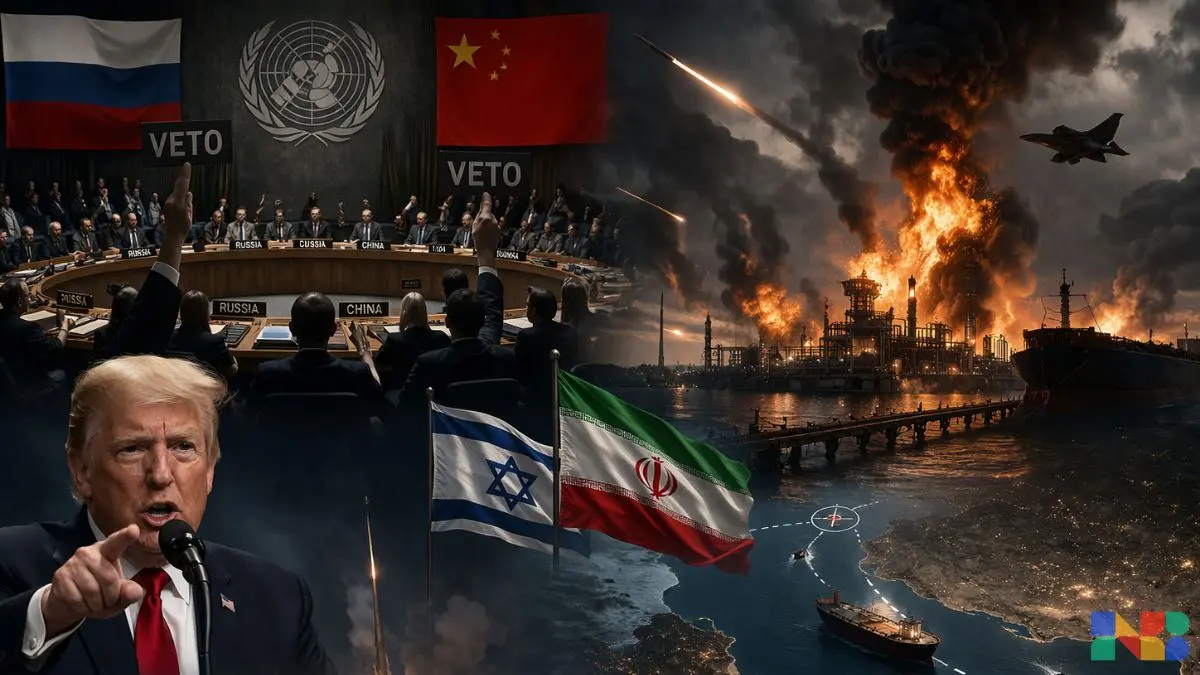
On February 28, 2026, the United States and Israel launched a large-scale surprise attack on Iran, assassinating Supreme Leader Ali Khamenei, along with defence minister Aziz Nasirzadeh, IRGC commander Mohammad Pakpour, and several other senior officials. Iran responded by launching hundreds of drones and ballistic missiles across the Middle East, targeting US military bases in Bahrain, Jordan, Kuwait, Qatar, Saudi Arabia, and the UAE, and simultaneously closing the Strait of Hormuz.
Flights in and out of the Middle East came to a near-complete stop, stranding residents, expatriates, and tourists. Dubai International Airport, one of the world's busiest, was hit by drone strikes and temporarily halted all flights. The global energy system buckled almost immediately, with oil prices surging and supply chains for critical minerals and materials thrown into chaos.
The US military formally began a campaign to reopen the Strait of Hormuz on March 19. By March 12, Iran had already made 21 confirmed attacks on merchant ships attempting to pass through.
Today's Countdown: The 8 PM Deadline
All week, the pressure has been building toward a single moment: an 8:00 PM Eastern deadline set by President Trump for Iran to agree to reopen the Strait or face what he called total annihilation of its civilian infrastructure.
Also read: Iran-Israel War Latest Updates: Trump Warns of ‘Civilisation End’, Fresh Attacks Hit Israel
Trump set 8 p.m. Eastern as his deadline for Iran to reopen the Strait of Hormuz, threatening to destroy all of the country's power plants and bridges if Tehran didn't make a deal. He had previously also threatened to hit water desalination plants.
And the language he used this morning was unlike anything a sitting US president has publicly said. In a post on Truth Social just after 8 a.m., Trump wrote: a whole civilization would die tonight, never to be brought back again. He said he didn't want that to happen but believed it probably would, before suggesting that with "complete and total regime change," something "revolutionarily wonderful" could still happen.
Meanwhile, Vice President JD Vance, speaking to reporters during a visit to Hungary, warned that the US has "tools in its toolkit that we so far haven't decided to use" against Iran, adding he was "hopeful" negotiations could still avoid them being deployed.
Iran's Response: Defiance — and Human Chains
Tehran did not flinch. Iran's government urged its citizens to physically defend the country's infrastructure with their own bodies.
Iran's deputy minister of youth called on young Iranians to form human chains around power plants across the country. Iranian President Masoud Pezeshkian said around 14 million Iranians had answered the government's call for volunteers, adding that he too remained "ready to give my life for Iran."
The IRGC was equally defiant. Its spokesperson Ebrahim Zolfaqari warned that if attacks on non-civilian targets are repeated, Iran's retaliation would be "far more forceful and on a much wider scale."
Iran's position on negotiations was also made clear. A senior Iranian security source told CNN that the Strait of Hormuz will not return to its previous condition unless the war is permanently stopped, and that even after a full halt to attacks, the strait would only reopen under conditions tied to how fully the other side meets its commitments. "Iran has no trust in Trump or his representatives," the source said.
Iran also submitted a counter-proposal. Iran's 10-point plan demanded a guarantee against future attacks, an end to Israeli strikes on Hezbollah in Lebanon, and removal of sanctions, in exchange for reopening the Strait — but with Iran imposing a $2 million fee on every ship passing through the waterway. Trump called it a "significant step" but said it was "not good enough."
https://twitter.com/News18India/status/2041575670581485681
What Israel Has Been Doing
While diplomats argued at the UN, Israel has continued a relentless air campaign inside Iran.
Israeli Prime Minister Netanyahu said strikes hit transport aircraft and dozens of helicopters, and that on Tuesday, railway lines and bridges used by the Revolutionary Guards were attacked. "We are crushing the terror regime in Iran with ever-increasing force," Netanyahu said, while insisting the strikes were "not intended to attack the Iranian people."
Israel also issued a public warning on X for Iranians to avoid traveling by train and to stay away from railway tracks.
The Israeli army also struck Iran's largest petrochemical complex, which serves the South Pars natural gas field — the world's largest — and a separate petrochemical compound in Shiraz.
Israeli strikes also hit three airports in Tehran, destroying several Iranian aircraft and helicopters. The Khorramabad International Airport in western Iran was also struck, local media reported.
The Wider War: Gulf States Under Fire
The conflict is not contained to Iran's borders. Across the Gulf, US allies are absorbing Iranian counterstrikes nightly.
An Iranian drone strike on Kuwait's Ali Al Salem Air Base wounded 15 American service members. Saudi Arabia's air defences intercepted at least 18 drones, with the defence ministry reporting possible debris damage near critical energy facilities. The King Fahd Causeway connecting Bahrain to Saudi Arabia has been indefinitely closed to traffic as a precaution against Iranian attacks.
Air defence systems in the UAE also engaged with incoming Iranian missiles and drones on Tuesday.
A building belonging to satellite phone company Thuraya in Sharjah was hit by an Iranian missile, wounding two Pakistani nationals.
Iran also issued a chilling new threat: following a US-Israeli strike on Sharif University of Technology in Tehran that damaged its GPU and AI computing infrastructure, Iran's state media warned that the US Stargate AI centre in Abu Dhabi — developed with OpenAI, Oracle, and Nvidia — is within range of Iranian missiles and has been identified as a strategic target.
What happens next?
The next few days will decide the direction of this war.
If the United States follows through on Donald Trump’s warnings, direct strikes on Iranian infrastructure could begin, pushing the conflict into a wider regional war. That would likely trigger stronger retaliation from Iran, not just against Israel but also against US-linked assets in the region.
If Iran continues to hold the Strait of Hormuz, global pressure will increase quickly. Oil markets are already reacting, and any prolonged disruption will affect fuel prices, inflation, and shipping worldwide.
At the same time, diplomatic options have narrowed after the UN setback. Any breakthrough now will have to come through backchannel talks or direct negotiations, not global consensus.
In simple terms, the situation is sitting on a knife edge — one major move from either side could change the scale of the conflict overnight.
Timeline of the Iran-Israel war
- February 28, 2026
US and Israeli strikes hit Iranian targets, triggering the current phase of the conflict - Early March 2026
Iran responds with missile and drone attacks targeting Israeli-linked positions - Mid-March 2026
Israel expands strikes deeper inside Iran, including military and logistics sites - Late March 2026
Iran signals control over the Strait of Hormuz, disrupting global oil movement - Early April 2026
Oil prices surge as shipping slows and insurance risks increase - April 6–7, 2026
Trump issues strong warnings, including threats to strike Iranian infrastructure
Iran rejects temporary ceasefire proposals - April 7, 2026 (evening)
UN Security Council fails to pass Hormuz resolution after veto by Russia and China - April 7, 2026 (night)
Fresh attacks reported on Israel, Israeli forces launch retaliatory strikes
Trump warns of “civilisation end” if escalation continues
Primary Sources & References
Live News Blogs (Real-time Updates)
- CBS News Live Blog — cbsnews.com/live-updates/iran-war-trump-deadline-power-plants-human-chains-israel-train-strikes
- Fox News Live Blog — foxnews.com/live-news/trump-iran-deadline-israel-hormuz-april-7
- Republic World Live Blog — republicworld.com/world-news/iran-war-live-tehran-rejects-trumps-tuesday-deadlin