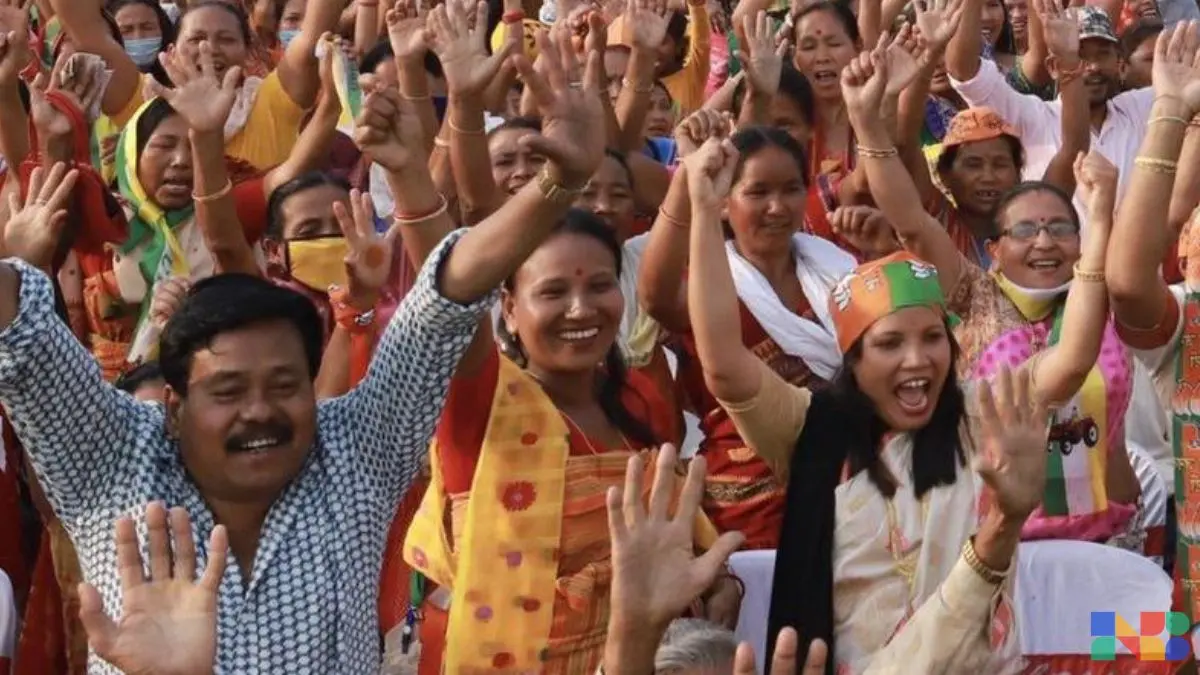
There was a time when elections in India—especially in politically sensitive states like Assam—were defined by towering national faces. Campaigns revolved around Delhi, narratives were shaped in television studios, and voters were expected to align with national ideologies.
But Assam Elections 2026 tells a very different story.
This election is not just a contest between the BJP and Congress. It is a deeper, more layered political moment—one that reveals how Indian democracy is quietly shifting from centralised narratives to regional realities.
https://twitter.com/narendramodi/status/2041098881241407543
The Evolution of Identity Politics in Assam
To understand Assam’s present, one must revisit its past.
For decades, Assam’s politics has revolved around identity—questions of who belongs, who doesn’t, and who decides. From the Assam Movement of the 1980s to debates around illegal immigration, citizenship, and cultural preservation, the state has been a laboratory of identity politics.
Political parties have historically tapped into these anxieties. Whether it was the Congress balancing ethnic equations or the BJP sharpening narratives around infiltration and indigenous rights, identity has remained the emotional core of Assam’s elections.
What is different in 2026 is not the disappearance of identity—but its strategic redefinition.
How Manifestos Became Political Weapons in 2026
This election is being fought as much through speeches as through documents—manifestos that are no longer symbolic, but deeply strategic.
The BJP’s “Sankalp Patra” blends governance with identity. Promises of economic expansion, job creation, and infrastructure development sit alongside commitments like implementing the Uniform Civil Code and tackling illegal infiltration.
On the other side, the Congress has crafted a manifesto that directly challenges both governance and identity narratives. From granting Scheduled Tribe status to multiple communities to setting up an Anti-Corruption Commission, it attempts to position itself as both inclusive and accountable.
More importantly, Congress has pushed a 100-day action plan, signalling urgency and execution—an attempt to counter the perception that opposition parties lack governance credibility.
This is where Assam 2026 becomes interesting.
Manifestos are no longer just promises. They are political storytelling tools—each party trying to define what Assam stands for:
- Is it identity-first?
- Is it development-first?
- Or is it a hybrid of both?
The Undercurrent: Local vs National Politics
- Allegations of corruption and governance failures are taking centre stage
- Civil society groups are warning against divisive, communal rhetoric
- Regional alliances and seat-sharing battles are shaping outcomes more than national narratives
In short, Assam is witnessing a quiet decentralisation of politics.
What Assam 2026 Means for India’s Political Future
Assam 2026 is not just a state election—it is a signal.
It suggests that future elections in India may no longer be dominated by a single narrative or leader. Instead, they will be shaped by:
- Regional aspirations over national rhetoric
- Execution over promises
- Local leadership over central projection
Perhaps the most telling insight is this:
India’s democracy is becoming more fragmented—but also more mature.
Voters are no longer passive recipients of political messaging. They are active evaluators—questioning, comparing, and demanding results.
The Bigger Question
As Assam heads to the polls, one question lingers:
Is this a one-off shift—or the beginning of a new political era in India?
If Assam is any indication, the answer may already be unfolding—quietly, decisively, and far beyond the noise of campaign rallies.