Deep Sea Port & Industrial Corridor Development Plans: West Bengal's Blue-Water Bet
Kolkata's ports once made Bengal the crown of British commerce. Today, the state is trying to rewrite that story on its own terms — and this time, the ships are bigger.
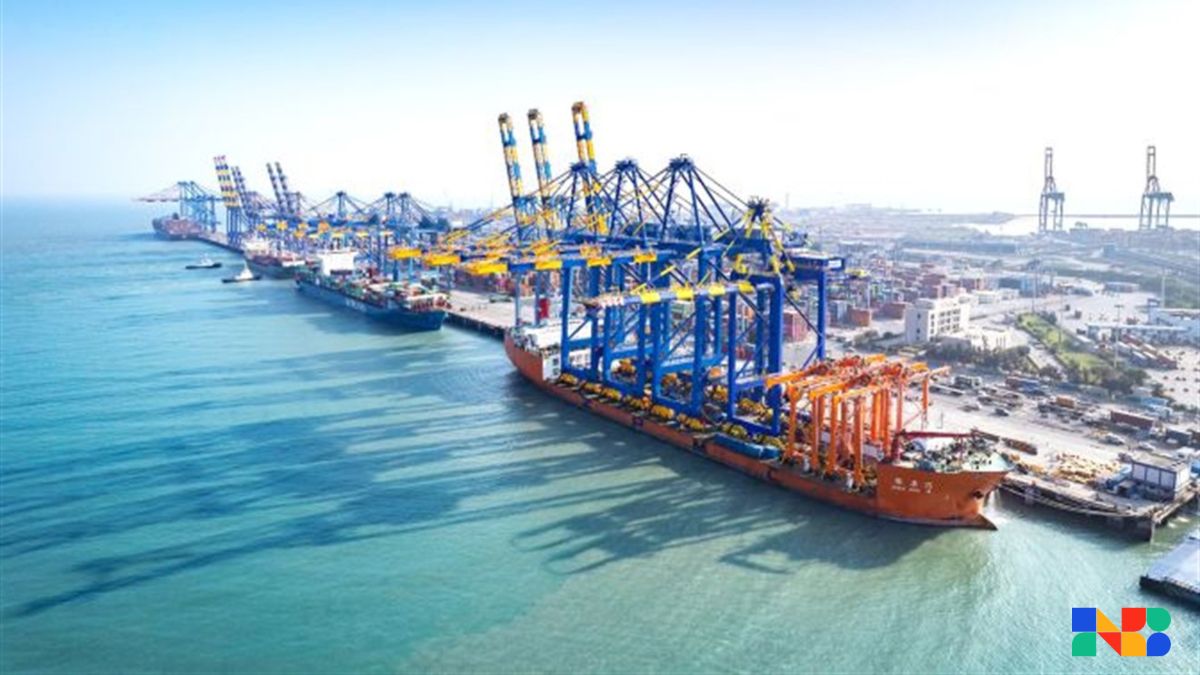
In 1900, the Port of Kolkata was the second busiest harbour in the British Empire — after London. It moved jute, indigo, coal, and cotton with an industrial rhythm that made Bengal the economic heartbeat of South Asia. Then, over the next hundred years, the river silted. The ships got bigger. The draught got shallower. And West Bengal deep sea port industrial corridor 2025 watched as Chennai, Mundra, Nhava Sheva, and Visakhapatnam took what was once its birthright. By 2023-24, Syama Prasad Mookerjee Port (formerly Kolkata Port Trust) handled 63 million tonnes of cargo — respectable by any measure, but a fraction of Mundra's 173 MT or JNPT's 88 MT.
West Bengal has spent decades explaining its port problem. Now, finally, it is building its way out of it. The Tajpur Greenfield Deep Sea Port — proposed on the Bay of Bengal coastline in East Midnapore district — is the state's most consequential infrastructure commitment in a generation. If executed on plan, it will transform not just West Bengal's maritime profile but the entire eastern India cargo economy.
"Bengal didn't lose its port advantage overnight. But it can win it back faster than people think — if Tajpur becomes real."
The Tajpur Project
The Tajpur Deep Sea Port, proposed at Tajpur village approximately 170 km south of Kolkata, has had a notoriously tortured journey from concept to construction. The project was first announced in 2014, shelved, revived under the Sagarmala Programme in 2018, bid-out in 2022, and finally awarded in principle to the Adani Ports and SEZ Ltd (APSEZ) — JSW Infrastructure consortium in early 2023 for a concession period of 30 years. The total project cost is estimated at Rs 25,000 crore across both phases, with the state government contributing Rs 5,200 crore in enabling infrastructure including the rail and road connectivity package.
Phase 1 envisions four berths capable of handling Panamax and Super-Panamax vessels with a draught of 15 metres, targeting 60 million tonnes per annum (MTPA) capacity. Phase 2, subject to Phase 1's commercial success, would expand to 12 berths and 200 MTPA — positioning Tajpur among the top five ports on India's eastern seaboard. The environmental clearance from the Ministry of Environment, Forest and Climate Change (MoEFCC) was received in late 2024 after a two-year review, clearing the single biggest regulatory hurdle for construction commencement.
The Industrial Corridor Vision: Beyond the Berths
A deep sea port without industrial hinterland is a pier, not a port. The West Bengal government, through WBIDC (West Bengal Industrial Development Corporation), has developed the Haldia-Kolkata-Tajpur Industrial Corridor framework under PM Gati Shakti, covering a 140-km belt along NH-41 and the proposed Port-Expressway. The corridor envisions three Integrated Manufacturing Clusters (IMCs) — at Haldia (chemicals and petrochemicals), Panskura-Kharagpur (auto and electronics), and Contai-Digha (maritime services and tourism logistics).
Haldia's industrial estate, already the largest in eastern India with 400+ units and an annual industrial output of Rs 42,000 crore (WBIDC FY2024 data), is being expanded under the Haldia Industrial Township Authority (HITA) with an additional 2,500 acres of greenfield industrial land. The Haldia Dock Complex — part of Syama Prasad Mookerjee Port — handled 45.3 MT in FY2023-24, its highest ever, buoyed by LPG, fertilisers, and POL (petroleum, oil, and lubricants) cargo.
Sagarmala and Central Policy Alignment
West Bengal is one of the largest recipients of Sagarmala Programme funds in eastern India, with 71 projects worth Rs 41,820 crore sanctioned as of 2025 in categories spanning port modernisation, road-rail connectivity, port-linked industrialisation, and coastal community development. Of these, 28 projects worth Rs 12,400 crore have been completed, while the remainder are at various stages of implementation.
The Union Budget 2025-26 allocated Rs 82,000 crore to port and shipping infrastructure nationally — with eastern ports specifically named in Finance Minister Nirmala Sitharaman's budget speech as a priority corridor given their BIMSTEC trade facilitation role. Kolkata's position as India's gateway to Bangladesh, Myanmar, Sri Lanka, and Thailand gives Tajpur a geopolitical tailwind that no other new port in India currently enjoys.
The Connectivity Challenge: Getting Goods to & from Tajpur
The port is only as useful as the roads and rails that feed it. The Rail Vikas Nigam Limited (RVNL) has been tasked with the Haldia-Tajpur rail link project — an 80-km greenfield railway connecting the port to the existing South Eastern Railway network at Mecheda. The project, estimated at Rs 4,200 crore, has completed land acquisition for 55% of the alignment. Construction of the remaining 45% faces resistance from fishing and agricultural communities along the East Midnapore coastal belt — a socio-political reality that WBIDC's project documentation acknowledges but has not yet fully resolved.
On the road front, the Rs 3,600 crore Tajpur Port Expressway — a six-lane access highway connecting the port to NH-16 at Kharagpur — has received NHAI approval. DPR finalisation was completed in November 2024, and land acquisition notifications were issued across 42 villages in Purba Medinipur district in January 2025. The expressway is critical because without it, Tajpur's container trucks will have no alternative but existing two-lane state highways through densely populated coastal towns — a scenario that port operators and state planners both want to avoid.
What It Means for Bengal's Economy by 2030
An operational Phase 1 Tajpur port by 2028-29 — handling 30-35 MT in its initial years — would provide an estimated direct employment of 22,000 people and indirect employment of over 90,000 in logistics, warehousing, and port-services. The industrial corridor, if the three IMCs achieve even 60% occupancy by 2030, projects a combined manufacturing output of Rs 1,20,000 crore and exports of $8 billion annually (WBIDC projections, cross-verified by IIM Calcutta's Centre for Policy Studies in a 2024 study).
The larger significance is symbolic as well as economic. For a state whose business reputation has been defined for 30 years by stories of what left rather than what arrived, Tajpur is the most tangible signal yet that the tide — literally and figuratively — is turning.
Tags
Share this article
-B_oZyeHK.png)