Nitish Kumar Resignation Sparks CM Buzz in Bihar: Full Story Explained
The resignation follows constitutional requirements after his election to the Rajya Sabha, but it has sparked fresh political buzz over Bihar’s leadership dynamics.
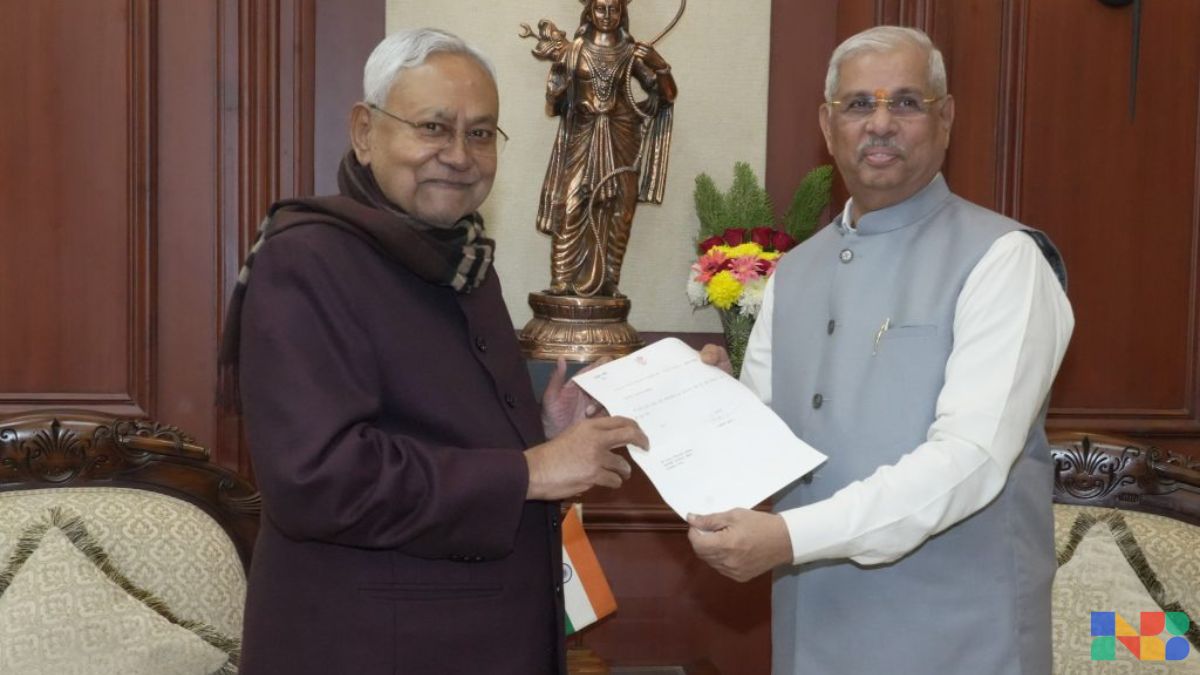
Chief Minister Nitish Kumar submitted his resignation from the Bihar Legislative Council through an emissary, which was accepted by Council Chairman Avadhesh Narayan Singh.
At the same time, BJP leader Nitin Nabin resigned from the Bihar Legislative Assembly, with his resignation letter submitted to the Speaker by state BJP president Sanjay Saraogi.
Both leaders had been elected to the Rajya Sabha earlier this month, necessitating their exit from state legislatures.
Why It Matters
The resignations are primarily procedural, mandated under the Prohibition of Simultaneous Membership Rules, 1950, framed under Articles 101 and 190 of the Constitution. These rules require a leader elected to both Parliament and a state legislature to vacate one seat within 14 days.
However, the timing and political backdrop have made this development significant. With Nitish Kumar moving to the Rajya Sabha, discussions have intensified around Bihar’s political roadmap and whether any leadership reshuffle could follow.
What Exactly Happened?
Nitish Kumar has been elected to the Rajya Sabha on March 16. But here’s the rule:
You cannot be both:
- 1) A Member of Parliament (MP)
- 2) AND a member of a State Legislature
At the same time.
So, within 14 days, he had to resign from one post. He chose to resign from the Bihar Legislative Council.
This is why the resignation happened on March 30—it was the deadline day.
But Why Is This Bigger Than Just a Rule?
Now comes the real story.
On paper, nothing changes—Nitish Kumar is still Chief Minister.
But politically, everything may be changing underneath.
1. Shift from State to National Politics
Moving to Rajya Sabha means:
- Less day-to-day control in Bihar
- More involvement at national level
This is often seen as a transition phase in politics.
Impact on People
For Bihar Politics
While Nitish Kumar continues as Chief Minister, his shift to the Rajya Sabha has fueled speculation about potential changes in governance or succession planning.
For Constituencies
Nitin Nabin’s resignation from the Bankipore constituency marks the end of a long tenure, though he assured continued engagement with the public.
For Governance
The transition reflects adherence to constitutional norms, reinforcing procedural discipline in public office.
But Why Is This Bigger Than Just a Rule?
Now comes the real story.
On paper, nothing changes—Nitish Kumar is still Chief Minister.
But politically, everything may be changing underneath.
1. Shift from State to National Politics
Moving to Rajya Sabha means:
- 1) Less day-to-day control in Bihar
- 2) More involvement at national level
This is often seen as a transition phase in politics.
Official Context & Statements
According to Parliamentary Affairs Minister Vijay Kumar Choudhary, the resignation was submitted in line with constitutional requirements, adding that Nitish Kumar has consistently upheld such norms.
Council Chairman Avadhesh Narayan Singh described him as an “invaluable leader” who has contributed significantly to Bihar.
Meanwhile, Nitin Nabin shared an emotional message for his constituents, highlighting his continued connection with the people despite taking on new responsibilities.
“The party has given me a new responsibility, but my connect with my people will continue,” said Nitin Nabin.
While the resignation of Nitish Kumar is a constitutional formality, its political implications have drawn attention across Bihar. Whether it leads to a leadership shift or remains a procedural step, the coming weeks will be crucial in shaping the state’s political narrative.
Summing it up
What looks like a routine resignation is actually a turning point moment.
Nitish Kumar stepping into the Rajya Sabha may quietly mark the beginning of a new political chapter in Bihar—one where leadership, power balance, and governance style could all change.
For now, nothing has officially shifted.
But in politics, the biggest changes often begin exactly like this—silently, and then suddenly.
Tags
Share this article
-B_oZyeHK.png)